
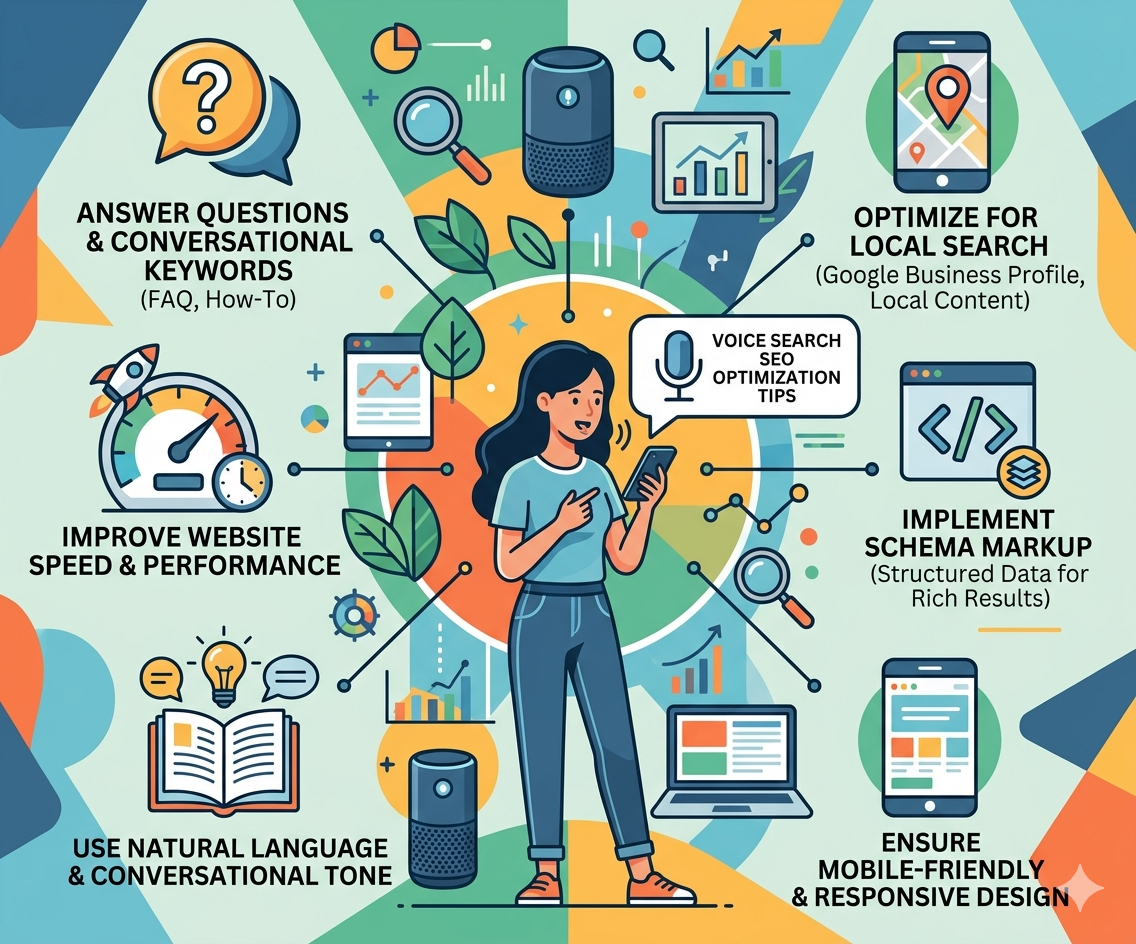
Voice Search SEO Optimization Tips
Voice Search SEO Optimization Tips are no longer optional for businesses that want to stay visible in modern search results. People are increasingly speaking to devices instead of typing queries manually, and that single shift is changing the entire SEO landscape. From smartphones and smart speakers to AI-powered assistants like Google Assistant, Siri, and Alexa, voice-driven search behavior is becoming a natural part of everyday life. Recent industry reports show that billions of voice assistants are currently active worldwide, while nearly 30% of online searches are now voice-based. Search engines are adapting rapidly because users expect faster, more conversational, and more accurate answers. If your website content still sounds robotic or overly optimized for old-school keyword stuffing, you may already be losing traffic to competitors who understand conversational SEO.
The interesting thing about voice search is that it behaves more like a real conversation than traditional search. Instead of typing “best digital marketing course Bangalore,” users ask questions such as “Which is the best digital marketing institute near me?” That subtle difference completely changes keyword strategy, content structure, and search intent optimization. Businesses that understand this shift can gain a huge advantage in rankings, local visibility, and organic traffic growth. Voice search SEO is no longer about simply ranking on Google; it is about becoming the direct answer spoken aloud by AI assistants. That is a powerful position for any brand to own.
What Is Voice Search SEO?
Voice search SEO refers to the process of optimizing website content so it appears in spoken search results generated through voice assistants and AI-powered search engines. Traditional SEO focused heavily on typed keywords, backlinks, and desktop browsing behavior. Voice SEO, on the other hand, revolves around natural language, user intent, mobile experience, and conversational phrases. Think of it like the difference between reading a formal letter and talking casually with a friend. Voice search is built around how people naturally speak.
How Voice Search Works in Modern Search Engines
Search engines today rely heavily on artificial intelligence, natural language processing, and machine learning to interpret spoken commands. When someone asks a question through a smart assistant, the system scans indexed content to find the most relevant and concise answer. AI systems prioritize pages with clear structure, direct answers, strong authority, and excellent user experience. Featured snippets often become the primary source for voice responses because they provide quick, accurate information. Research in 2026 indicates that around 40% of voice search answers are pulled directly from featured snippets.
This means websites must go beyond simply ranking on page one. They need to become the most trusted and readable source of information. Voice assistants are designed to save time, so they prefer content that answers questions immediately without forcing users to scroll endlessly. If your content buries the answer under fluff, it becomes less competitive in voice-driven search environments.
Why Businesses Are Prioritizing Voice Search
Businesses are aggressively investing in voice search optimization because consumer behavior is changing faster than expected. Users increasingly prefer hands-free browsing while driving, cooking, shopping, or multitasking. Voice interaction is becoming part of daily routines because it feels faster and more convenient than typing. Reports published in 2026 show that more than 4.2 billion people now have access to voice assistants on their devices.
For local businesses, the opportunity is even bigger. A huge percentage of voice searches carry local intent, meaning users are searching for nearby services, products, or businesses. Queries like “best coffee shop near me” or “digital marketing institute nearby” dominate voice-based interactions. Businesses that optimize for local SEO, conversational keywords, and mobile usability gain a significant edge over competitors still relying only on traditional optimization methods.
Growth of Voice Search in 2026
Latest Voice Search Statistics
Voice search adoption has exploded in recent years, and the momentum continues in 2026. According to current industry reports, nearly 1.8 billion voice searches happen every single day worldwide. Another report estimates that 8.4 billion voice assistant devices are now active globally, outnumbering the human population. These numbers clearly show that voice technology is no longer experimental. It has become mainstream consumer behavior.
The numbers become even more interesting when examining mobile usage patterns. Around 42% of mobile searches are now voice-based, and younger users rely heavily on spoken search interactions during daily activities. Businesses targeting Gen Z and millennials simply cannot afford to ignore this trend because those audiences naturally prefer faster and more conversational digital experiences.
Rise of AI-Powered Conversational Search
The growth of conversational AI is accelerating voice search adoption even further. Google recently expanded its AI-powered “Search Live” voice experience globally, enabling users to interact with search engines through real-time spoken conversations. This evolution signals a major transformation in how search engines understand and deliver information. Instead of isolated keyword matching, AI systems now process context, follow-up questions, and conversational flow.
This shift changes SEO strategy dramatically. Websites must now create content that sounds natural when spoken aloud. Short robotic phrases no longer perform as effectively as conversational answers written in a human tone. Search engines increasingly reward content that mirrors authentic communication styles because users expect AI interactions to feel smooth and intuitive. It is similar to the difference between talking to a helpful store employee and reading instructions from a machine manual. One feels human, and the other feels cold and disconnected.
Why Voice Search Matters for SEO
Shift From Typed Queries to Spoken Queries
Voice searches are fundamentally different from typed searches. Typed searches are usually short and fragmented, while spoken searches are longer and more detailed. A person might type “weather Bangalore,” but verbally ask, “What’s the weather like in Bangalore this evening?” That difference may look small, but it changes keyword targeting completely.
SEO professionals now need to optimize for full conversational phrases instead of isolated keywords. Long-tail keywords have become more important because voice users tend to ask complete questions. Search engines interpret these conversational patterns to understand deeper intent. Businesses that optimize only for short keywords risk missing a growing percentage of organic traffic opportunities.
The Impact on Search Intent
Voice search strongly emphasizes user intent. Search engines are no longer just matching words; they are trying to understand what users actually want. Someone asking “Where can I learn digital marketing near me?” is likely ready to enroll in a course soon. That search has strong transactional intent.
Understanding intent allows businesses to create content that directly solves problems. Voice SEO works best when pages provide immediate value, clear answers, and helpful information. The more useful your content appears to both users and search engines, the greater your chances of being selected as the spoken result.
Voice Search SEO Optimization Tips for Better Rankings
Use Conversational Keywords
Voice Search SEO Optimization Tips always begin with conversational keyword targeting because spoken searches sound natural and informal. Instead of stuffing pages with repetitive exact-match keywords, focus on phrases users actually say during conversations. Imagine how someone would ask a question aloud rather than type it mechanically.
For example, instead of targeting “SEO tips voice search,” optimize for phrases like “What are the best voice search SEO optimization tips?” This simple shift aligns your content with real-world search behavior. Conversational keywords also improve readability, making your content more engaging for users and search engines alike.
Focus on Long-Tail Search Queries
Long-tail keywords are essential for voice SEO because spoken searches are naturally longer and more detailed. Users often include context, location, urgency, and intent in voice queries. These phrases may have lower search volume individually, but collectively they drive highly targeted traffic.
| Traditional Keyword | Voice Search Query |
|---|---|
| Digital marketing course | Which is the best digital marketing course near me? |
| SEO services | Who offers affordable SEO services for startups? |
| Coffee shop Bangalore | What is the best coffee shop open now in Bangalore? |
Long-tail optimization also reduces competition because fewer websites target highly specific conversational phrases effectively.
Optimize for Featured Snippets
Featured snippets are like the VIP section of Google search results. They often become the default answers used by voice assistants. Structuring content to earn snippets significantly increases your chances of dominating voice search results.
To optimize for snippets:
- Answer questions directly within the first few sentences
- Use question-based headings
- Keep answers concise yet informative
- Structure content clearly with headings and lists
Reports from 2026 show that over 40% of voice answers come directly from featured snippets. That statistic alone makes snippet optimization impossible to ignore.
Improve Website Loading Speed
Voice search users expect instant responses. Slow-loading websites create frustration and reduce ranking potential. Search engines prioritize fast websites because speed directly affects user experience. Studies suggest voice search result pages load significantly faster than average webpages.
Improving speed involves compressing images, enabling browser caching, reducing unnecessary scripts, and choosing reliable hosting providers. Think of website speed like customer service in a busy store. If customers wait too long for assistance, they simply leave and go somewhere else.
Make Your Website Mobile Friendly
Most voice searches happen on mobile devices, making mobile optimization absolutely essential. Responsive design, readable fonts, touch-friendly navigation, and fast mobile performance all contribute to stronger rankings.
Google’s mobile-first indexing means search engines primarily evaluate the mobile version of your website. If your site performs poorly on smartphones, voice SEO performance will likely suffer too. Businesses must ensure that users can quickly access answers without zooming, scrolling excessively, or struggling with navigation.
Add Structured Data Markup
Structured data helps search engines understand your content more clearly. It acts like labels on storage boxes, telling search engines exactly what information exists on a page. Schema markup improves visibility for FAQs, reviews, business details, products, and events.
Voice assistants rely heavily on structured information because it improves answer accuracy. Implementing FAQ schema, local business schema, and speakable schema can significantly improve visibility in voice-driven search results.
Optimize for Local SEO
Local SEO is one of the strongest pillars of voice search optimization because many spoken queries contain local intent. Users frequently search for nearby businesses, services, restaurants, and educational institutes while on the move.
Importance of Google Business Profile
An optimized Google Business Profile improves local visibility dramatically. Businesses should ensure:
- Accurate business name, address, and phone number
- Updated business hours
- High-quality images
- Positive customer reviews
- Proper category selection
Voice assistants often pull local business data directly from Google Business Profiles, making optimization essential for visibility.
Create FAQ-Based Content
FAQ pages work extremely well for voice SEO because voice queries are usually question-based. Users naturally ask who, what, where, when, why, and how questions. Creating dedicated FAQ sections helps align content with these conversational patterns.
A well-optimized FAQ section improves snippet opportunities while also increasing user engagement. Search engines appreciate content that provides direct, helpful answers in an organized format.
Content Strategies for Voice Search SEO
Write in Natural Human Language
Voice Search SEO Optimization Tips become far more effective when content sounds genuinely human. Many websites still write content primarily for algorithms instead of real readers. That approach no longer works effectively in voice-driven environments. AI systems increasingly prioritize conversational readability because spoken responses should sound natural when read aloud.
Writers should avoid overly technical jargon unless necessary. Shorter sentences, active voice, and conversational phrasing improve comprehension and engagement. Imagine explaining a topic to a friend sitting across from you rather than writing an academic textbook. That mindset creates stronger voice-friendly content naturally.
Create Question-and-Answer Content
Question-and-answer formatting aligns perfectly with voice search behavior. Users ask questions verbally, and search engines look for pages that provide immediate answers. Structuring articles around common questions improves both readability and ranking potential.
For example:
- What is voice search SEO?
- Why is voice search important?
- How can businesses optimize for voice search?
These types of headings mirror real user behavior, making content more discoverable for conversational queries.
Common Voice Search SEO Mistakes to Avoid
Ignoring User Intent
One of the biggest mistakes businesses make is focusing solely on keywords without understanding why users search. Voice search is deeply intent-driven, meaning relevance matters more than keyword repetition. Content should solve real problems rather than simply chase rankings.
When businesses understand intent, they can create highly targeted pages that address specific needs. This approach improves engagement, reduces bounce rates, and increases conversion potential.
Overstuffing Keywords
Keyword stuffing damages readability and weakens user trust. Voice search algorithms prioritize natural language, making awkward repetition counterproductive. The goal is to create content that flows smoothly while still incorporating target phrases strategically.
Search engines have evolved dramatically over the years. They no longer reward robotic repetition. Instead, they reward clarity, authority, and user satisfaction.
Future of Voice Search SEO
Voice search will continue evolving alongside artificial intelligence, machine learning, and conversational computing. AI assistants are becoming more human-like, contextual, and predictive. Search engines increasingly understand emotion, follow-up questions, and conversational nuance. Businesses that adapt early will gain stronger visibility as these technologies mature.
The future of SEO is not just text-based ranking. It is about becoming the trusted voice that AI assistants choose to recommend. Websites that prioritize conversational content, technical optimization, structured data, and user experience will dominate this next phase of search evolution.
Recent developments in AI-powered search tools and conversational interfaces indicate that search behavior is moving toward real-time interactive experiences. This means brands must think beyond traditional SEO tactics and prepare for a future where spoken interaction becomes the default way users access information online.
Conclusion
Voice Search SEO Optimization Tips are shaping the future of digital marketing faster than many businesses expected. Voice search is no longer a futuristic trend hiding on the horizon. It is already transforming how users search, interact, and make purchasing decisions online. From conversational keywords and featured snippets to mobile optimization and local SEO, every aspect of modern search strategy now connects directly to voice behavior.
Businesses that embrace voice SEO today position themselves ahead of competitors still relying on outdated optimization methods. The brands that win in this evolving environment are the ones creating genuinely helpful, conversational, and user-focused content. Educational institutes, local businesses, service providers, and eCommerce brands can all benefit from adapting their SEO strategies for voice-first experiences. Institutions like (NIDM) National Institute of Digital Marketing are also emphasizing modern digital marketing strategies that include AI-driven SEO and voice search optimization, reflecting how important these skills have become in today’s competitive landscape.
FAQs
1. What are Voice Search SEO Optimization Tips?
Voice Search SEO Optimization Tips are strategies used to improve website visibility in spoken search results generated through voice assistants like Google Assistant, Siri, and Alexa.
2. Why is voice search important for SEO?
Voice search is important because millions of users now prefer speaking instead of typing. Businesses optimized for voice search can improve rankings, local visibility, and organic traffic.
3. How do I optimize content for voice search?
You can optimize content by using conversational keywords, targeting long-tail phrases, improving page speed, adding structured data, and creating FAQ-based content.
4. Does voice search affect local SEO?
Yes, voice search strongly impacts local SEO because many spoken queries include phrases like “near me” or location-based searches.
5. What is the future of voice search SEO?
The future of voice search SEO involves AI-driven conversational search, smarter virtual assistants, and greater emphasis on user intent, natural language, and structured content.