Social media marketing: A Complete Guide to Growing Your Brand Online
Social media marketing has become one of the most effective ways for businesses to connect with customers, build trust, and increase online visibility. Whether you run a small business, a startup, or an established company, a well-planned social media marketing strategy can help you reach the right audience and turn attention into meaningful business results.
What Is Social Media Marketing?
Social media marketing is the practice of promoting a business, product, or service through platforms such as Instagram, Facebook, LinkedIn, YouTube, and other social networks. It combines content creation, audience engagement, community building, paid advertising, and performance analysis to achieve specific marketing goals.
Unlike traditional advertising, social media marketing gives brands an opportunity to communicate directly with their audience. Businesses can answer questions, collect feedback, showcase their personality, and create long-term relationships with customers.
Why Is Social Media Marketing Important?
The growth of social platforms has changed how people discover brands and make purchasing decisions. An effective social media marketing plan can help a business:
- Increase brand awareness
- Reach targeted audiences
- Generate website traffic
- Build customer relationships
- Create leads and sales
- Improve brand credibility
- Understand customer preferences
Another advantage is accessibility. Even businesses with limited budgets can start creating useful content and gradually build an audience.
Choosing the Right Social Media Platforms
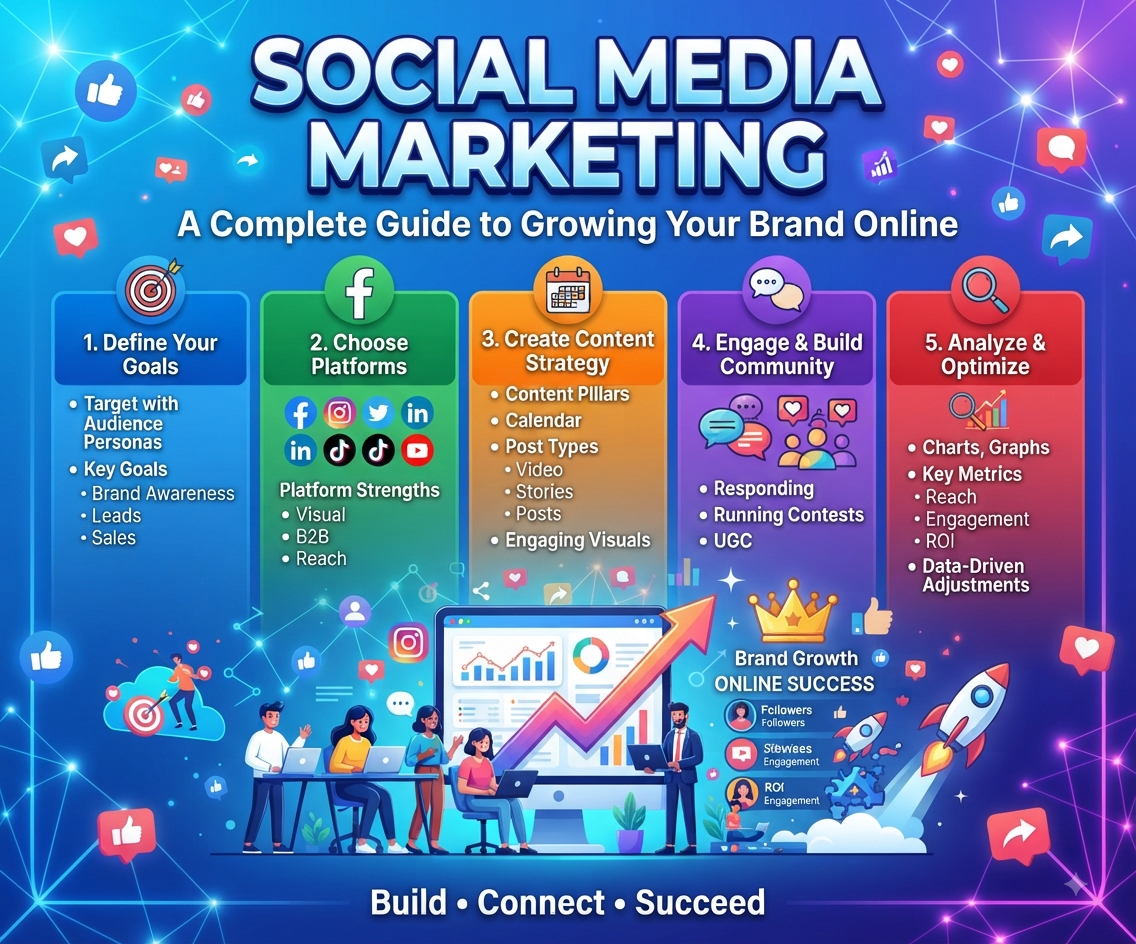
Every platform has a different audience and content style. Therefore, businesses should select channels based on their goals and target customers rather than trying to be everywhere.
Instagram can work well for visual brands, lifestyle businesses, and creators. LinkedIn is useful for B2B companies, professionals, and industry-focused communication. YouTube is powerful for educational, demonstration, and long-form video content. Facebook can support communities, local businesses, and a wide range of advertising campaigns.
The best social media marketing approach focuses on quality and consistency instead of simply increasing the number of platforms.
Creating an Effective Content Strategy
Content is the foundation of successful social media marketing. A strong content strategy should answer three questions: Who are you trying to reach? What problems can you help them solve? And why should they pay attention to your brand?
Businesses can create several types of content, including educational posts, tutorials, customer stories, behind-the-scenes updates, product demonstrations, short videos, polls, and industry insights. A balanced content mix keeps the audience interested without making every post feel like an advertisement.
Consistency also matters. A realistic publishing schedule makes it easier to maintain quality and gives audiences a reason to return.
The Role of Engagement
Posting content is only one part of social media marketing. Engagement is equally important. Responding to comments, answering messages, acknowledging feedback, and participating in relevant conversations can make a brand feel more approachable.
Strong engagement can also provide valuable insights. Questions and comments often reveal what customers want, what confuses them, and what they expect from a product or service.
Using Paid Advertising
Organic content can build trust, but paid advertising can help businesses reach specific audiences more quickly. Most major platforms provide targeting options based on factors such as interests, demographics, location, behaviors, or professional characteristics.
A successful advertising campaign begins with a clear objective. Instead of simply boosting a post, businesses should decide whether they want awareness, website visits, leads, app installs, or sales. Testing different creative formats and audiences can help identify what performs best.
Measuring Performance
A major benefit of social media marketing is the ability to measure results. Important metrics may include reach, impressions, engagement rate, follower growth, click-through rate, leads, conversions, and return on advertising spend.
However, numbers should always be connected to business objectives. A post with thousands of views may not be valuable if it does not reach the right audience or contribute to a meaningful goal.
Regular reporting helps marketers identify successful content, understand audience behavior, and improve future campaigns.
Common Mistakes to Avoid
Businesses often struggle with social media marketing because they focus on follower counts instead of business outcomes. Other common mistakes include posting without a strategy, copying competitors, ignoring comments, using inconsistent branding, and failing to review performance data.
Another mistake is expecting immediate results. Building an engaged audience takes time. Brands that consistently provide useful content, communicate authentically, and learn from their data are more likely to achieve sustainable growth.
Future of Social Media Marketing
The future of social media marketing will continue to be shaped by short-form video, creator partnerships, social commerce, personalization, artificial intelligence, and changing consumer expectations. As platforms evolve, businesses will need to adapt while keeping their brand message clear and authentic.
The most successful marketers will not simply chase every new trend. They will evaluate whether a trend fits their audience, brand, and objectives before investing resources in it.
A strong social media marketing strategy will increasingly combine creativity with data-driven decision-making, helping businesses understand what their audiences want and deliver relevant experiences.
Conclusion
Social media marketing is no longer optional for many businesses that want to remain visible and competitive online. It provides opportunities to build awareness, engage customers, generate leads, and strengthen long-term relationships. Success comes from combining a clear strategy, valuable content, consistent engagement, targeted advertising, and regular measurement.
For learners who want to develop practical digital skills, NIDM (National Institute of Digital Marketing) can be a useful place to explore structured learning in digital marketing. With the right knowledge and hands-on practice, aspiring marketers can build the confidence needed to create effective campaigns and grow brands in an increasingly digital world.