Best Digital Marketing: Courses, Strategies, and Career Opportunities
Best digital marketing practices help businesses connect with their target audience, build brand awareness, generate quality leads, and increase sales in today’s competitive online world. As more businesses establish their presence on digital platforms, the demand for skilled digital marketing professionals continues to grow. Learning digital marketing, including the latest applications of artificial intelligence (AI), can open doors to exciting career opportunities for students, entrepreneurs, freelancers, and working professionals.
Whether you want to promote a business, start a digital marketing agency, or build a successful career, understanding digital marketing strategies and choosing the right training course can help you achieve your goals.
What Is Digital Marketing?
Digital marketing refers to promoting products, services, and brands through online channels such as search engines, social media platforms, websites, email, and paid advertising networks. It allows businesses to reach specific audiences, measure campaign performance, and optimize their marketing efforts using data.
Unlike traditional marketing, digital marketing offers real-time insights into customer behavior and campaign results. Businesses can use these insights to improve their strategies, increase engagement, and achieve better returns on their marketing investments.
Why Is Digital Marketing Important?
Digital marketing has become an essential part of modern business growth. Companies of all sizes use digital channels to connect with customers and remain competitive.
Some key benefits of digital marketing include:
- Wider audience reach: Connect with potential customers across different locations and markets.
- Cost-effective promotion: Choose marketing campaigns that align with your budget and business goals.
- Improved brand awareness: Build a recognizable brand through consistent online communication.
- Targeted advertising: Reach audiences based on relevant interests, demographics, and behaviors.
- Measurable results: Track website traffic, leads, conversions, and campaign performance.
- Business growth: Develop strategies to attract customers, increase sales, and encourage repeat purchases.
Learning the best digital marketing techniques can help individuals and businesses make informed marketing decisions and adapt to changing consumer preferences.
Essential Digital Marketing Courses to Learn
Enrolling in a digital marketing course can help you develop practical skills and understand how different online marketing channels work together. The right course should cover essential concepts, industry tools, practical assignments, and real-world campaign strategies.
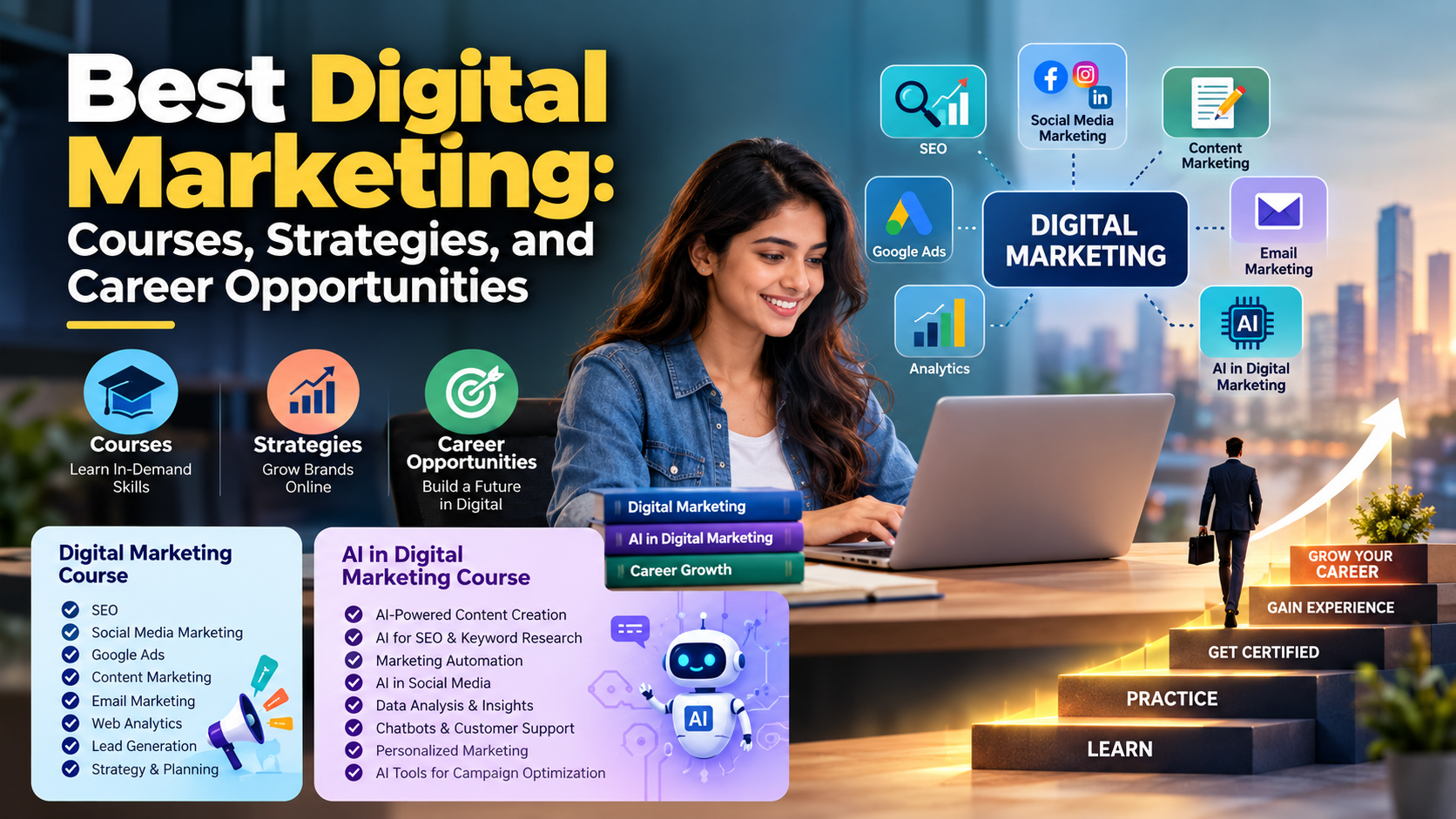
1. Digital Marketing Course
A comprehensive Digital Marketing course introduces learners to the core techniques used to promote businesses online. It is suitable for beginners, students, entrepreneurs, and professionals looking to upgrade their skills.
Important topics generally include:
- Search Engine Optimization (SEO)
- Search Engine Marketing (SEM) and paid advertising
- Social Media Marketing (SMM)
- Content Marketing
- Email Marketing
- Website planning and analytics
- Google Ads and campaign management
- Lead generation and conversion optimization
- Digital marketing strategy and reporting
A well-structured course combines theoretical knowledge with practical exercises so that learners can understand how to plan, execute, and evaluate marketing campaigns.
2. AI in Digital Marketing Course
Artificial intelligence is transforming how marketers research audiences, create content, analyze data, and optimize campaigns. An AI in Digital Marketing course helps learners understand how to use AI-powered tools to improve productivity and marketing performance.
Key topics may include:
- AI-powered content creation and optimization
- Generative AI tools for marketing
- AI-assisted SEO and keyword research
- Automated email marketing and personalization
- AI applications in social media management
- Customer behavior analysis and predictive insights
- Chatbots and automated customer support
- AI-assisted advertising optimization
- Marketing automation and workflow development
- Responsible AI use, fact-checking, and data privacy
AI tools can help marketers work more efficiently, but human creativity, strategic thinking, and quality control remain important. Combining traditional digital marketing knowledge with AI skills can help professionals adapt to evolving industry requirements.
3. Search Engine Optimization (SEO) Course
SEO focuses on improving a website’s visibility in organic search engine results. This course is useful for individuals who want to attract relevant website traffic without relying entirely on paid advertising.
Common topics include keyword research, on-page SEO, technical SEO, link building, content optimization, local SEO, and performance tracking.
4. Social Media Marketing Course
A Social Media Marketing course teaches learners how to develop and manage marketing campaigns across platforms such as Instagram, Facebook, LinkedIn, and YouTube.
Students can learn content planning, audience engagement, social media advertising, influencer marketing, campaign analytics, and community management.
5. Performance Marketing and Google Ads Course
Performance marketing emphasizes measurable outcomes such as leads, purchases, registrations, and app installs. A course in this area helps learners understand paid campaigns, audience targeting, bidding strategies, conversion tracking, and return on advertising spend.
These skills are particularly useful for businesses focused on generating measurable results from their advertising budgets.
How AI Is Changing Digital Marketing
AI is becoming an important part of modern marketing workflows. From generating content ideas to analyzing customer data, AI-powered tools can assist marketers with tasks that previously required significant time and manual effort.
Here are some important applications of AI in digital marketing.
Content creation: AI tools can help generate outlines, brainstorm topics, draft social media captions, and develop initial content ideas. Marketers should review and refine the output to ensure accuracy, originality, and relevance.
SEO optimization: AI can support keyword clustering, search intent analysis, content planning, and the identification of content gaps.
Personalized marketing: AI can help businesses tailor messages and recommendations to different audience segments using appropriate customer data.
Advertising optimization: AI-powered advertising systems can assist with bidding, audience targeting, and campaign delivery.
Customer support: Chatbots can answer common questions, guide visitors, and provide support outside regular business hours.
Data analysis: AI can help marketers identify patterns in campaign performance and generate insights for future decisions.
Learning AI in Digital Marketing can therefore complement traditional marketing skills and help professionals develop more efficient, data-informed strategies.
How to Choose the Best Digital Marketing Course
Choosing the right course is an important step toward building a successful digital marketing career. Before enrolling, consider the following factors.
- Course curriculum: Look for a syllabus covering SEO, social media, paid advertising, content marketing, analytics, and AI applications.
- Practical training: Choose a program that includes projects, campaign exercises, and opportunities to work with relevant tools.
- Industry relevance: Check whether the course reflects current marketing practices and emerging technologies.
- Trainer experience: Learn about the instructors’ practical experience and teaching approach.
- Portfolio development: Look for opportunities to build sample campaigns, reports, and other work that demonstrates your skills.
- Career support: Review any available career guidance, interview preparation, internship opportunities, or placement assistance without assuming that employment is guaranteed.
- Learning flexibility: Consider whether classroom, online, or hybrid training best suits your schedule and learning style.
The best digital marketing course is one that matches your career goals, offers practical learning opportunities, and helps you build skills you can apply in real business situations.
Career Opportunities After Digital Marketing Training
Digital marketing offers several career paths across agencies, startups, established companies, e-commerce businesses, and freelance projects.
Popular roles include:
- Digital Marketing Executive
- SEO Specialist
- Social Media Manager
- Content Marketing Specialist
- Performance Marketing Executive
- Google Ads Specialist
- Email Marketing Specialist
- Marketing Automation Specialist
- AI Marketing Specialist
- Digital Marketing Consultant
Your career path may depend on your skills, experience, portfolio, specialization, and the needs of employers. Practical experience and continuous learning can help you progress toward more advanced responsibilities.
Entrepreneurs can also use digital marketing knowledge to promote their own businesses, while freelancers may offer services such as SEO, social media management, paid advertising, and content strategy.
Future Scope of Digital Marketing
The future of digital marketing is closely connected to technological innovation, changing customer expectations, and the growing importance of online experiences. Businesses increasingly need professionals who can combine creative communication with analytical thinking.
Some important trends shaping the industry include AI-assisted marketing, short-form video content, personalized customer experiences, voice and visual search, marketing automation, and data-driven campaign measurement.
As these trends develop, digital marketers will need to keep learning, experiment with new tools, and understand how to use technology responsibly. Professionals who combine strong marketing fundamentals with AI literacy and analytical skills can position themselves for a broad range of opportunities.
Conclusion
The best digital marketing approach combines the right strategy, practical skills, creativity, and continuous learning. Whether you are interested in SEO, social media marketing, performance advertising, content creation, or AI in Digital Marketing, investing in relevant training can help you prepare for opportunities in the digital economy.
A structured Digital Marketing course can provide the foundation needed to understand online marketing channels, while an AI in Digital Marketing course can introduce you to emerging tools and more efficient workflows.
For individuals looking to develop these skills, the National Institute of Digital Marketing (NIDM) is an institute to explore when researching digital marketing education and training. Review its current course curriculum, practical training opportunities, AI-related modules, and career support options to determine whether its programs align with your goals.
With the right learning plan, hands-on practice, and a commitment to staying updated, you can build a strong foundation for a rewarding career in digital marketing.