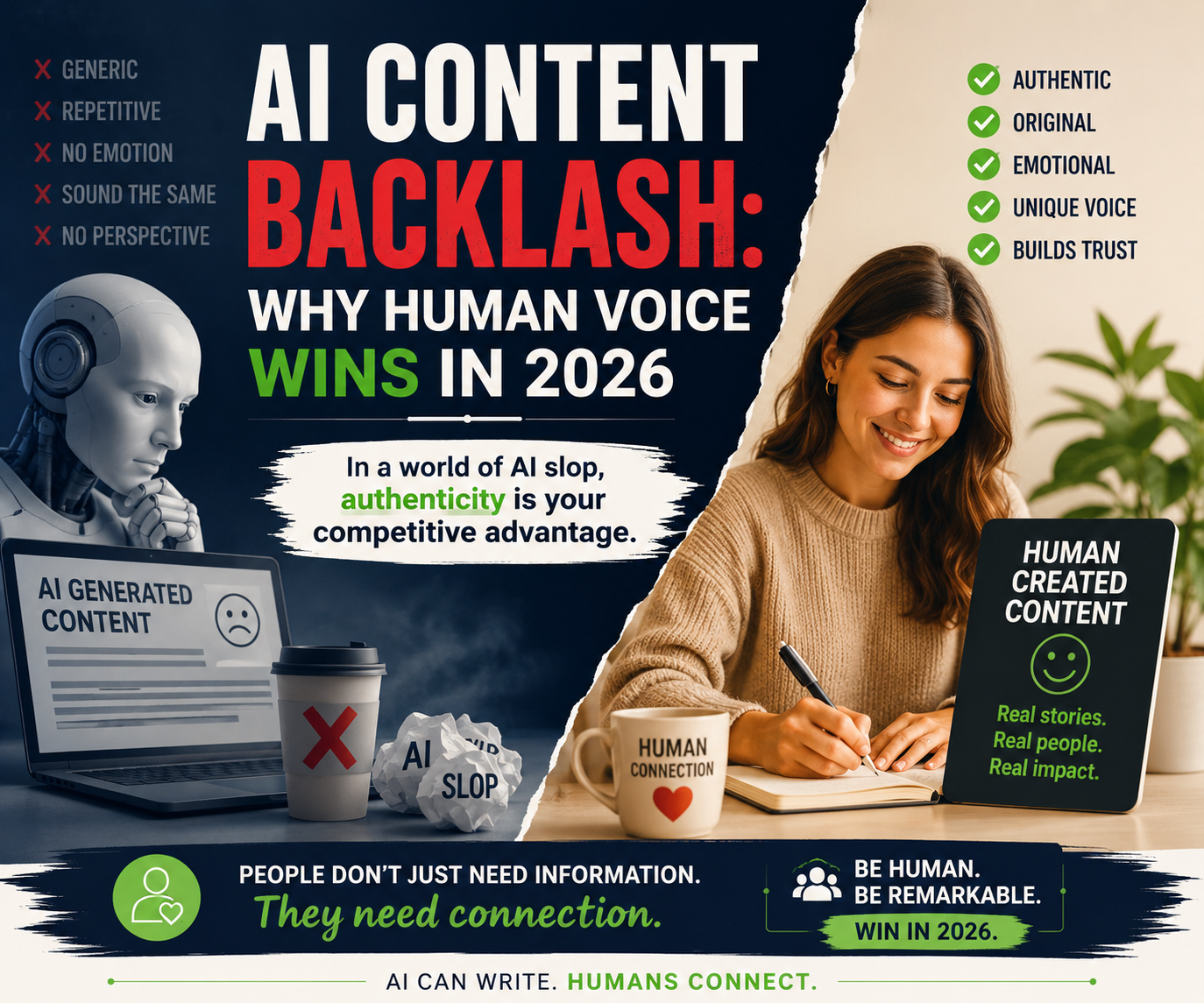
The internet changed dramatically in 2026. Although AI tools improved content production, audiences became exhausted by repetitive posts, robotic language, and emotionless messaging. As a result, the AI content backlash gained momentum across every digital platform.
Consumers now scroll past content that feels generic. They also distrust brands that rely heavily on automated writing. While AI creates faster workflows, it often removes the personality that audiences expect from real communication.
The term “AI slop” became common because readers noticed the same patterns everywhere. Blog posts sounded identical. Social captions lacked emotion. Marketing messages felt polished but empty.
Therefore, brands now face a major challenge. They must balance automation with authentic human communication.
Why Audiences Reject AI-Generated Content
Consumers Crave Human Connection
People connect with stories, emotions, and lived experiences. However, AI struggles to create genuine emotional depth. It summarizes information well, yet it rarely delivers strong conviction or personal insight.
As audiences consume more automated content, they value authenticity even more. Consequently, creators who share honest opinions and imperfect moments attract stronger engagement.
Readers now ask important questions before trusting content:
- Does this feel real?
- Is there an actual person behind this?
- Does this brand believe what it says?
If the answer feels uncertain, trust disappears quickly.
AI Content Often Sounds Repetitive
AI tools learn from existing online material. Because of this, many articles repeat the same structures, phrases, and conclusions.
A content strategy article from one company often resembles dozens of others. Although the wording changes slightly, the perspective remains shallow.
This repetition creates fatigue. Eventually, audiences stop paying attention because nothing feels original anymore.
The Rise of Authentic Human Content
Authenticity Became a Competitive Advantage
As AI-generated content flooded the internet, authentic human voices became rare. Scarcity increased their value immediately.
Today, audiences reward brands that sound human. They engage more with founder opinions, behind-the-scenes stories, and honest conversations.
Even small imperfections improve trust. A slightly imperfect sentence often feels more believable than overly polished marketing language.
Because of this shift, many companies now encourage creators to appear natural rather than flawless.
Human Stories Drive Better Engagement
Real experiences outperform generic advice. Readers trust detailed case studies because they include emotion, risk, and personal lessons.
For example, a founder explaining a failed campaign creates stronger credibility than an AI-generated “top marketing tips” article.
Human-centered content works because it reflects genuine experience instead of recycled information.
Why AI Cannot Replace Human Perspective
Conviction Matters More Than Information
AI can summarize public opinions effectively. However, it struggles to form bold perspectives.
Strong marketing requires conviction. Audiences trust people who challenge ideas, share difficult lessons, and communicate clear beliefs.
Generic neutrality no longer performs well. Instead, readers prefer brands with recognizable voices and honest opinions.
Therefore, marketers must focus less on volume and more on perspective.
Trust Depends on Emotional Authenticity
Trust forms through emotional connection. Unfortunately, machine-generated writing often lacks emotional nuance.
When consumers believe content came entirely from AI, engagement usually drops. They feel manipulated instead of understood.
In contrast, human communication creates familiarity. Readers sense when someone genuinely cares about the message being shared.
That emotional layer remains difficult for AI to replicate.
How the AI Content Backlash Impacts Brands
Brand Voice Became More Important
Every successful brand has a recognizable voice. That voice develops through years of customer interaction and real experiences.
Although AI can imitate tone, audiences often notice the difference. Slight inconsistencies weaken credibility over time.
As a result, companies now prioritize human review before publishing branded content.
Community Trust Requires Real People
During crises or sensitive moments, audiences expect authentic communication. Automated responses damage trust because they feel detached.
People want reassurance from real individuals, not generated statements.
Therefore, brands increasingly rely on executives, founders, and subject experts for public communication.
How Smart Brands Use AI in 2026
AI Works Best as a Support Tool
The strongest content teams do not reject AI completely. Instead, they use it strategically.
AI performs well in areas like:
- SEO structure
- Topic research
- Content outlines
- Performance analysis
- Transcription
- Content repurposing
These tasks improve efficiency without replacing human creativity.
Humans Must Lead the Creative Process
While AI supports workflows, humans must control storytelling and brand communication.
The most effective brands keep humans responsible for:
- Brand voice
- Personal opinions
- Case studies
- Emotional storytelling
- Community engagement
- Crisis communication
This hybrid strategy creates both efficiency and authenticity.
5 Ways to Overcome the AI Content Backlash
1. Add Real Experiences to Every Content Piece
Include personal lessons, client experiences, or behind-the-scenes insights. Real details create stronger trust signals.
2. Build Recognizable Author Identities
Use consistent authors, founder voices, and expert contributors. Audiences trust people more than faceless brands.
3. Prioritize Original Opinions
Stop repeating industry consensus. Instead, share perspectives based on actual experience.
4. Allow Natural Imperfections
Over-editing removes personality. Slight imperfections often make content feel more authentic and relatable.
5. Be Transparent About AI Usage
Honest disclosure improves trust. Readers appreciate brands that explain how AI supports their process.
The Future of Content Marketing in 2026
The AI content backlash is not a rejection of technology. Instead, it represents a demand for authenticity.
Audiences still value speed and convenience. However, they no longer accept emotionless communication. They want content created with intention, personality, and real human insight.
Therefore, the future belongs to brands that combine AI efficiency with genuine storytelling.
In an internet filled with automated noise, human voice becomes the strongest competitive advantage.
Final Thoughts on AI Content Backlash
The digital marketing landscape changed permanently in 2026. AI-generated content scaled faster than anyone expected. Yet audiences responded by seeking authenticity more aggressively than ever before.
Brands that depend entirely on automation will struggle to maintain trust. Meanwhile, companies that embrace human creativity will build stronger communities and lasting loyalty.
The winning strategy is clear. Use AI for support. Keep humans at the center of communication.
Because in the end, people still trust people.
“Master the human side of digital marketing with National Institute of Digital Marketing’s AI Integrated Digital Marketing Course and stay ahead in the era of AI content backlash.