Search intent mapping has become a foundational strategy in modern SEO because search engines increasingly prioritize relevance, usefulness, and user satisfaction over simple keyword placement. Ranking for a target keyword is no longer enough if the page fails to address the real purpose behind a search. A structured search intent mapping framework helps marketers understand what users expect from a query and build content that aligns with those expectations. This improves not only rankings, but also engagement and conversions.
As search algorithms continue evolving through AI driven results and intent recognition, businesses need more than traditional keyword research to compete. Search engines analyze whether users find value in a result through behavior signals and content relevance. By using a search intent mapping framework, marketers can connect keywords to user goals, improve content strategy, and strengthen visibility in modern search results
What Is Search Intent Mapping for SEO?
Search intent mapping for SEO is the process of categorizing keywords based on the reason behind a search and aligning them with the right content type. Instead of selecting keywords only by search volume or keyword difficulty, this method focuses on understanding whether users want information, product comparisons, or are ready to take action. This makes content more relevant to both users and search engines.
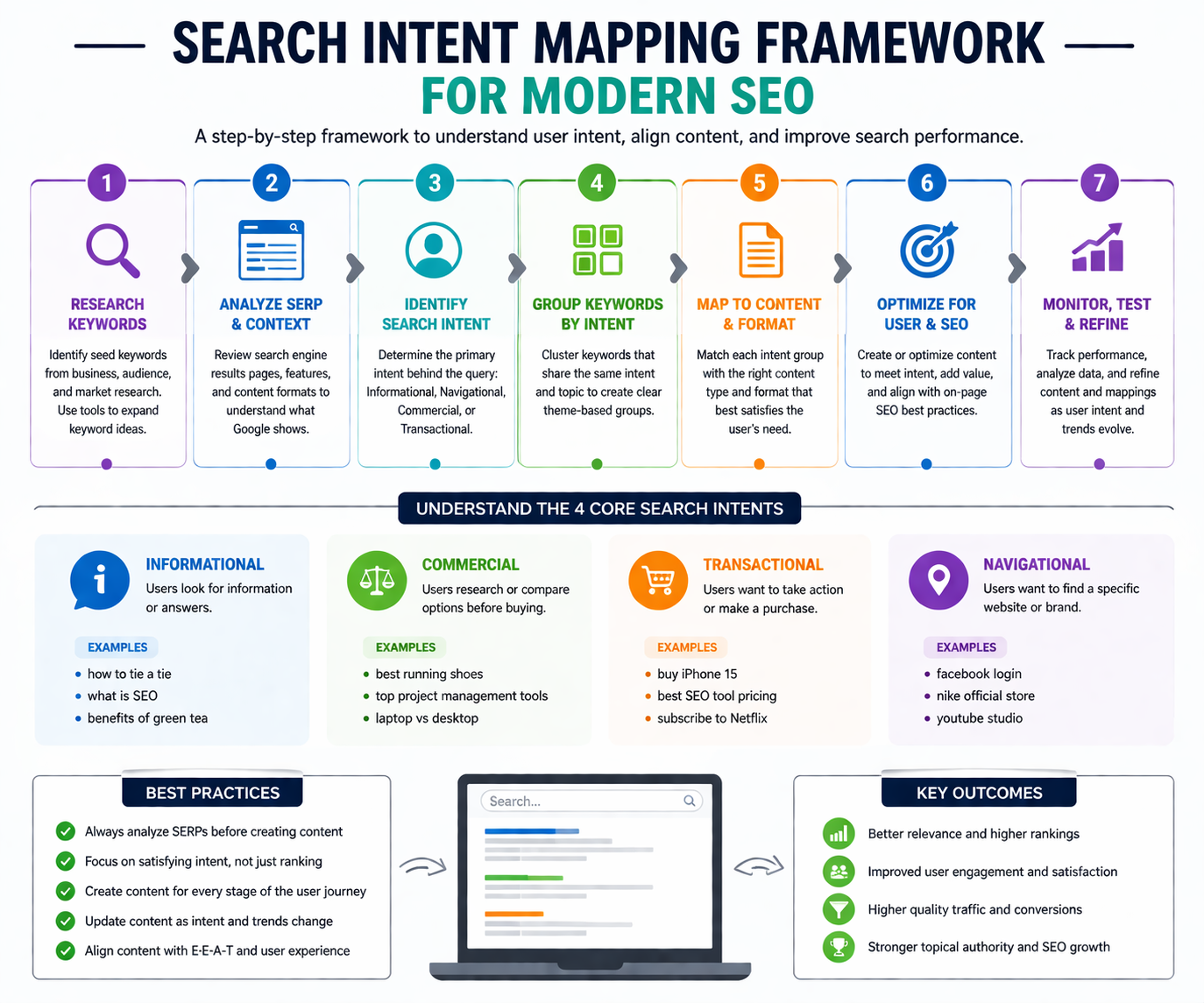
The framework often organizes keywords into informational, navigational, commercial, and transactional intent. For example, someone searching how to improve technical SEO may want educational guidance, while best SEO audit software reflects comparison driven intent. Mapping these differences allows businesses to create content that matches what searchers actually want.
This process also improves content planning by reducing intent mismatch. Businesses promoting services, software, or even a digital marketing course can use search intent mapping to identify whether users seek awareness content, evaluation content, or conversion-focused pages. That alignment helps improve both organic performance and user experience.
Why Search Intent Matters in Modern SEO
Search intent matters because search engines aim to show results that best satisfy user expectations. Even well optimized pages may struggle to rank if they target the wrong type of intent. Modern SEO search intent strategy focuses on creating content that aligns with the purpose behind a keyword, rather than optimizing for the keyword alone.Intent alignment also influences important engagement signals. When users land on content that solves their problem or answers their question, they are more likely to stay, engage, and convert. These signals can support stronger performance over time, while content that misses intent often produces poor engagement.
As search engines improve contextual understanding, search intent analysis for keywords has become essential. Whether optimizing for traditional results, featured snippets, or AI driven search experiences, businesses that prioritize intent are often better positioned to maintain long-term visibility. Understanding user intent matters in modern SEO because it helps create content that matches what people are actually looking for when they use search engines. Instead of focusing only on keywords, marketers can align content with user needs, whether the goal is learning, comparing options, or making a decision. This improves relevance, supports better rankings, and increases engagement because users are more likely to find value in content that meets their expectations. As search engines continue prioritizing context and user satisfaction, understanding intent has become essential for sustainable SEO growth.
Learning how to map search intent starts with analyzing keywords beyond standard metrics. Review the language of a keyword, the likely user goal, and the type of content users may expect. This helps determine whether the keyword fits informational, commercial, or transactional intent. The next step is validating assumptions through search results. Reviewing top-ranking pages helps reveal how search engines interpret a query. If guides dominate results, the intent may be informational. If product pages appear, the intent may lean transactional. After identifying intent, group keywords into clusters based onshared purpose and assign each group to the right content format. This creates a structured framework that improves content planning and supports broader SEO strategy.
To map search intent, start by analyzing the purpose behind each keyword rather than focusing only on search volume or competition. Identify whether users are looking for information, trying to compare solutions, or ready to take action based on the language used in the query. Next, study the search engine results pages to see what types of content are ranking, such as blog posts, product pages, or comparison articles, since this reveals how search engines interpret intent. After identifying intent, group related keywords into categories and match them with the most relevant content type so each page aligns with user expectations and supports a stronger SEO strategy
Using SERP Analysis for Intent Mapping
SERP analysis is one of the most effective ways to confirm keyword intent. By reviewing ranking pages, featured snippets, related searches, and People Also Ask questions, marketers can better understand which content types search engines favor. SERP analysis can also reveal mixed intent keywords. Some searches show both informational and commercial results, meaning users may have multiple needs. In those cases, content may need to combine education with comparison-driven elements. Because intent can change over time, SERP analysis should be ongoing. Monitoring search result shifts helps ensure content stays aligned with current search behavior and remains competitive.
Mapping Keywords to the Buyer Journey
Search intent mapping becomes stronger when connected to the buyer journey. Informational keywords often support awareness-stage content that introduces problems or opportunities. These queries typically perform well with educational blog posts. Commercial keywords align with the consideration stage, where users evaluate solutions. Comparison pages, case studies, and solution-focused content often work well here. Transactional keywords support the decision stage and often perform best through product pages, service pages, or landing pages. Mapping keywords across these stages helps build a structured content journey from discovery to conversion.
Search Intent Analysis for Keywords
Search intent analysis for keywords involves identifying signals that reveal user goals. Keyword modifiers such as “buy,” “best,” “review,” and “how to” often indicate different intent levels and can help guide content decision Beyond modifiers, analyzing search results provides deeper insight. A keyword that looks informational may actually trigger commercial results, which can shift the type of content needed to rank. Ongoing search intent analysis also helps prioritize keywords more strategically. Instead of focusing only on traffic volume, businesses can target keywords aligned with awareness, lead generation, or conversion goals.
Building a Modern SEO Search Intent Strategy
A modern SEO search intent strategy starts by organizing keywords into intent groups and aligning each group with specific content objectives. This connects keyword research with content strategy in a more meaningful way. Once keywords are mapped, content should be created or optimized to match dominant intent while also addressing related user questions. Supporting subtopics, FAQs, and internal links can strengthen relevance and improve topic coverage. Regular performance monitoring is equally important. Reviewing rankings, engagement, and conversions helps determine whether content is fulfilling intent effectively and where adjustments may be needed.
Building a modern SEO search intent strategy starts with organizing keywords based on user goals and aligning them with content that matches those needs. Instead of treating all keywords the same, marketers should map queries by intent, create content for each stage of the user journey, and optimize pages to satisfy both search engines and users. This strategy also includes analyzing search behavior, refining content based on performance, and updating pages as intent shifts over time. By focusing on relevance and user expectations, businesses can improve rankings, strengthen engagement, and build a more effective long-term SEO strategy.
Common Search Intent Mapping Mistakes
A major mistake is targeting keywords based only on volume without verifying intent. High-traffic keywords often underperform when content does not match what users expect. Another common issue is assuming every keyword has a single intent. Many modern queries contain mixed intent, and ignoring this can make content less competitive. Failing to update content as search intent changes is another risk. Search behavior evolves, and older content may lose relevance unless it is reviewed and refined regularly.
Benefits of Search Intent Mapping for SEO
Search intent mapping improves relevance, which can support better rankings and stronger engagement. When content aligns with user expectations, it has a greater chance of performing well in search. It also improves traffic quality. Intent-driven content attracts users whose goals align with the page, often leading to better engagement and higher conversion potential. Another advantage is improved content structure. Mapping intent across funnel stages helps businesses build topical authority and create a stronger long-term SEO framework.
Conclusion
A search intent mapping framework is essential for modern SEO because it connects keywords, user expectations, and content strategy. By understanding search intent mapping for SEO, learning how to map search intent, and applying search intent analysis for keywords, businesses can improve relevance and performance. A strong modern SEO search intent strategy supports more than rankings. It improves engagement, strengthens conversions, and helps build topical authority over time. As search continues evolving, intent will remain central to organic success. Businesses that prioritize search intent mapping now will be better prepared to adapt and sustain long-term visibility