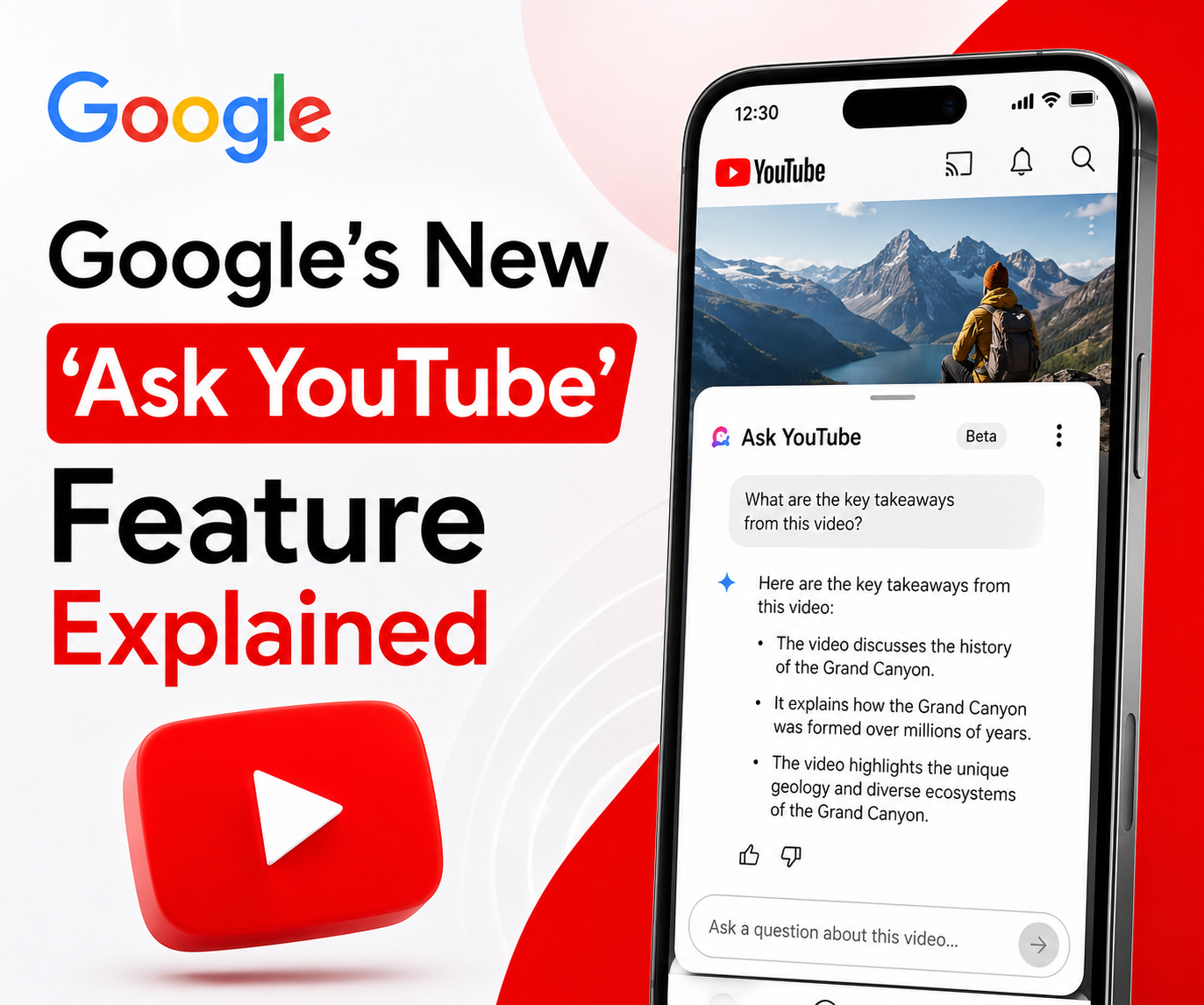
Google is continuing its push into AI-powered search experiences with the testing of a new feature called “Ask YouTube.” The experiment introduces a conversational way for users to search and interact with YouTube content, moving beyond traditional keyword-based discovery. Instead of manually browsing videos or typing multiple search terms, users can ask questions in a natural, conversational format and receive AI-generated responses tied to relevant YouTube videos. This could become especially valuable for users searching for educational content such as tutorials, skill-based learning videos, and a digital marketing course, where conversational AI can quickly recommend the most relevant videos, lessons, and expert creators based on specific learning goals.
The feature reflects Google’s broader strategy of integrating artificial intelligence into search products, making information discovery faster, smarter, and more personalized. As AI reshapes how users interact with search engines, “Ask YouTube” could significantly impact content discovery, video SEO, and the future of creator visibility on the platform
What Is Google’s ‘Ask YouTube’ Feature?
“Ask YouTube” is an experimental conversational search tool designed to help users find information from YouTube videos more efficiently. Rather than relying solely on keywords, the feature allows users to ask complete questions such as “What are the best beginner camera settings?” or “How do I optimize a website for SEO?”
The AI system then analyzes YouTube content and provides summarized answers, recommendations, or contextual responses based on relevant videos. Users may also receive follow-up suggestions or related topics, creating a more interactive search experience similar to AI chat assistants.The goal is to reduce the time users spend scrolling through videos while improving content discovery and user satisfaction.
How Conversational Search Changes YouTube Discovery
Traditional YouTube search focuses heavily on titles, descriptions, tags, thumbnails, and engagement signals. Users typically search using short keyword phrases and manually select videos from search results. With conversational AI search, the process becomes more intent-driven. Instead of matching exact keywords, the system attempts to understand the meaning and context behind user questions. This allows YouTube to surface content that better aligns with what users are actually trying to learn or accomplish.
For example, a user searching “How can I grow a small business online?” may receive AI-generated insights pulled from multiple business and marketing videos instead of simply seeing a standard list of results. This shift could dramatically change how users discover educational, tutorial, and informational content on YouTube.
Why Google Is Investing in AI-Powered Search
Google has been rapidly integrating generative AI across its ecosystem, including Search, Workspace, Android, and YouTube. The rise of conversational AI platforms has accelerated the demand for more interactive and personalized search experiences. Users increasingly expect immediate answers rather than long lists of links or videos.
By bringing conversational AI into YouTube, Google aims to make video content easier to navigate and more accessible for users seeking quick information. This also aligns with Google’s long-term focus on search intent. AI-driven systems can better interpret nuanced questions, complex topics, and conversational queries compared to traditional keyword-based algorithms.
Potential Impact on YouTube SEO
The introduction of “Ask YouTube” could reshape video SEO strategies for creators and marketers. Historically, YouTube optimization focused on keyword placement, click-through rates, watch time, and engagement metrics. While these factors will still matter, conversational search may place greater emphasis on topical relevance, content quality, and contextual understanding. Creators may need to optimize content around audience questions and search intent rather than isolated keywords. Videos that clearly answer specific user queries could become more visible in AI-generated responses.
Structured content, detailed explanations, timestamps, captions, and well-organized transcripts may also become increasingly important because AI systems rely on contextual understanding to extract relevant information. As conversational search grows, creators who produce educational, solution-oriented, and authoritative content may gain a competitive advantage.
What This Means for Content Creators
For YouTube creators, “Ask YouTube” presents both opportunities and challenges. On one hand, the feature could improve content discovery by helping users find highly relevant videos more easily. Smaller creators with valuable niche content may benefit if their videos directly answer user questions. On the other hand, AI-generated summaries could reduce the need for users to watch full videos in some situations. This may impact watch time and user engagement for certain types of informational content.
Creators will likely need to focus more on producing unique, engaging, and experience-driven content that encourages viewers to watch beyond quick answers. Storytelling, expertise, entertainment value, and deeper analysis may become even more important in an AI-assisted discovery environment.
The Future of AI and Video Search
Google’s “Ask YouTube” experiment highlights the growing role of conversational AI in content discovery. Search is evolving from simple keyword matching to interactive, intent-based experiences powered by machine learning and natural language processing. As AI continues to improve, video platforms may become more conversational, personalized, and predictive. Users could eventually interact with videos through AI-generated summaries, follow-up questions, and real-time recommendations tailored to their interests. This evolution could fundamentally change how people consume video content online.
Conclusion
Google’s new “Ask YouTube” feature represents another major step toward AI-driven search experiences. By introducing conversational search into YouTube, Google is attempting to make video discovery smarter, faster, and more aligned with user intent. For marketers, SEO professionals, and content creators, this shift signals the importance of creating high-quality, context-rich, and audience-focused content.
As conversational AI becomes more integrated into search platforms, optimizing for user intent and informational value may become just as important as traditional SEO tactics. While still in the experimental stage, “Ask YouTube” offers a glimpse into the future of video search — one where conversations may replace keywords as the primary way users discover content online