Wee Why You Need a Social Media Content Calendar for 2026
Social media in 2026 is no longer about posting randomly and hoping something works. Platforms are smarter, audiences are more selective, and competition is intense. But now algorithms reward consistency, relevance, and meaningful engagement rather than sheer volume. This is exactly why a social media content calendar for 2026 has become a non-negotiable tool for brands, creators, educators, and businesses.
A content calendar is not just a schedule. It’s a strategic roadmap that connects your business goals with audience needs, trends, platforms, and timing. When done right, it not only saves time but also improves content quality, strengthens brand voice, and increases reach organically.
In this guide, you’ll learn how to build a future-ready social media content calendar, which strategies will dominate in 2026, the best tools to use, and real examples you can adapt immediately.
What Is a Social Media Content Calendar?
A social media content calendar is a planned timeline of what content you will publish, when, where, and why. It includes post ideas, formats, captions, hashtags, visuals, publishing dates, and platform-specific details.
In 2026, content calendars go beyond simple spreadsheets. They integrate:
- AI-driven insights
- Audience behavior patterns
- Content performance predictions
- Cross-platform optimization
At its core, a content calendar helps you move from reactive posting to intentional publishing.
Modern Features of a 2026 Digital Content Planner
In simple terms, a social media content calendar is a planned timeline of what content you will publish, when, where, and why. Here’s what’s different in 2026:
1. AI-Assisted Content Ideation
AI tools now suggest post ideas based on trends, audience interests, and past performance.
2. Platform-Specific Strategies
One-size-fits-all content no longer works. Each platform demands customized formats and tones.
3. Short-Form + Value-Driven Content
Attention spans are shorter, but audiences expect high value quickly.
4. Predictive Scheduling
Posting times are optimized using data, not guesswork.
5. Community-Centric Content
Algorithms prioritize conversations, saves, and shares over likes.
Benefits of a Social Media Content Calendar in 2026
A well-structured content calendar delivers measurable advantages:
- Consistency across platforms
- Better brand storytelling
- Reduced last-minute stress
- Improved engagement rates
- Stronger alignment with campaigns
- Clear tracking of what works
Most importantly, it helps you stay relevant in a fast-moving digital environment.
Core Elements of a 2026 Social Media Content Calendar
To build a powerful calendar, include these essential components:
1. Content Themes
Define weekly or monthly themes such as:
- Education
- Inspiration
- Promotions
- Community stories
- Behind-the-scenes
2. Content Formats
Mix different formats:
- Reels and Shorts
- Carousels
- Stories
- Live sessions
- Static posts
- AI-generated visuals
3. Platforms
Customize content for:
- X (Twitter)
- YouTube
- Threads
- Emerging platforms
4. Publishing Schedule
Include:
- Date
- Time
- Time zone
- Frequency
5. Goals and KPIs
Every post should have a purpose:
- Reach
- Engagement
- Clicks
- Leads
- Conversions
Step-by-Step Strategy to Create a Social Media Content Calendar for 2026
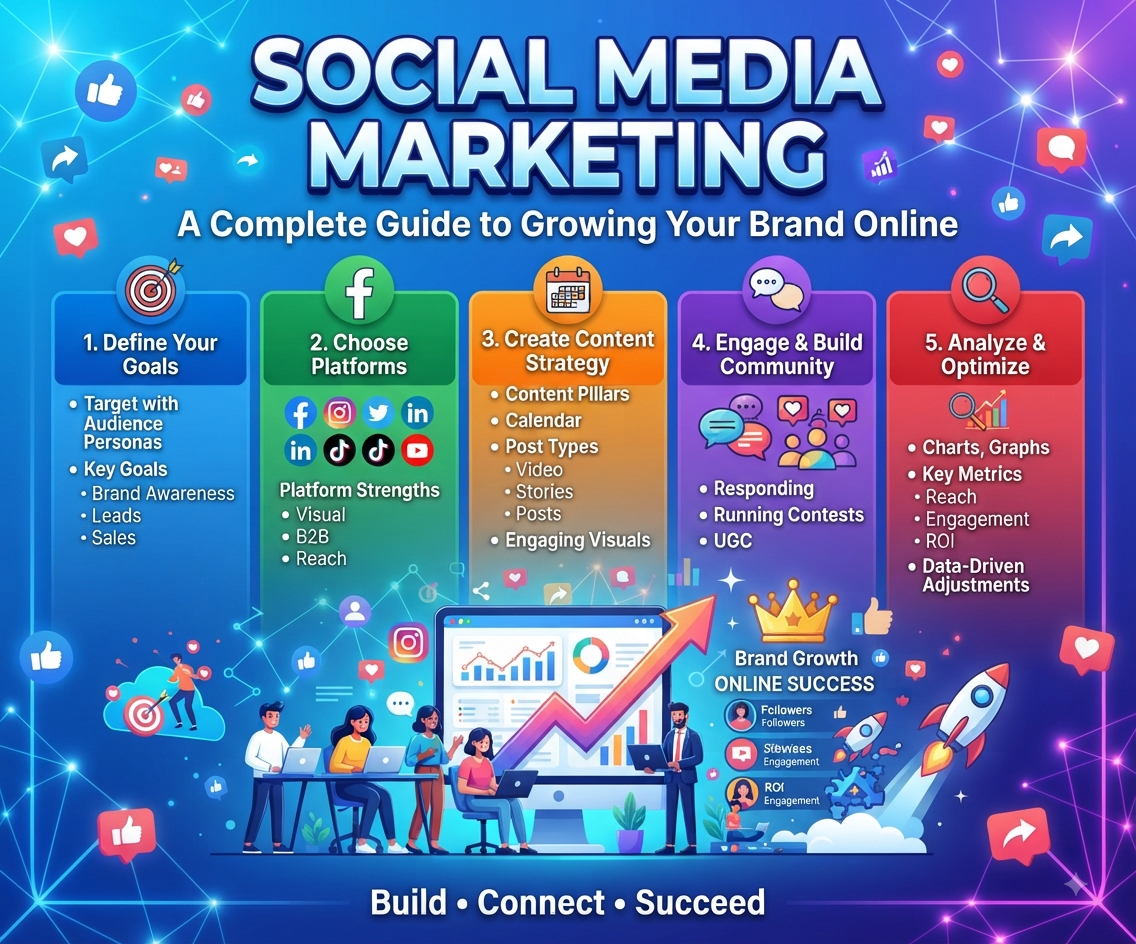
Step 1: Define Clear Goals
Start with clarity. Ask:
- Do you want brand awareness?
- Are you driving traffic?
- Do you want leads or sales?
- Are you building a community?
Your goals determine your content style, tone, and frequency.
Step 2: Understand Your 2026 Audience
Audience behavior in 2026 is shaped by:
- Short attention spans
- Preference for authenticity
- Demand for practical value
Use insights such as:
- Age groups
- Platform usage
- Content preferences
- Active time slots
Step 3: Choose the Right Platforms
You don’t need to be everywhere. Focus on platforms where your audience is active.
For example:
- Instagram & Threads – Visual storytelling and community
- LinkedIn – Thought leadership and B2B
- YouTube – Long-form and educational
- X – Real-time updates and opinions
Step 4: Plan Content Pillars
Content pillars keep your calendar structured.
Common pillars include:
- Educational posts
- Tips and how-tos
- User-generated content
- Promotional posts
- Trends and timely content
A balanced calendar avoids audience fatigue.
Step 5: Decide Posting Frequency
Quality beats quantity in 2026.
Recommended average frequency:
- Instagram: 4–5 posts/week
- LinkedIn: 3–4 posts/week
- X: Daily short updates
- YouTube: 1–2 videos/week
Monthly Social Media Content Calendar Framework (2026)
1st Week: Awareness
- Brand story post
- Industry insight
- Educational reel
2nd Week : Engagement
- Polls and questions
- Carousel tips
- Interactive stories
3rd Week: Authority
- Case studies
- Expert opinions
- Behind-the-scenes content
4th Week: Conversion
- Offers
- Testimonials
- Call-to-action posts
This structure keeps your content balanced and purposeful.
Best Social Media Content Calendar Tools for 2026
Technology plays a major role in efficient planning. Here are top tool categories used in 2026:
1. AI-Powered Planning Tools
These tools suggest:
- Content ideas
- Best posting times
- Caption improvements
2. Scheduling Tools
Allow you to:
- Schedule posts in advance
- Manage multiple platforms
- Maintain consistency
3. Analytics Tools
Help track:
- Engagement rates
- Reach and impressions
- Conversion performance
4. Collaboration Tools
Useful for teams to:
- Review content
- Approve posts
- Maintain brand guidelines
Using the right tools reduces effort and improves results.
Social Media Content Calendar Examples for 2026
Educational Brand
- Monday: Tip carousel
- Wednesday: Explainer reel
- Friday: Q&A post
Local Business
- Tuesday: Customer testimonial
- Thursday: Product highlight
- Saturday: Community post
Example 3: Personal Brand
- Monday: Thought leadership
- Wednesday: Short video insight
- Friday: Personal story
These examples can be customized based on niche and audience.
Content Ideas That Will Perform Best in 2026
Some content types consistently perform well:
- Short-form educational videos
- Carousel-style step-by-step guides
- Relatable storytelling
- Authentic behind-the-scenes
- Problem-solution posts
- Community-driven content
The key is to focus on clarity and usefulness.
Hashtag and Caption Strategy for 2026
Hashtags still matter, but quality matters more than quantity.
Best practices:
- Use niche-specific hashtags
- Mix trending and evergreen tags
- Keep captions conversational
- Start with a strong hook
- End with a clear call to action
Captions should feel human, not robotic.
Common Mistakes to Avoid in a 2026 Content Calendar
Avoid these pitfalls:
- Overposting without strategy
- Ignoring analytics
- Copy-pasting content across platforms
- Focusing only on promotions
- Not updating the calendar based on performance
A flexible calendar always performs better than a rigid one.
How to Measure Success of Your Social Media Content Calendar
Track these key metrics:
- Engagement rate
- Reach and impressions
- Saves and shares
- Click-through rate
- Lead or sales conversions
Review performance monthly and refine your strategy.
Future Trends Shaping Social Media Content Calendars
Looking ahead, expect:
- Deeper AI integration
- Hyper-personalized content
- Voice and video-first platforms
- Community-driven algorithms
- Real-time content optimization
Your calendar should be dynamic, not static.
Building a Winning Social Media Content Calendar for 2026
A social media content calendar for 2026 is more than a planning document, it’s a strategic asset. It helps you stay consistent, relevant, and connected with your audience in an increasingly competitive digital space.
By combining clear goals, audience insights, smart tools, and flexible strategies, you can create content that not only reaches people but truly resonates with them.
When you plan with intention and publish with purpose, social media stops being overwhelming and starts becoming a powerful growth engine. Start building your 2026 content calendar today and you can love learning what truly works in the digital world.
Learn Future Ready Digital Marketing Skills with NIDM
NIDM offers industry focused digital marketing training designed for real-world success in 2026. With practical learning, expert mentors, live projects, and AI-integrated modules, NIDM helps students become truly job-ready.
Degrees get attention. Skills get hired. Start building yours with NIDM.