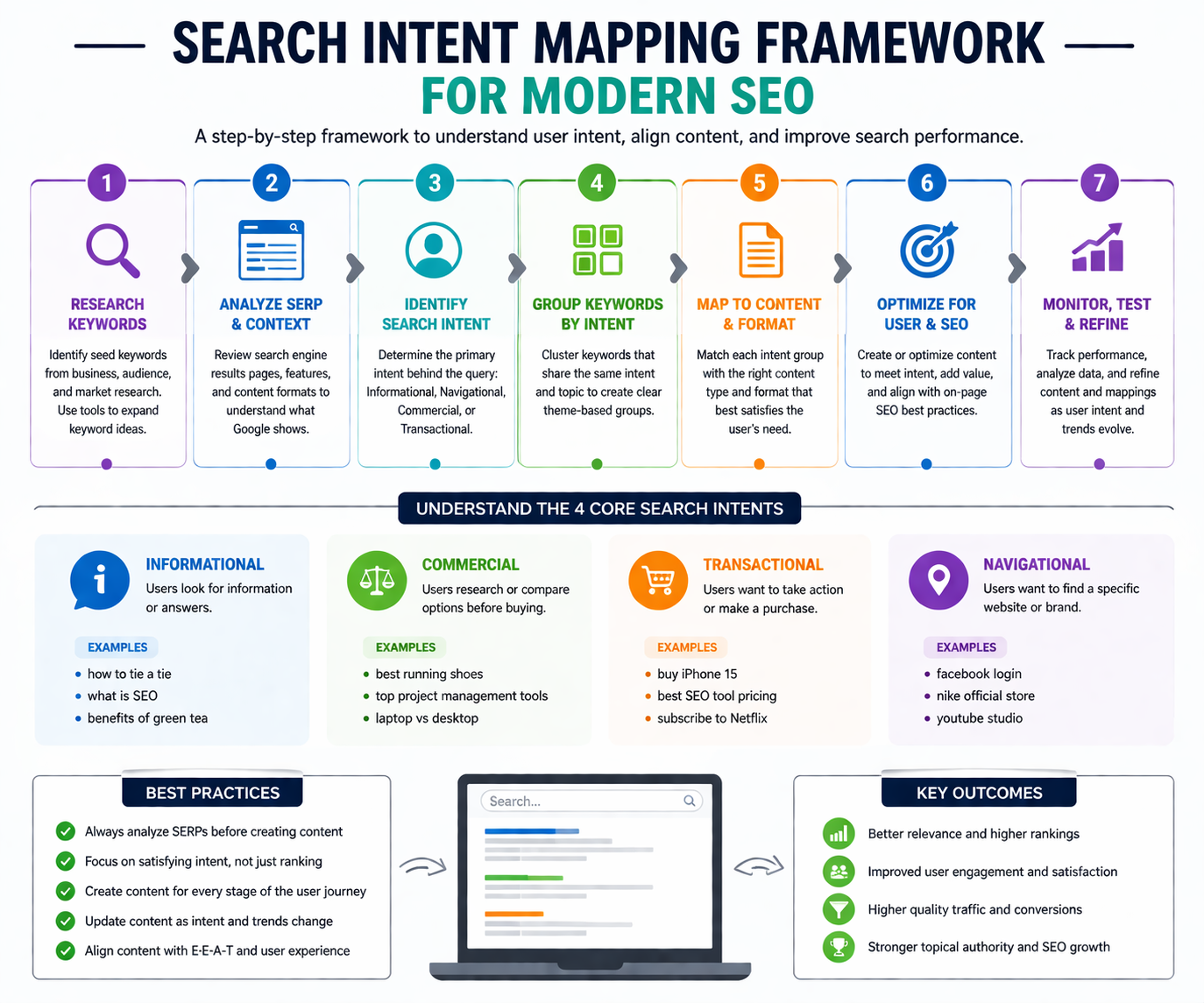

Search Engine Optimization (SEO) is constantly evolving and is bringing major shifts driven by AI, user experience, and search behavior changes. Traditional keyword stuffing and backlinks alone are no longer enough. Google now focuses on search intent, content quality, and user satisfaction.
This blog covers the latest SEO trends, proven techniques, and best practices you must follow to rank higher on search engines.
What is SEO?
SEO is about helping users find the most relevant, helpful, and trustworthy content as quickly as possible. Search engines now use advanced AI algorithms to understand:
- User intent
- Content depth
- Website experience
- Content authenticity
Ranking is no longer just technical—it’s user-centric SEO.
Latest SEO Trends
1. AI-Driven Search Results
Google’s AI systems now analyze context, intent, and behavior rather than just keywords.
Focus on:
- Topic authority
- Natural language content
- Clear explanations
2. Search Generative Experience (SGE)
Google shows AI-generated answers at the top of search results.
To rank:
- Answer questions clearly
- Use structured content
- Provide expert-level insights
3. Voice & Conversational Search
With voice assistants and AI chat tools growing, searches are becoming more conversational.
Example:
- Instead of: “SEO tips”
- Users ask: “What are the best SEO practices?”
Use long-tail and question-based keywords.
4. EEAT Is More Important Than Ever
Google prioritizes content with:
- Experience
- Expertise
- Authoritativeness
- Trustworthiness
Websites without credibility struggle to rank.
5. Zero-Click Searches
Many searches end without clicking any website because answers appear directly on Google.
Optimize for:
- Featured snippets
- FAQs
- Direct, concise answers
SEO Techniques
1. Intent-Based Keyword Research
Don’t target only high-volume keywords. Understand why users are searching.
Types of intent:
- Informational
- Navigational
- Commercial
- Transactional
2. Topical Authority Over Single Keywords
Instead of writing one blog per keyword, create topic clusters.
Example:
- Main topic: SEO
- Supporting blogs:
-
- On-page SEO
- Technical SEO
- AI in SEO
- Local SEO trends
This improves authority and rankings.
3. Content Optimization for Humans First
Write for users, not algorithms.
Best practices:
- Simple language
- Clear headings
- Short paragraphs
- Bullet points
4. Core Web Vitals & Page Experience
Google rewards fast, mobile-friendly websites.
Focus on:
- Page speed
- Mobile responsiveness
- Secure HTTPS
- Easy navigation
5. Smart Internal Linking
Internal links help Google understand your site structure.
- Old blogs to new content
- Related topics together
Best SEO Practices
High-Quality, Original Content
Avoid AI-generated low-quality content. Use AI as a support tool, not a replacement.
Regular Content Updates
Update old blogs with:
- New statistics
- Fresh examples
- Latest keywords
Google prefers updated content.
Strong Meta Titles & Descriptions
Even if not a ranking factor, they improve click-through rate (CTR).
Optimize for Mobile-First Indexing
More than 70% of searches happen on mobile devices.
Local SEO Optimization
For local businesses:
- Google Business Profile optimization
- Local keywords
- Reviews and ratings
SEO Mistakes to Avoid
- Keyword stuffing
- Copy-paste or AI-only content
- Buying low-quality backlinks
- Ignoring user experience
- Not updating old content
Final Thoughts
SEO is not about shortcuts. It’s about:
- Helping users
- Building trust
- Creating valuable content
- Improving website experience
If you focus on quality, intent, and consistency, SEO will deliver long-term organic traffic and growth.