Introduction
Parasite SEO is one of the most talked-about — and misunderstood — tactics in digital marketing right now. If you have ever wondered how a brand-new piece of content on Medium or LinkedIn outranks established websites within days, chances are you have witnessed Parasite SEO in action. In this guide, we break down exactly what Parasite SEO is, why it works so effectively in 2026, which platforms give you the best results, and where the line between smart strategy and risky manipulation actually sits.
What Is Parasite SEO?
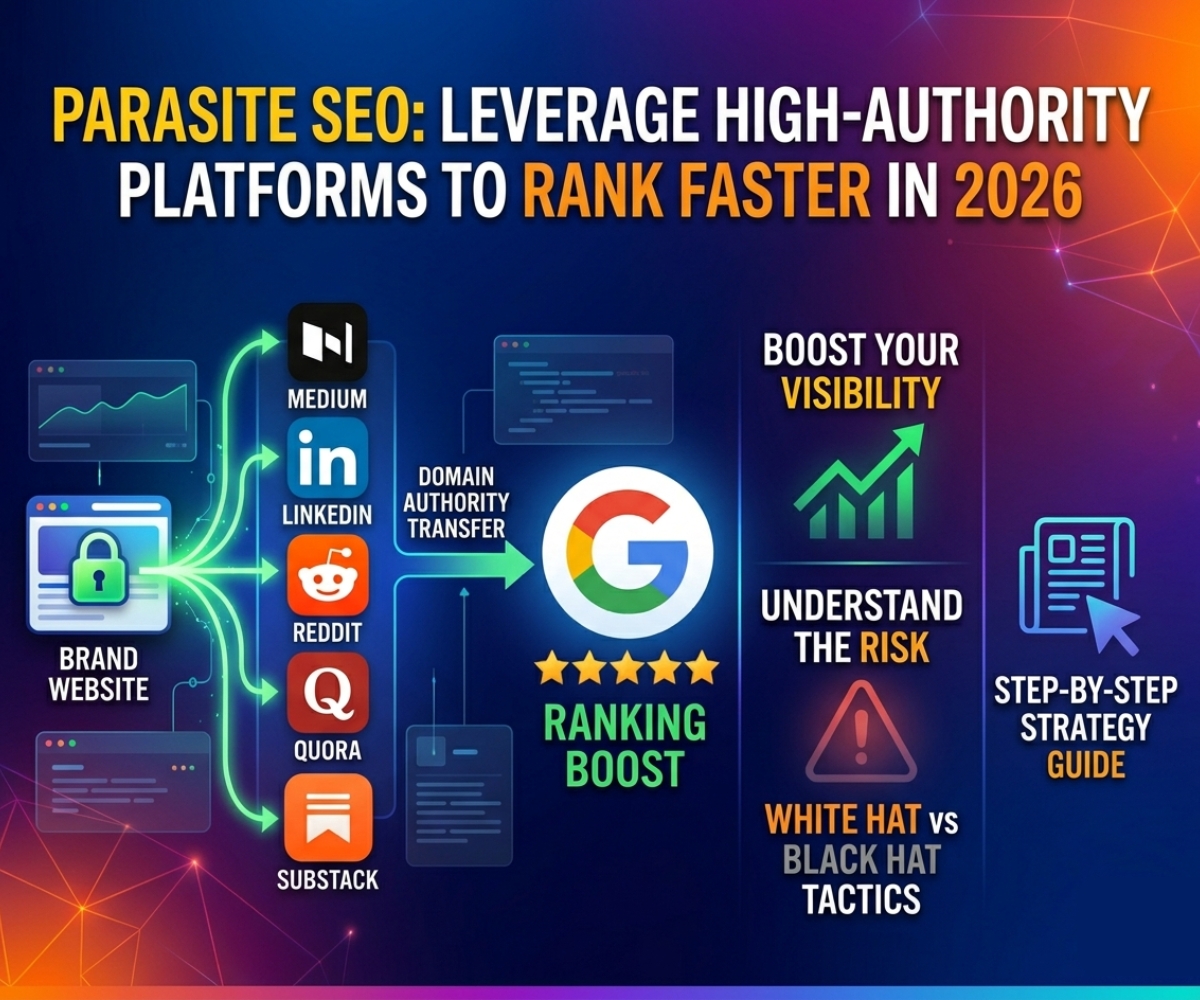
Parasite SEO is the practice of publishing optimised content on high-authority third-party platforms — rather than on your own website — to leverage their domain trust and rank quickly in Google search results.
The name comes from biology. Just like a barnacle attaches itself to a larger creature to travel further and faster, your content “attaches” to an already-trusted domain. Google sees the host platform’s decades of authority and trust signals, and your content benefits from them immediately.
Think of it this way: if you publish an article on your own brand-new blog, Google may take months — sometimes years — to trust it enough to rank it on page one. But if that same article is published on LinkedIn, Medium, or Reddit, it can appear in the top five results within 24 to 48 hours.
Why Parasite SEO Works So Well in 2026
There are three core reasons Parasite SEO delivers fast results:
1. Google Already Trusts These Platforms
Sites like LinkedIn, Medium, Reddit, and Quora carry Domain Authority scores in the 90s. Google has crawled them for years, indexed millions of pages from them, and consistently rewards their content. When you publish there, you inherit that credibility instantly — something your own site could take years to build.
2. Fast Indexing Means Faster Rankings
High-authority platforms are crawled by Google’s bots continuously, sometimes multiple times per day. A well-optimised article published on Medium on a Monday morning can appear in Google search results by Tuesday. That speed simply is not possible on a new or low-authority domain.
3. Engagement Signals Boost Visibility
When readers on these platforms comment, share, save, or click through your content, Google treats those as quality signals. Active engagement tells the algorithm that your content is worth surfacing to more people — accelerating your rankings even further.
Not all third-party platforms are equal. Here are the best options in 2026:
Medium
Medium has a massive user base and high domain authority, making it ideal for long-form, informational content. Articles on topics like marketing, productivity, business, and technology consistently rank well here.
LinkedIn Pulse
LinkedIn articles are particularly powerful for B2B, SaaS, consulting, and professional services content. Properly optimised posts can appear in Google results within 24–48 hours — faster than almost any other text-based platform.
Niche subreddits with engaged communities are a goldmine. Relevant threads can rank globally — even in competitive non-English markets. The key is adding genuine value to the conversation before dropping any links.
Quora
Answering high-traffic questions on Quora is a classic Parasite SEO move that still delivers. Optimise your answer with your target keyword naturally, and add a relevant link back to a detailed guide on your own site.
Substack & YouTube
Substack newsletters are increasingly indexed by Google. YouTube, meanwhile, benefits from double exposure — it ranks inside Google search AND inside YouTube’s own search engine, giving your content two separate traffic sources.
How to Use Parasite SEO Step by Step
You do not need a complex setup to get started. Here is a straightforward process:
Choose your target keyword. Pick a keyword with decent search volume that your own domain is unlikely to rank for quickly due to competition or authority gaps.
Select the right platform. Match the platform to your content type and audience. B2B topics → LinkedIn. How-to guides → Medium. Community discussions → Reddit.
Write genuinely useful content. This is non-negotiable. Thin, keyword-stuffed articles will not rank and will get removed. Write a comprehensive, original piece that delivers real value to the platform’s audience.
Optimise on-page elements. Include your target keyword in the title, first paragraph, at least one subheading, and the meta description (where available). Use clean formatting with H2s, H3s, and bullet points.
Add a natural link back to your site. One or two relevant links to your own website are enough. Make the links contextual and helpful, not forced.
Measure and iterate. Use Google Analytics and tools like Ahrefs or SEMrush to track keyword rankings, traffic, and referral clicks. Refine within the first 21 days based on what the data tells you.
When Parasite SEO Crosses the Line
Here is where many marketers get into trouble. Parasite SEO exists on a spectrum — and where you land on that spectrum determines whether it is a smart growth strategy or a liability.
White Hat Parasite SEO (Safe & Sustainable)
White hat Parasite SEO means you follow the host platform’s guidelines, create content that is genuinely valuable to readers, and use links naturally. Examples include legitimate guest posts, well-researched LinkedIn articles, and helpful Reddit contributions. This is fully ethical and sustainable long-term.
Grey Hat Parasite SEO (Proceed With Caution)
Grey hat tactics sit in a murky middle ground. Examples include publishing content on open platforms purely for SEO benefit with no real value for readers, or using thin content that technically complies with guidelines but is not genuinely useful. Results may be short-lived as Google’s algorithms continue to evolve.
Black Hat Parasite SEO (High Risk, Avoid It)
Black hat tactics — keyword stuffing, fake accounts, link farms, AI-generated spam content, and publishing low-quality content at scale purely to manipulate rankings — are a direct violation of Google’s site reputation abuse policies. The March 2024 core update and subsequent 2025 spam policy refinements specifically targeted this behaviour. Sites caught in these practices face deindexing, manual penalties, and permanent damage to their brand’s search presence.
The rule of thumb: if you are creating content you would be embarrassed for a real reader to see, it is black hat. If the content adds genuine value and you are following the platform’s rules, it is white hat.
Parasite SEO vs. Traditional SEO — Which Should You Use?
The short answer: both, at different stages and for different goals.
| Parasite SEO | Traditional SEO | |
|---|---|---|
| Speed | Fast (days to weeks) | Slow (months to years) |
| Control | Low (host platform’s rules) | High (your own site) |
| Cost | Low | Medium to High |
| Long-term value | Limited | Very High |
| Best for | New brands, quick wins, testing ideas | Sustainable growth, brand equity |
The smartest approach in 2026 is a hybrid strategy: use Parasite SEO to test keywords and gain early visibility, then repurpose and expand that content on your own domain for long-term authority. Think of it as a fast lane on the motorway — useful for getting ahead quickly, but not the entire journey.
Is Parasite SEO Right for Your Business?
Parasite SEO is particularly effective if:
- Your own website is new or has low domain authority
- You need fast results for a time-sensitive campaign
- You want to test whether a keyword converts before investing in a full content strategy
- You are in a competitive niche where ranking on your own domain would take years
It is less suitable if:
- Brand reputation and content ownership are critical priorities
- You are in a regulated industry where platform-published content could cause compliance issues
- You do not have the resources to consistently create high-quality content for external platforms
Conclusion
Parasite SEO is a legitimate, powerful tactic when used correctly. It gives smaller brands and newer websites a fighting chance against established competitors — without waiting years to build domain authority. The key is understanding where the line is: create real value for real readers, follow platform rules, and use it as a complement to your own content strategy, not a replacement for it. Done right, Parasite SEO is not about cheating the system. It is about working smart within it.
Frequently Asked Questions
Is Parasite SEO legal? Yes. Publishing content on third-party platforms is completely legal. The risk of penalty comes from black hat tactics like spamming, keyword stuffing, or violating platform guidelines — not from the strategy itself.
Does Parasite SEO still work in 2026? Yes, when done ethically. Google’s recent updates have cracked down on low-quality, spammy parasite content, but well-written, genuinely useful content on high-authority platforms continues to rank consistently.
What is the best platform for Parasite SEO in 2026? It depends on your niche. Medium and LinkedIn work well for thought leadership and marketing content. Reddit and Quora are strong for informational and question-based content. YouTube is powerful for any topic with video potential.
Can Parasite SEO replace building my own website’s SEO? No. Parasite SEO is a tactical tool for speed and early visibility. It should always be paired with a long-term strategy to build authority on your own domain.
Parasite SEO remains one of the smartest shortcuts in a digital marketer’s toolkit — but only when built on a foundation of quality content, genuine value, and platform integrity. Businesses should focus on leveraging high-authority platforms ethically rather than chasing quick wins that risk penalties. To truly master SEO strategies like this, learning from NIDM (National Institute of Digital Marketing) can provide the practical knowledge and industry-level expertise to do it right.
Same structure as the backlinks CTA — three sentences, same flow, ends with the NIDM mention. Want me to update the file with this added at the bottom?