
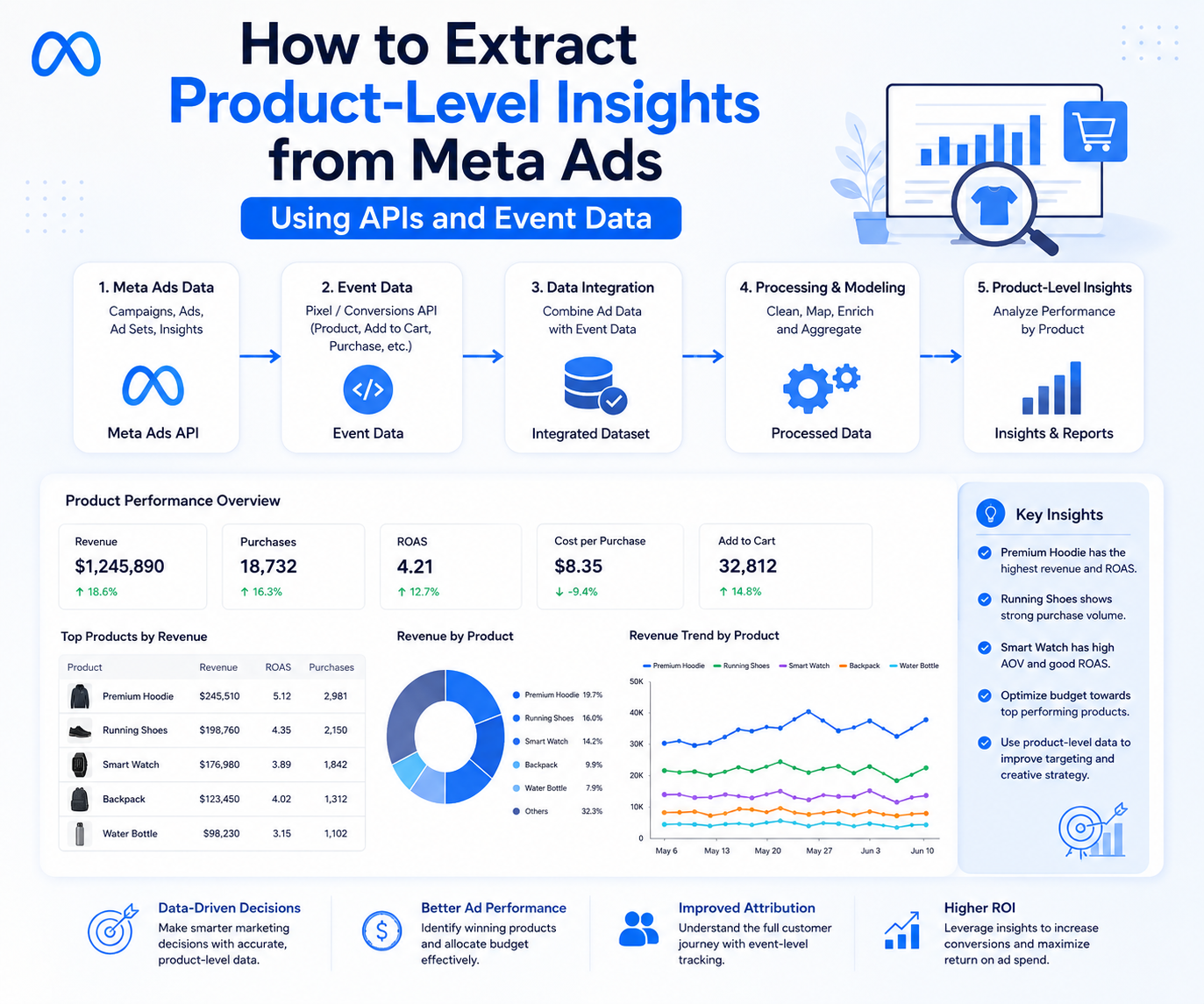
Meta Ads Manager provides marketers with extensive campaign performance metrics, but most of these insights remain aggregated at the campaign or ad-set level. For ecommerce businesses managing large product catalogs, this creates a major visibility gap. A campaign may appear profitable overall while certain products silently consume budget without generating meaningful returns. At the same time, hidden high-performing products may never receive the investment they deserve because their impact is diluted inside broader reporting structures. Product-level analysis helps solve this problem by connecting advertising performance directly to individual SKUs, enabling brands to make smarter decisions around growth, profitability, and inventory planning. These concepts are also widely covered in a digital marketing course, where marketers learn how to analyze product performance, optimize ad spend, and improve ecommerce campaign ROI through data-driven strategies.
Understanding Meta’s Advertising Data Ecosystem
To extract product-level insights effectively, brands must understand how Meta’s data ecosystem works. Meta’s Marketing API provides access to campaign performance metrics such as impressions, clicks, spend, purchases, and attributed revenue. However, these metrics alone do not reveal which specific products are responsible for driving conversions. This is where Meta Pixel events and Conversions API become critical. These systems track on-site user behavior such as product views, add-to-cart actions, and completed purchases. When combined with product catalog data, they create a bridge between ad engagement and product-level commerce activity.
The Importance of Product Identifiers in Event Tracking
The foundation of product-level reporting lies in consistent product identification. Every tracked ecommerce event should include unique product identifiers such as SKU numbers, product IDs, or catalog references. For example, when a customer views a product page or completes a purchase, the associated event should contain the exact product ID tied to that action. These identifiers allow advertisers to map Meta advertising data back to individual products inside their ecommerce systems. Without standardized product identifiers across platforms, attribution becomes fragmented and reporting accuracy declines significantly.
Using the Meta Marketing API for Performance Extraction
The Meta Marketing API acts as the primary source for advertising performance data. Brands typically use the API to extract campaign-level metrics including spend, clicks, conversions, impressions, and return on ad spend. This data provides the performance layer needed for deeper analysis. However, API data alone is not enough to generate actionable product-level insights. The true value emerges when campaign metrics are connected with behavioral and transactional event streams that contain product-level details. This combination transforms raw advertising data into a much more valuable source of business intelligence.
Connecting Ecommerce Platforms with Meta Data
Once product identifiers are consistently tracked, businesses can begin integrating Meta advertising data with ecommerce backend systems such as Shopify, Magento, or WooCommerce. This integration enables teams to analyze product performance beyond simple acquisition metrics. Instead of focusing only on ROAS, brands can evaluate profit margins, repeat purchases, refund behavior, and customer lifetime value at the SKU level. This deeper visibility helps organizations understand not just which products sell well, but which products generate sustainable and profitable growth over time.
Building a Centralized Product Analytics Pipeline
Many advanced ecommerce organizations centralize their advertising and commerce data into cloud data warehouses such as BigQuery, Snowflake, or Redshift. These systems combine multiple data sources including Meta API exports, product catalogs, purchase events, inventory systems, and transactional databases. A centralized pipeline allows analysts to build product-level dashboards that reveal spend by SKU, conversion rates by category, inventory-sensitive performance trends, and customer purchasing behavior. This infrastructure creates a single source of truth that supports faster optimization and more informed strategic decisions.
Conclusion
Meta’s default reporting tools were designed primarily for campaign management, not deep product analytics. By combining Marketing API data, event tracking, Conversions API, and ecommerce backend systems, brands can unlock far more detailed insights into how individual products perform across paid social campaigns. This level of visibility enables smarter marketing decisions, stronger operational coordination, and more profitable growth strategies. As data-driven commerce continues to evolve, businesses that master product-level advertising intelligence will gain a significant competitive advantage in the digital marketplace.