
Customer reviews influence buying decisions more than traditional advertising. Businesses with visible social proof often generate more trust, higher conversions, and stronger engagement.
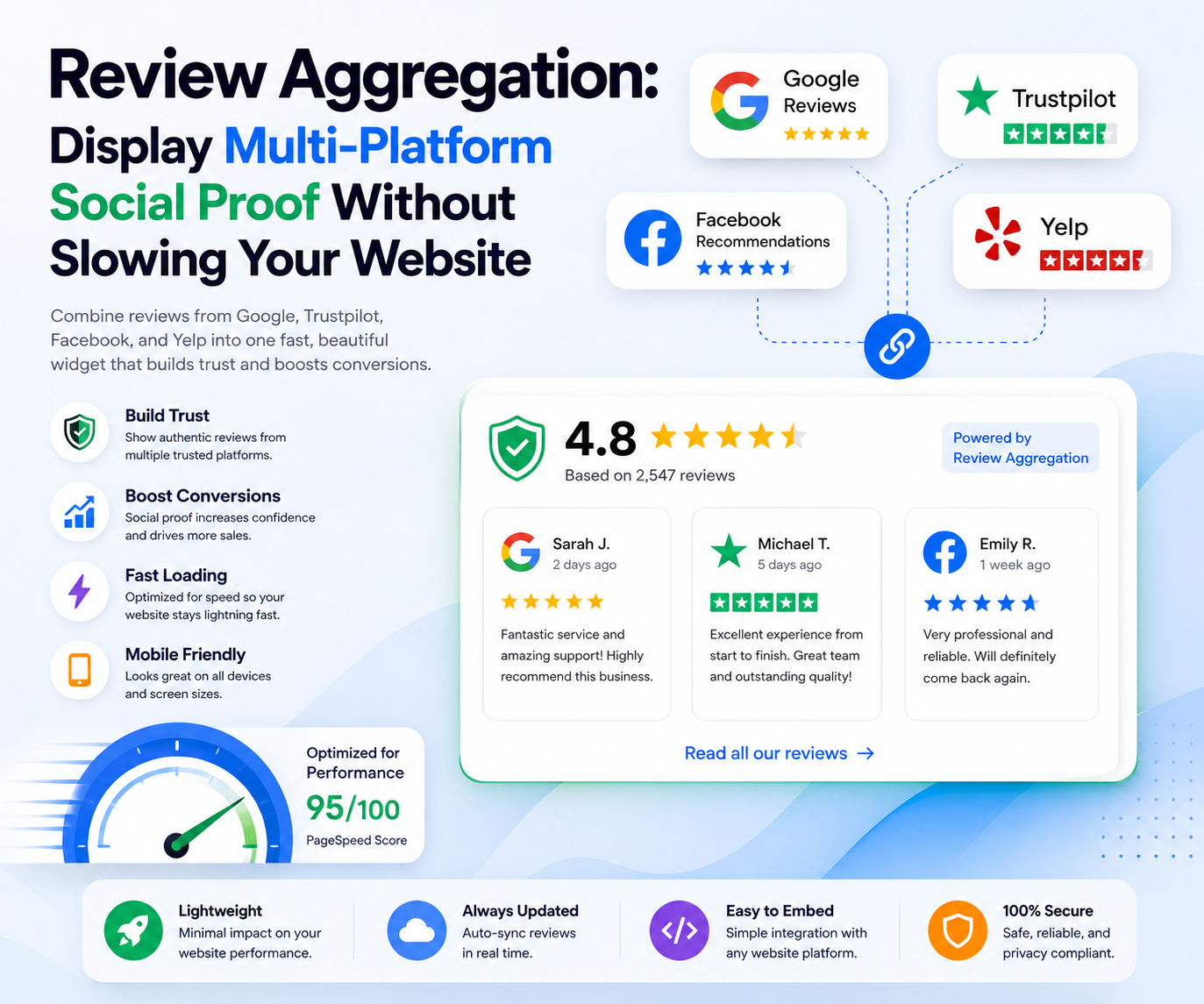
Review Aggregation helps businesses combine reviews from Google, Trustpilot, Facebook, and Yelp into one centralized widget. Instead of displaying reviews separately across platforms, businesses can create a cleaner and more reliable customer experience.
The biggest challenge is maintaining website speed. Many review plugins load heavy scripts that hurt Core Web Vitals and reduce SEO performance.
This guide explains how to build a fast, lightweight Review Aggregation system without slowing down your website.
Why Review Aggregation Matters for Modern Websites
Review Aggregation strengthens credibility by combining customer feedback from multiple trusted platforms into one location.
Consumers rarely trust a single review source. A business with positive reviews across Google, Trustpilot, Facebook, and Yelp appears more authentic and reliable.
Displaying reviews directly on your website also reduces friction. Visitors no longer need to leave your site to verify your reputation.
Benefits of Review Aggregation include:
- Higher conversion rates
- Better local SEO signals
- Increased customer trust
- Lower bounce rates
- Stronger brand authority
Customer reviews also add fresh user-generated content to webpages. Search engines value updated content because it improves relevance and user experience.
Businesses should avoid cluttered widgets filled with animations and sliders. Simple layouts perform better for both usability and loading speed.
Review Aggregation Builds Stronger Trust Signals
Trust grows when customers see consistent ratings across multiple platforms.
If a business shows strong Google Reviews alongside Trustpilot, Facebook, and Yelp ratings, visitors feel more confident about purchasing products or contacting the business.
A unified review widget also creates a professional appearance. Instead of scattered testimonials across different pages, customers can view social proof in one clean section.
Fresh reviews matter as well. Recent customer experiences show that the business remains active and trustworthy.
Review Aggregation improves first impressions while supporting long-term reputation management.
Review Aggregation Supports SEO and Conversions
Customer reviews naturally contain keywords related to services, products, and customer experiences.
This helps search engines understand webpage relevance without requiring businesses to constantly update content manually.
Reviews also improve conversion optimization. Positive testimonials near call-to-action sections can increase clicks, inquiries, and purchases.
Best placement areas include:
- Homepage
- Product pages
- Service pages
- Landing pages
- Checkout sections
Strategic placement improves visibility without distracting users from important actions.
How to Build a Fast Multi-Platform Review Widget
Website speed should remain a priority when implementing Review Aggregation.
Many businesses install heavy plugins that load multiple external scripts, slowing down websites significantly.
A fast review widget focuses on lightweight loading methods and optimized content delivery.
Most businesses benefit from combining:
- Google Reviews
- Trustpilot Reviews
- Facebook Recommendations
- Yelp Reviews
Instead of displaying every review, highlight selected high-quality reviews with reviewer names, ratings, and timestamps.
Performance optimization methods include:
- Lazy loading
- Server-side caching
- Static review rendering
- CDN delivery
- Compressed scripts
- Reduced animations
Simple card layouts usually load faster than large sliders and carousels.
Businesses using WordPress should avoid stacking multiple review plugins together. One optimized solution performs better and reduces unnecessary script loading.
Use Lazy Loading for Review Widgets
Lazy loading delays review widget rendering until users scroll near the review section.
This reduces initial page load time and improves website performance metrics.
Without lazy loading, review scripts load immediately when the webpage opens, increasing server requests and slowing rendering speed.
Benefits include:
- Faster Largest Contentful Paint
- Better mobile performance
- Lower JavaScript execution time
- Reduced bounce rates
Businesses should regularly test widget performance using PageSpeed Insights or GTmetrix.
Reduce External Script Requests
Every review platform introduces additional API requests and external scripts.
Too many requests can damage loading speed and reduce SEO performance.
A better solution is caching reviews locally and refreshing them periodically instead of loading live data during every page visit.
Optimization methods include:
- Minifying JavaScript files
- Combining CSS resources
- Using lightweight embeds
- Hosting fonts locally
- Reducing third-party tracking scripts
These improvements help businesses maintain fast-loading webpages while still displaying strong social proof.
Best Platforms for Review Aggregation
Businesses should prioritize review platforms where their audience actively leaves feedback.
Google Reviews remain essential for local SEO and search visibility.
Trustpilot works well for SaaS companies, online stores, and service businesses because it emphasizes verified customer experiences.
Facebook Reviews support social trust and community engagement, while Yelp remains valuable for restaurants, hospitality businesses, and local services.
When selecting platforms, consider:
- Industry relevance
- Customer activity
- Review quality
- API accessibility
- Website performance impact
Most businesses only need three or four review sources.
Too many platforms can overwhelm visitors and reduce widget clarity.
Google and Trustpilot Reviews
Google Reviews improve local search visibility and influence purchasing decisions directly in search results.
Trustpilot reviews provide independent brand credibility, especially for online businesses.
Combining both platforms creates stronger trust signals because customers recognize them immediately.
Businesses should display:
- Average ratings
- Review counts
- Verified reviewer badges
- Recent customer experiences
This setup works especially well on homepages and landing pages.
Facebook and Yelp Reviews
Facebook Reviews help businesses strengthen social engagement because users associate Facebook profiles with real identities.
Yelp remains influential for restaurants, healthcare providers, hospitality businesses, and local services.
Businesses targeting local customers benefit from displaying Yelp ratings alongside Google Reviews.
Review Aggregation becomes more persuasive when customers recognize multiple trusted platforms together.
Common Review Aggregation Mistakes to Avoid
Many businesses hurt website performance by installing multiple review plugins and embedding excessive scripts.
Another common mistake is displaying too many reviews simultaneously. Large sliders and auto-playing carousels often reduce usability and slow rendering speed.
Mobile optimization is equally important. Review sections must remain readable and accessible on smaller screens.
Businesses should also avoid fake or duplicated reviews. Authentic customer experiences build stronger long-term trust.
Common mistakes include:
- Overusing animations
- Embedding multiple widgets
- Ignoring page speed
- Showing outdated reviews
- Poor mobile formatting
- Excessive API requests
Review Aggregation should support conversions instead of distracting visitors.
Avoid Heavy Plugins and Sliders
Heavy plugins often include unnecessary features that increase JavaScript execution time.
Large sliders and autoplay animations create accessibility problems and hurt user experience.
Simple grid-based layouts perform better while remaining easier to scan on mobile devices.
Businesses should prioritize lightweight review widgets optimized for Core Web Vitals performance.
Fast websites build trust faster than visually overloaded pages.
Keep Reviews Updated and Authentic
Outdated reviews reduce credibility because customers expect recent experiences when evaluating businesses online.
Businesses should automate review syncing whenever possible.
Authenticity matters equally. Removing every negative review can make testimonials appear manipulated or unrealistic.
Balanced reviews create stronger trust because they feel genuine.
Businesses should respond professionally to negative feedback and use customer reviews to improve service quality.
Final Thought
Review Aggregation helps businesses combine Google, Trustpilot, Facebook, and Yelp reviews into one optimized social proof system.
A fast, lightweight review widget improves trust, supports SEO, and increases conversions without harming website performance.
The most effective Review Aggregation strategies focus on:
- Fast loading speed
- Mobile optimization
- Authentic customer reviews
- Smart widget placement
- Lightweight design
Businesses that balance performance optimization with strong social proof create better user experiences and stronger online credibility.
Learn SEO, social proof strategies, website optimization, and digital marketing skills with National Insitute of Digital Marketing.
Master practical techniques used by modern businesses to improve trust, conversions, and online visibility.