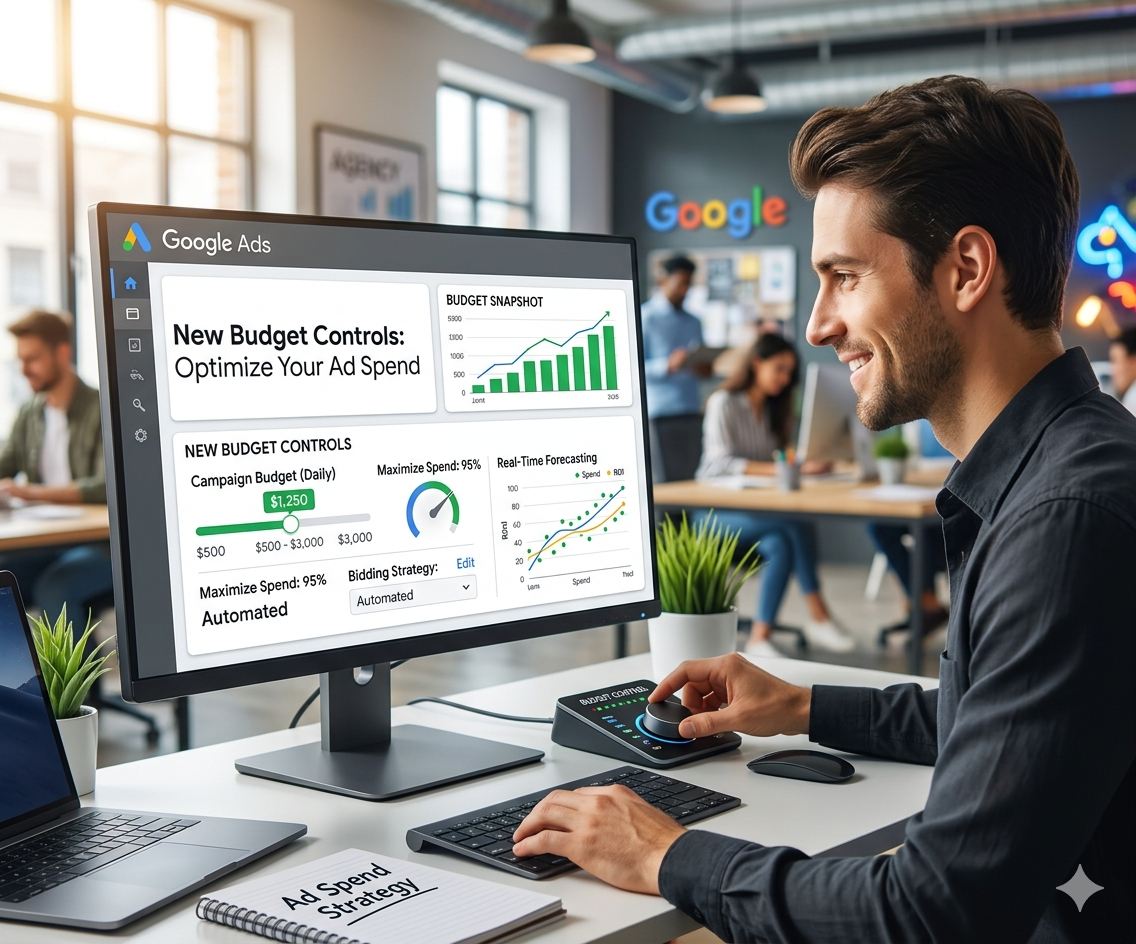
Google Ads is introducing a new set of budget pacing and bidding controls that could reshape how advertisers manage campaign spending and optimize performance. The latest update focuses heavily on AI-driven automation, allowing campaigns to adjust spending patterns based on predicted demand and customer behavior. With features like Journey-Aware Bidding and improved pacing systems, Google is continuing its push toward smarter advertising automation for businesses of all sizes.
Google Ads Introduces Smarter Budget Pacing
One of the biggest changes in this update is Google’s new demand-led budget pacing system. Traditionally, advertisers expected campaign budgets to spend somewhat evenly across days or weeks. With the new system, Google Ads can now increase spending during periods when it predicts stronger conversion opportunities and reduce spending when demand appears lower. The idea behind this approach is to help advertisers capture more valuable traffic at the right time rather than distributing budgets uniformly.
Google says campaigns will still respect monthly budget limits, but daily spending patterns may become less predictable. This means advertisers could notice sudden increases in spending during peak search activity or high-intent customer periods. For businesses running seasonal promotions or time-sensitive campaigns, the feature may improve conversion efficiency by allocating budgets more aggressively during important buying moments.
Google Ads has introduced smarter budget pacing features designed to help advertisers manage campaign spending more efficiently and improve ad performance across multiple campaigns. These new controls provide better flexibility, real-time budget adjustments, and enhanced spending insights, allowing businesses to optimize their advertising strategies with greater accuracy. As digital advertising continues to evolve, professionals looking to stay competitive can benefit from enrolling in a digital marketing course to learn advanced Google Ads strategies, campaign optimization techniques, and budget management best practices for successful online marketing campaigns.
Journey-Aware Bidding Focuses on the Entire Customer Journey
Another major announcement is the introduction of Journey-Aware Bidding, a feature designed to help advertisers optimize campaigns based on the full customer journey instead of relying only on front-end conversions. In many industries, especially B2B and high-value service sectors, users often take days or even weeks before completing a purchase or becoming a qualified customer. Traditional conversion tracking sometimes struggles to understand the true value of these leads.
With Journey-Aware Bidding, Google Ads can use additional signals such as CRM data, offline conversions, pipeline activity, and revenue outcomes to make smarter bidding decisions. This allows the system to prioritize higher-quality leads rather than simply generating more form submissions or clicks. Advertisers who already use offline conversion imports may benefit the most from this update because Google’s AI will have more customer data available for optimization.
Automation Continues To Expand Inside Google Ads
Google’s latest update also highlights the company’s ongoing focus on automation and machine learning. Smart Bidding systems are becoming more advanced as Google gives its algorithms greater flexibility to explore new audience segments, search behavior patterns, and conversion opportunities. The company believes these automation tools can help advertisers discover valuable traffic that manual bidding strategies might overlook.
For many advertisers, this could improve campaign performance and reduce the amount of time spent manually adjusting bids and budgets. However, it also means marketers may have less direct control over how campaigns spend money on a daily basis. Businesses that depend heavily on strict budget management or manual optimization strategies may need time to adapt to these new automated systems.
Some Advertisers Are Concerned About Reduced Control
Although Google promotes these updates as performance improvements, not every advertiser is fully convinced. Some PPC professionals have expressed concerns about transparency and campaign control as automation becomes more dominant. Budget pacing systems that automatically increase spending during predicted high-demand periods could create challenges for advertisers trying to maintain stable daily costs.
There are also concerns that AI-driven bidding systems may become difficult to audit or fully understand. When campaigns rely heavily on automated decision-making, advertisers often need stronger tracking setups and cleaner account structures to ensure the system is learning from accurate conversion data. Without reliable tracking, automated bidding may optimize toward the wrong outcomes and lead to inefficient ad spend.
Advertisers Need Better Data Than Ever Before
The success of these new Google Ads features will largely depend on the quality of data advertisers provide to the platform. Businesses with strong conversion tracking, CRM integrations, and offline sales reporting are more likely to benefit from Journey-Aware Bidding and advanced pacing controls. Google’s automation systems perform best when they have detailed customer signals that accurately reflect real business outcomes.
This means advertisers may need to focus more on data quality, lead tracking, and attribution models moving forward. Companies that continue relying only on basic click or form submission tracking could struggle to fully benefit from the platform’s newer AI capabilities.
Conclusion
Google Ads is clearly entering a new phase where automation and AI-driven optimization play a central role in campaign management. The new budget pacing controls and Journey-Aware Bidding features are designed to help advertisers improve efficiency, identify higher-quality customers, and maximize conversions across the entire customer journey.
While these updates may create concerns about reduced manual control, they also offer opportunities for businesses willing to invest in stronger data tracking and smarter campaign structures. As Google Ads continues evolving, advertisers who adapt to automation while maintaining clear performance monitoring will likely see the greatest long-term benefits.