
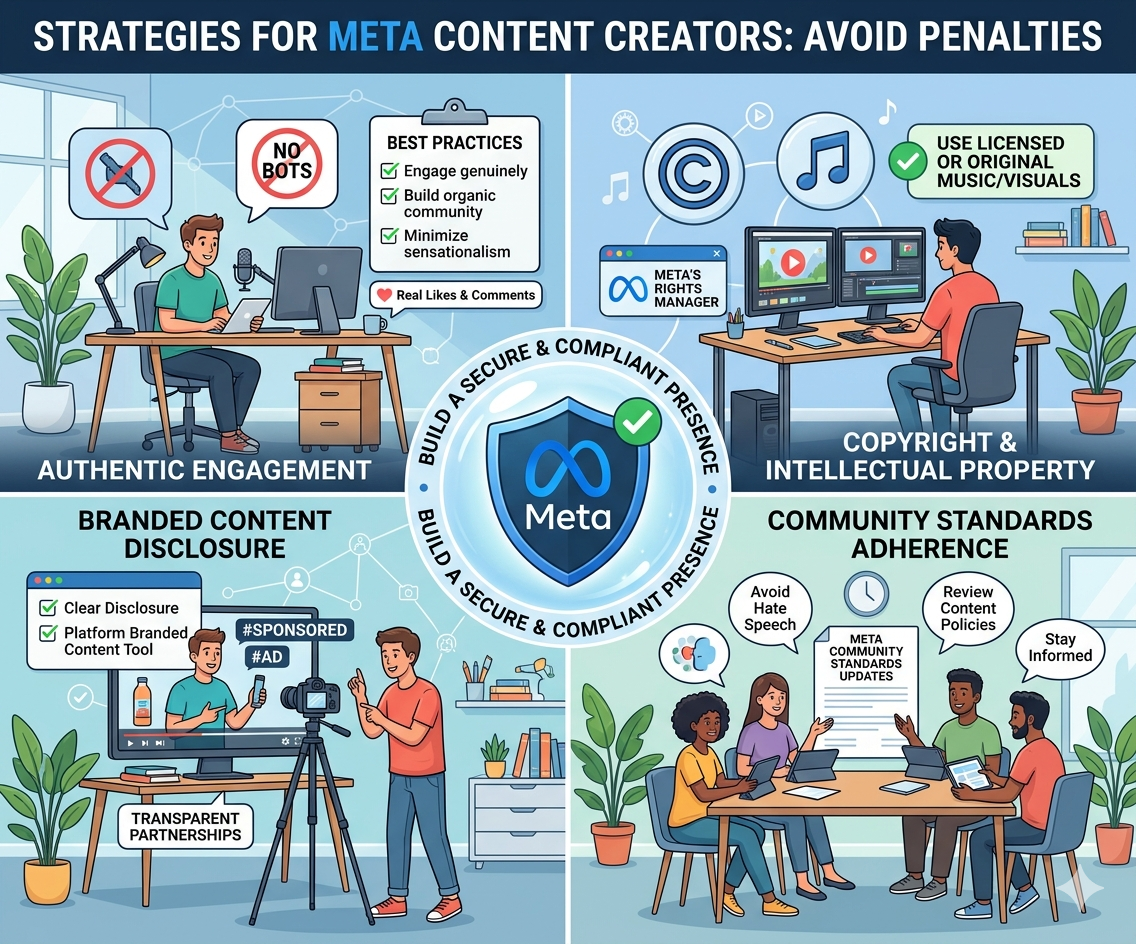
As Meta Platforms places greater emphasis on authentic, high-value content, creators must adapt to evolving platform standards. The updated Meta Unoriginal Content Policy is designed to reduce copied, repetitive, and low value content while rewarding originality. For creators who rely on reach and monetization, understanding these changes is essential.
Developing these skills through a digital marketing course can help creators stay informed about platform policies, algorithm updates, and monetization strategies. The purpose of Meta’s updated policy is to support original creators and improve user experience by limiting spam like reposting. Accounts that repeatedly share duplicate or minimally altered content may face reduced reach, lower engagement, or even monetization restrictions. This makes understanding how to avoid meta content penalties a crucial part of modern content creation
Understanding Meta Unoriginal Content Policy
The Meta Unoriginal Content Policy targets content that is copied, reused without meaningful transformation, or provides little original value. This may include reposted videos without edits or commentary, duplicated reels, recycled clips, or content with minimal modifications that offers no new perspective or audience value.
However, repurposing content is not automatically prohibited. Creators can still reuse formats or ideas if they add value through storytelling, expert insights, tutorials, creative editing, reactions, or commentary. The focus is on originality and user value. Learning these principles through a digital marketing course can help creators produce compliant content while improving performance.
Creators who ignore the policy may experience lower visibility, reduced recommendations, engagement drops, or restrictions under Meta’s creator monetization rules.
How to Avoid Meta Content Penalties
Creating original content is one of the most effective ways to align with Meta’s original content guidelines. Producing your own videos, graphics, and ideas helps build credibility, improve engagement, and reduce compliance risks.
If you repurpose content, it should be transformed in a meaningful way. Adding commentary, educational context, fresh perspectives, reactions, or creative edits can make reused content valuable rather than repetitive. Simply reposting content without adding something new may trigger penalties.
Creators should also avoid duplicate uploads and watermarked content. Repeatedly posting the same assets or uploading content with third-party platform watermarks can reduce reach, while platform-native content often performs better and supports compliance.
Understanding Meta creator monetization rules is equally important for protecting revenue opportunities. Reviewing eligibility standards regularly and avoiding practices that could lead to demonetization or restricted access to monetization tools can help creators maintain income and account health.
Using only licensed or owned content is another essential practice. Publishing content without proper rights can create copyright issues, which combined with originality concerns may increase the risk of penalties.
Following Original Content Guidelines for Meta
Meta favors content that demonstrates creativity, ownership, consistency, and audience value. Creators should focus on sharing original ideas and storytelling, using their own visuals, voice, or editing style, and adding insight instead of reposting unchanged content. Content tailored specifically for the platform often performs better and aligns more closely with Meta’s expectations.
Maintaining quality and consistency over time can improve engagement and support long-term growth. Original content is no longer only a creative advantage but also a compliance requirement.
Why This Matters for Long-Term Growth
Meta’s updated creator monetization rules show that originality is increasingly connected to both reach and earnings. Creators who understand how to avoid meta content penalties can protect their accounts, maintain visibility, improve audience trust, and preserve monetization opportunities.
Following the Meta Unoriginal Content Policy is not only about avoiding restrictions. It is about building a sustainable content strategy that supports long-term growth. A professional digital marketing course can help creators stay ahead of policy changes and strengthen future success.
Conclusion
As Meta Platforms continues prioritizing authentic content, creators should make originality a core strategy. By following the Meta Unoriginal Content Policy, understanding Meta creator monetization rules, applying original content guidelines for meta, and learning how to avoid meta content penalties, creators can protect both visibility and revenue.
Creators who prioritize originality, compliance, and audience value will be in a stronger position to grow sustainably in an evolving creator landscape.