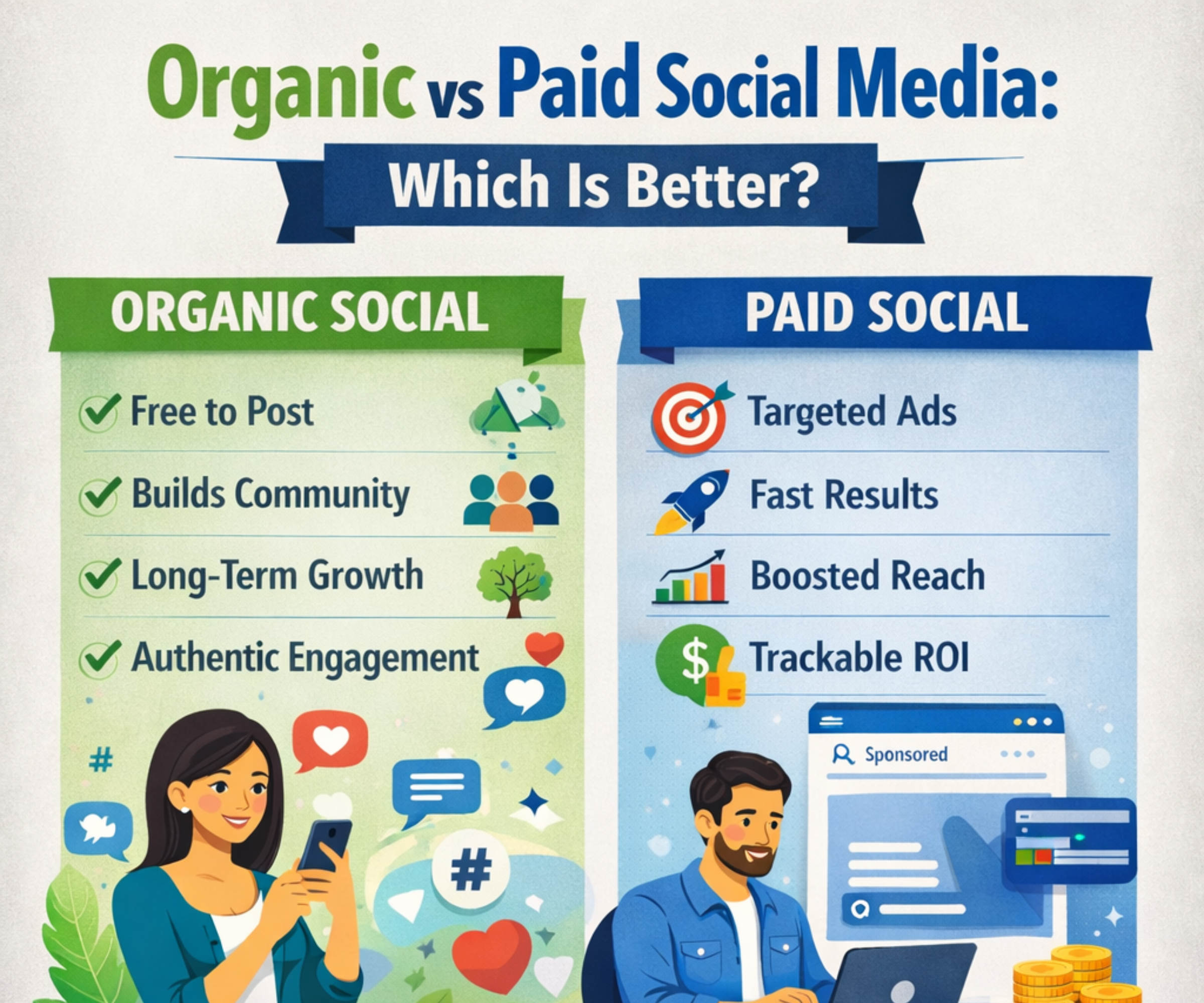
Organic vs Paid Social Media: Which Is Better?
Organic vs Paid Social Media is one of the most debated topics in digital marketing today. Businesses constantly wonder whether they should focus on building engagement naturally or invest in paid advertising to accelerate results. The truth is that both strategies offer distinct advantages and limitations. Choosing the right approach depends on your business goals, budget, target audience, and timeline. In this guide, we break down both methods in detail to help you determine what works best for your brand.
What Is Organic Social Media?
Organic social media refers to content shared on social platforms without paying for distribution or boosted visibility. These posts appear naturally in the feeds of followers and may reach additional users through shares and algorithmic discovery. Platforms like Instagram, Facebook, LinkedIn, and TikTok allow brands to build visibility without direct advertising spend.
Organic strategy focuses on relationship building, authentic engagement, and long-term brand presence.
Types of Organic Content
Organic social content includes:
- Standard feed posts
- Stories and interactive polls
- Reels and short-form videos
- Community discussions and comment engagement
- User-generated content (UGC)
This content builds emotional connections and strengthens brand identity.
Organic Social Media: Pros and Cons
Advantages of Organic Social Media
Organic vs Paid Social Media comparisons often highlight cost as a major benefit of organic marketing. It does not require direct ad spend, making it ideal for startups and small businesses.
Other benefits include:
- Authentic brand voice
- Strong community engagement
- Long-term brand loyalty
- Sustainable online presence
Organic content builds trust over time and creates long-lasting brand equity.
Disadvantages of Organic Social Media
However, organic growth has limitations:
- Slower results
- Reduced reach due to algorithm changes
- Requires consistent time and effort
While powerful for relationship-building, organic marketing alone may not deliver quick traffic or conversions.
What Is Paid Social Media?
Paid social media involves paying platforms to distribute your content to targeted audiences beyond your followers. Paid campaigns use advanced targeting based on demographics, interests, behaviors, and location.
Advertising tools on platforms such as Meta (Facebook & Instagram), TikTok, and LinkedIn help businesses reach specific audience segments with precision.
Paid social is commonly used for lead generation, product launches, traffic campaigns, and promotions.
Paid Social Media: Pros and Cons
Advantages of Paid Social Media
When discussing Organic vs Paid Social Media, paid strategies stand out for speed and scale.
Key benefits include:
- Immediate visibility
- Advanced audience targeting
- Faster conversions
- Detailed performance tracking
- Clear ROI measurement
Paid ads allow businesses to bypass algorithm restrictions and reach high-intent users quickly.
Disadvantages of Paid Social Media
Despite its strengths, paid marketing has drawbacks:
- Requires ongoing budget
- Visibility stops when spending stops
- Can feel less authentic to users
Without strong messaging and branding, paid campaigns may struggle to build long-term loyalty.
Organic vs Paid Social Media: Side-by-Side Comparison
Organic vs Paid Social Media differs across several critical factors:
| Factor | Organic Social | Paid Social |
|---|---|---|
| Cost | Free (time investment) | Requires ad budget |
| Reach | Limited to followers & shares | Broad & highly targeted |
| Speed | Slow growth | Immediate results |
| Targeting | Algorithm-based | Highly specific |
| Measurement | Basic engagement metrics | Advanced analytics & ROI |
| Longevity | Long-lasting presence | Ends when budget stops |
This comparison shows that each strategy serves a unique role in marketing.
When to Use Organic Social Media
Organic vs Paid Social Media decisions depend on goals. Organic marketing works best for:
- Building brand awareness
- Developing audience trust
- Creating community engagement
- Establishing brand personality
If your focus is long-term credibility and sustainable growth, organic is essential.
When to Use Paid Social Media
Organic vs Paid Social Media also reveals that paid campaigns are ideal for:
- Fast traffic generation
- Lead generation campaigns
- Product launches
- Event promotions
- Sales-driven campaigns
Paid advertising is performance-focused and designed to produce quick, measurable outcomes.
Using Organic and Paid Social Media Together
Organic vs Paid Social Media should not be viewed as competitors. The most effective digital marketing strategies combine both approaches.
For example:
- Test content organically before boosting it
- Use organic insights to improve paid targeting
- Run paid ads for visibility while nurturing trust organically
A hybrid approach allows brands to benefit from both relationship-building and scalable reach.
Final Verdict
Organic vs Paid Social Media does not have a universal winner. Organic builds trust, loyalty, and long-term engagement, while paid delivers speed, scale, and measurable results. The best strategy depends on your business goals, resources, and timeline.
If you’re just starting out with limited budget, focus on organic growth. If you need rapid visibility and conversions, invest in paid campaigns. The smartest marketers integrate both strategies for sustainable success.
Conclusion
Organic vs Paid Social Media is not about choosing one over the other — it’s about understanding how each supports your overall digital marketing strategy. Organic social builds the foundation of authenticity and community, while paid social accelerates reach and drives conversions. Together, they create a balanced and powerful marketing ecosystem.
For professionals looking to master both strategies and build a successful career in digital marketing, institutions like NIDM (National Institute of Digital Marketing) provide structured training and practical insights to stay ahead in the competitive marketing landscape.
FAQs
1. Is Organic vs Paid Social Media better for all businesses?
It depends on your goals. Organic is ideal for long-term trust, while paid works best for immediate visibility and conversions.
2. Can small businesses succeed without paid ads?
Yes, with consistent organic content. However, paid ads can accelerate growth.
3. Does paid social always guarantee ROI?
No. Paid campaigns must be optimized and targeted properly to generate strong returns.
4. Should I boost organic posts?
Boosting high-performing organic posts can be a cost-effective entry into paid advertising.
5. Is organic social media declining?
Organic reach has reduced over time due to algorithms, but it remains crucial for brand trust and engagement.