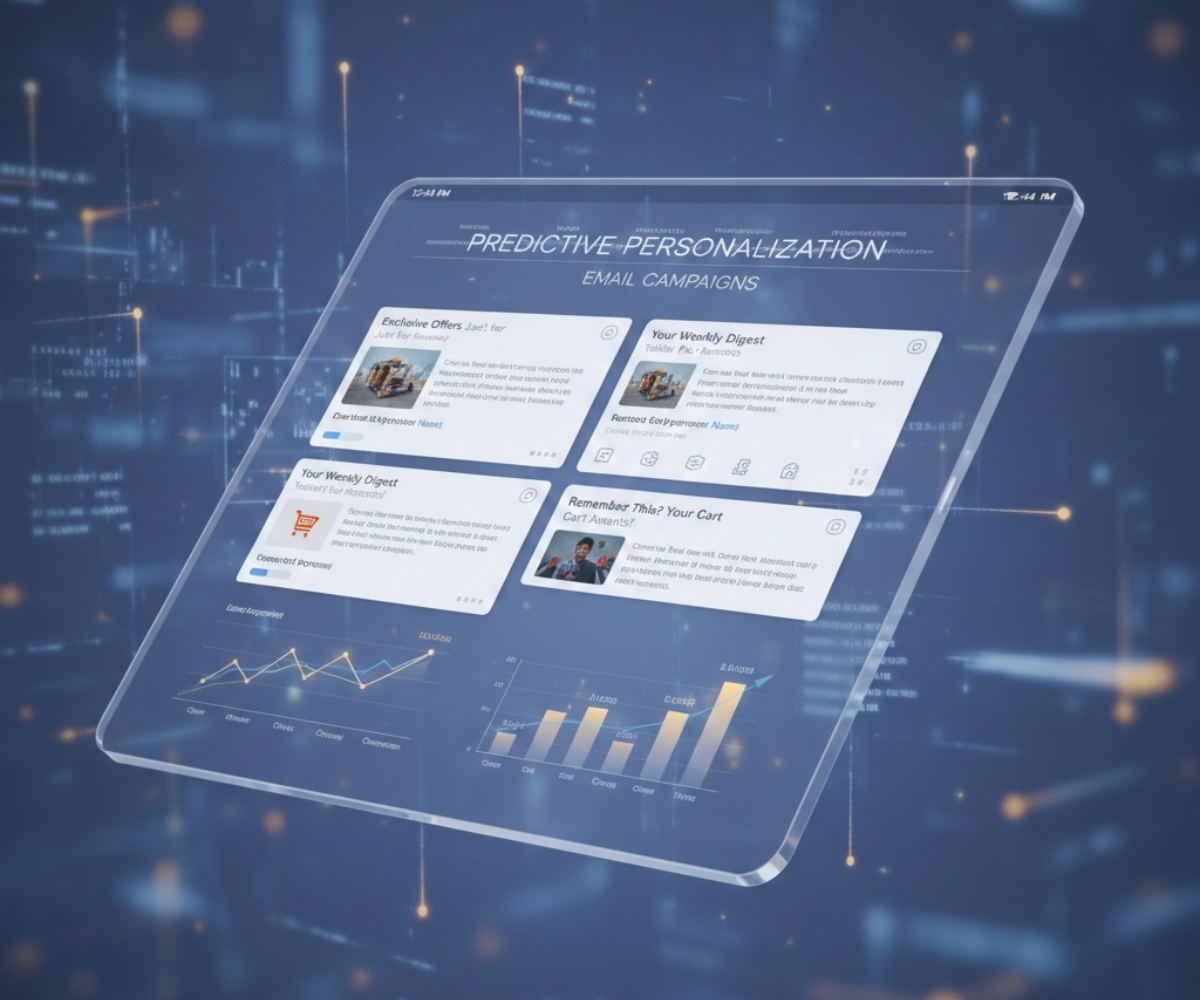
Predictive Personalization in Email Campaigns
Predictive personalization in email campaigns is transforming the way brands communicate with their audiences—turning generic inbox noise into meaningful, timely, and highly relevant conversations. Instead of guessing what subscribers might want, predictive personalization uses data, AI, and behavioral insights to anticipate needs before users even realize them.
Think of it as a digital mind reader—powered by algorithms instead of magic.
Email marketing has always been about relevance. But in 2026 and beyond, relevance without prediction is like driving while looking only in the rear-view mirror. In this guide, we’ll explore how predictive personalization works, why it matters, and how you can use it to create email campaigns that feel tailor-made for every subscriber.
Introduction to Predictive Personalization
Personalization isn’t new. Using a subscriber’s first name in a subject line has been standard practice for years. But today’s audiences expect far more. They want brands to understand their preferences, intent, and timing.
Predictive personalization goes beyond basic customization by analyzing historical data and real-time behavior to forecast future actions. Instead of reacting to user behavior, your emails start acting proactively—and that’s the real game changer.
Why Traditional Email Personalization Is No Longer Enough
Traditional personalization relies on static data such as name, location, age, or past purchases. While useful, this approach has clear limitations:
- It doesn’t adapt quickly
- It doesn’t learn continuously
- It often misses real-time intent
For example, recommending a winter jacket to someone who just bought one yesterday feels out of touch. Predictive personalization avoids these mistakes by recognizing patterns and probabilities, making emails smarter with every interaction.
What Is Predictive Personalization in Email Campaigns?
Predictive personalization in email campaigns uses predictive analytics, artificial intelligence, and machine learning to determine:
- What content a subscriber is most likely to engage with
- When they are most likely to open an email
- Which offer or product will drive conversion
By combining past behavior with real-time signals, predictive models continuously refine their predictions—delivering hyper-relevant messaging at scale.
How Predictive Analytics Powers Email Marketing
Predictive analytics analyzes historical data such as:
- Email opens and clicks
- Website visits and browsing behavior
- Purchase history
- Engagement frequency
These data points help identify behavioral patterns and forecast future actions at an individual level. Instead of placing users into broad segments, predictive models assign unique likelihood scores to each subscriber.
The Role of Artificial Intelligence and Machine Learning
AI and machine learning are the engines behind predictive email personalization. They process massive datasets faster than humans ever could, learning from outcomes and improving predictions over time.
The more campaigns you run and interactions you track, the smarter the system becomes—essentially training a personalized marketing assistant for every subscriber.
Customer Data: The Fuel Behind Prediction Models
Predictive personalization is only as strong as the data behind it. Key data types include:
- Behavioral data: clicks, page views, time spent
- Transactional data: purchases, renewals, upgrades
- Engagement data: opens, inactivity, unsubscribe signals
- Contextual data: device type, location, time of interaction
Clean, rich, and well-organized data leads to more accurate predictions.
Behavioral vs. Demographic Personalization
Demographics explain who your customer is. Behavior reveals what they want right now.
Predictive personalization prioritizes behavior because actions speak louder than attributes. Two users of different ages may behave identically—and predictive systems recognize and personalize for that reality.
Key Benefits of Predictive Personalization in Email Campaigns
Predictive personalization isn’t just a buzzword—it delivers measurable results.
Improved Customer Experience
Emails feel helpful rather than intrusive when they arrive at the right moment with relevant content. This turns email marketing into relationship marketing.
Higher Open and Click-Through Rates
Predictive subject lines, content selection, and send-time optimization naturally increase engagement.
Increased Conversions and Revenue
By targeting users when intent is highest, predictive personalization boosts conversions without increasing email volume.
Better Retention and Loyalty
Predictive models identify churn risk early, allowing brands to re-engage customers before they disengage completely.
Core Elements of Predictive Email Personalization
Predictive Segmentation
Dynamic segmentation based on likelihood scores—such as purchase probability or churn risk—replaces static lists.
Send-Time Optimization
Emails are delivered when each subscriber is most likely to open, not when it’s convenient for marketers.
Predictive Content Recommendations
Like streaming platforms suggesting your next show, predictive engines recommend products or content users are most likely to engage with.
Dynamic Subject Lines and CTAs
Subject lines and calls-to-action adjust automatically based on predicted user behavior, creating thousands of variations from one campaign.
Real-Time Data Triggers
Actions such as browsing, cart abandonment, or feature usage immediately update predictive models to maintain relevance.
Lifecycle-Based Predictions
Messages adapt based on where users are in their journey—from onboarding to retention or reactivation.
Use Cases of Predictive Personalization in Email Campaigns
Ecommerce
- Product recommendations
- Replenishment reminders
- Personalized discounts
B2B Marketing
- Sales-ready lead identification
- Intent-based content delivery
- Smarter lead nurturing
SaaS and Subscription Businesses
-
Churn prediction
-
Upsell and cross-sell opportunities
-
Feature adoption emails
Predictive Personalization Tools and Platforms
You don’t need to build predictive systems from scratch. Modern platforms offer:
- AI-powered email marketing tools
- CRM and CDP integrations for unified data
- Marketing automation platforms to turn predictions into action
Best Practices for Implementing Predictive Personalization
- Maintain strong data hygiene and accuracy
- Continuously test, learn, and optimize
- Respect privacy, consent, and compliance requirements
- Balance automation with human oversight
Common Mistakes to Avoid
- Over-automation without validation
- Ignoring data quality issues
- Blindly trusting predictions without context
Predictive personalization works best when combined with strategic thinking.
The Future of Predictive Personalization in Email Campaigns
As AI advances, predictive personalization will become more human-like—adapting in real time, understanding emotional context, and integrating seamlessly across channels.
The inbox isn’t dying. It’s getting smarter.
Conclusion
Predictive personalization in email campaigns is no longer optional—it’s a competitive advantage. By combining data, AI, and a customer-centric strategy, brands can send fewer emails that deliver stronger results.
At NIDM (National Institute of Digital Marketing), we emphasize using intelligent, data-driven personalization to help marketers move beyond mass messaging and build meaningful customer relationships.
The future of email marketing isn’t about sending more messages.
It’s about sending the right message, to the right person, at the right time.
FAQs
1. What is predictive personalization in email campaigns?
It uses AI and predictive analytics to anticipate subscriber behavior and personalize email content, timing, and offers.
2. How does predictive personalization improve ROI?
By increasing relevance, engagement, and conversion rates per email sent.
3. Is predictive email marketing suitable for small businesses?
Yes. Many platforms now offer scalable, affordable predictive features.
4. What data is required for predictive personalization?
Behavioral, transactional, and engagement data are most important.
5. Does predictive personalization replace traditional segmentation?
No. It enhances segmentation by making it dynamic and continuously evolving.