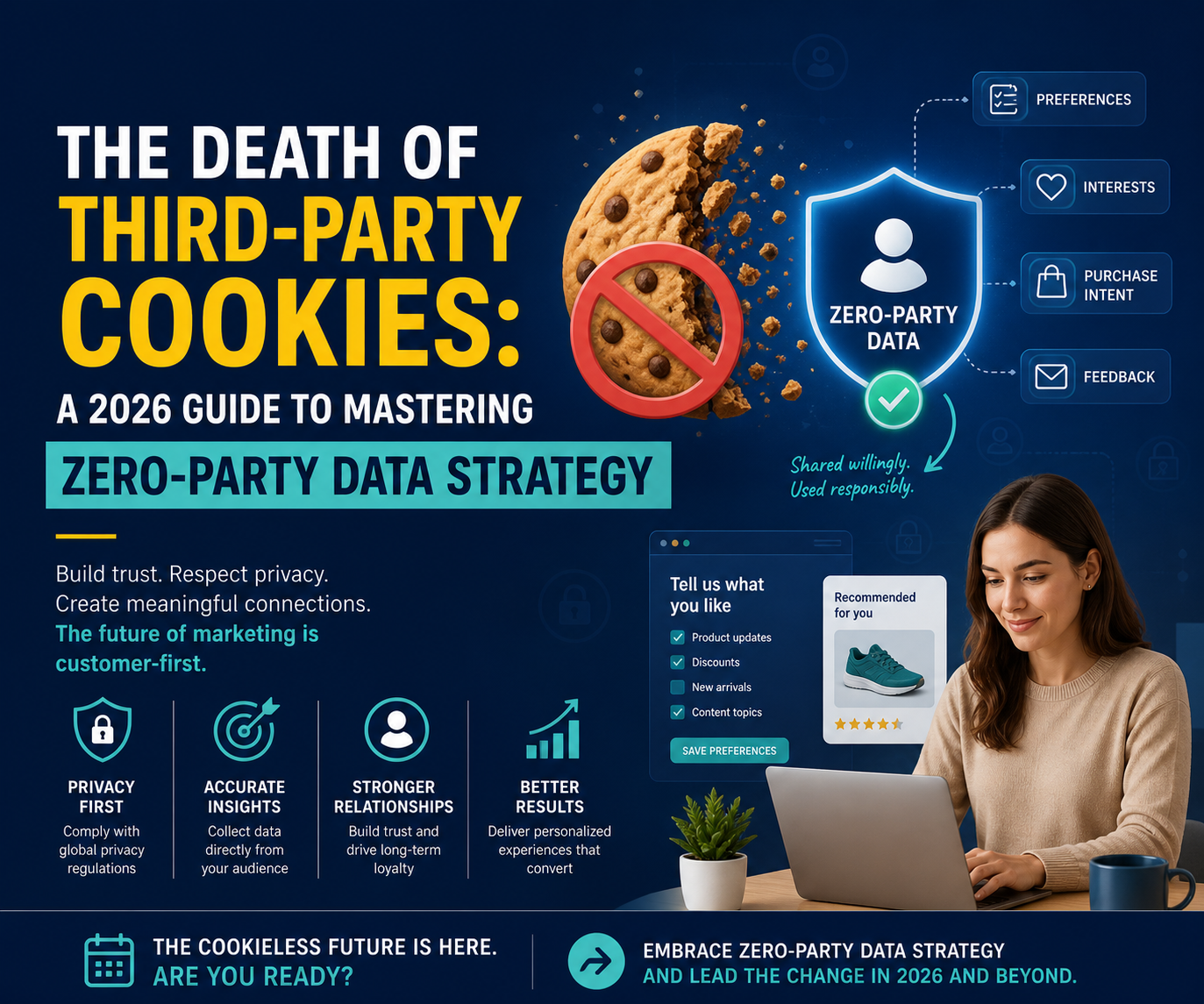
Third-party cookies are disappearing in 2026, making a zero-party data strategy essential for modern marketers. Many browsers have already blocked tracking systems. As a result, traditional targeting methods no longer perform well. Therefore, businesses must rethink how they collect and use data.
Consumers also expect stronger privacy. They want control over their personal information. Consequently, brands must focus on transparency and trust. This shift pushes marketers toward ethical data practices.
What Is Zero-Party Data Strategy?
A zero-party data strategy focuses on data that customers share willingly. Users provide this information through direct interactions. For example, they answer surveys or set preferences.
Moreover, this data is highly reliable. It reflects real customer needs and interests. Therefore, marketers can create accurate and relevant campaigns. This approach improves both user experience and results.
Why Zero-Party Data Strategy Matters in 2026
Privacy laws are becoming stricter worldwide. At the same time, users are more aware of data misuse. Because of this, businesses must adopt a zero-party data strategy.
It ensures compliance with regulations. It also builds trust with customers. Furthermore, it allows better targeting without violating privacy. As a result, marketing becomes both effective and ethical.
Key Benefits
Benefits of Zero-Party Data Strategy for Businesses
Customers provide information directly, so there is less guesswork. As a result, campaigns become more precise.
It also enhances personalization. Brands can deliver content based on real preferences. Therefore, engagement rates increase significantly.
Additionally, it builds stronger relationships. Users feel valued when brands respect their choices. Consequently, loyalty grows over time.
Finally, it reduces reliance on third-party tools. Businesses gain full control over their data. This creates long-term stability.
How to Collect Zero-Party Data Effectively
Brands must use smart techniques to collect data. First, interactive content works well. Quizzes and polls encourage participation. Therefore, users share insights naturally.
Next, keep surveys short and clear. Long forms reduce completion rates. However, simple questions improve responses.
Moreover, offer value in exchange. Discounts or exclusive content attract users. At the same time, ensure transparency in data usage.
Preference centers also help. Users can choose what they want to share. This builds trust and improves data quality.
Creating Personalized Experiences
Businesses can tailor emails based on user interests. As a result, open rates increase.
Websites can also adapt content dynamically. Product recommendations become more relevant. Therefore, users enjoy better experiences.
Additionally, personalized messaging improves conversions. Customers feel understood and appreciated. Consequently, retention rates grow.
Building Trust Through Transparency
Transparency plays a key role in modern marketing. Brands must explain how they use data. Clear communication builds confidence.
Moreover, give users control over their information. Allow them to update preferences anytime. This empowers customers and strengthens trust.
Use simple language in privacy policies. Avoid complex terms that confuse users. Therefore, communication becomes more effective.
Trust leads to long-term relationships. As a result, customers remain loyal to your brand.
Tools Supporting Zero-Party Data Strategy
Customer data platforms organize and manage user information.
Marketing automation tools improve personalization. They deliver targeted messages based on user input. Therefore, campaigns perform better.
Interactive tools also support data collection. Forms, quizzes, and chatbots gather insights easily. This makes the process smooth and effective.
Challenges in Adopting
Many businesses depend on third-party systems. Therefore, change takes time.
User engagement is another challenge. Not all customers share information easily. However, strong value propositions can solve this issue.
Data accuracy must also be maintained. Incorrect inputs can affect results. Therefore, validation processes are important.
Despite these challenges, the benefits are clear. Businesses must adapt to stay competitive.
Future of Marketing with Zero-Party Data Strategy
A strategy that defines the future of digital marketing. Privacy-first approaches will dominate the industry. Therefore, businesses must act quickly.
Personalization will continue to grow. However, it will depend on user consent. This ensures ethical marketing practices.
Brands will also focus on relationships. Data collection will become more transparent and user-driven. As a result, trust will increase.
Conclusion
The end of third-party cookies marks a major shift. A zero-party data strategy offers a reliable solution. It improves accuracy, builds trust, and ensures compliance.
Businesses must adopt this approach now. They should focus on user-driven data collection. Therefore, they can succeed in 2026 and beyond.
Take the next step in mastering a zero-party data strategy with National Institute of Digital Marketing. Gain hands-on experience in privacy-first marketing and real-world digital skills. Enroll today and future-proof your career in the evolving digital landscape.