Influencer Marketing and Ads: A Complete Guide for the Digital Era
Introduction: Influencer Marketing in the Digital Era
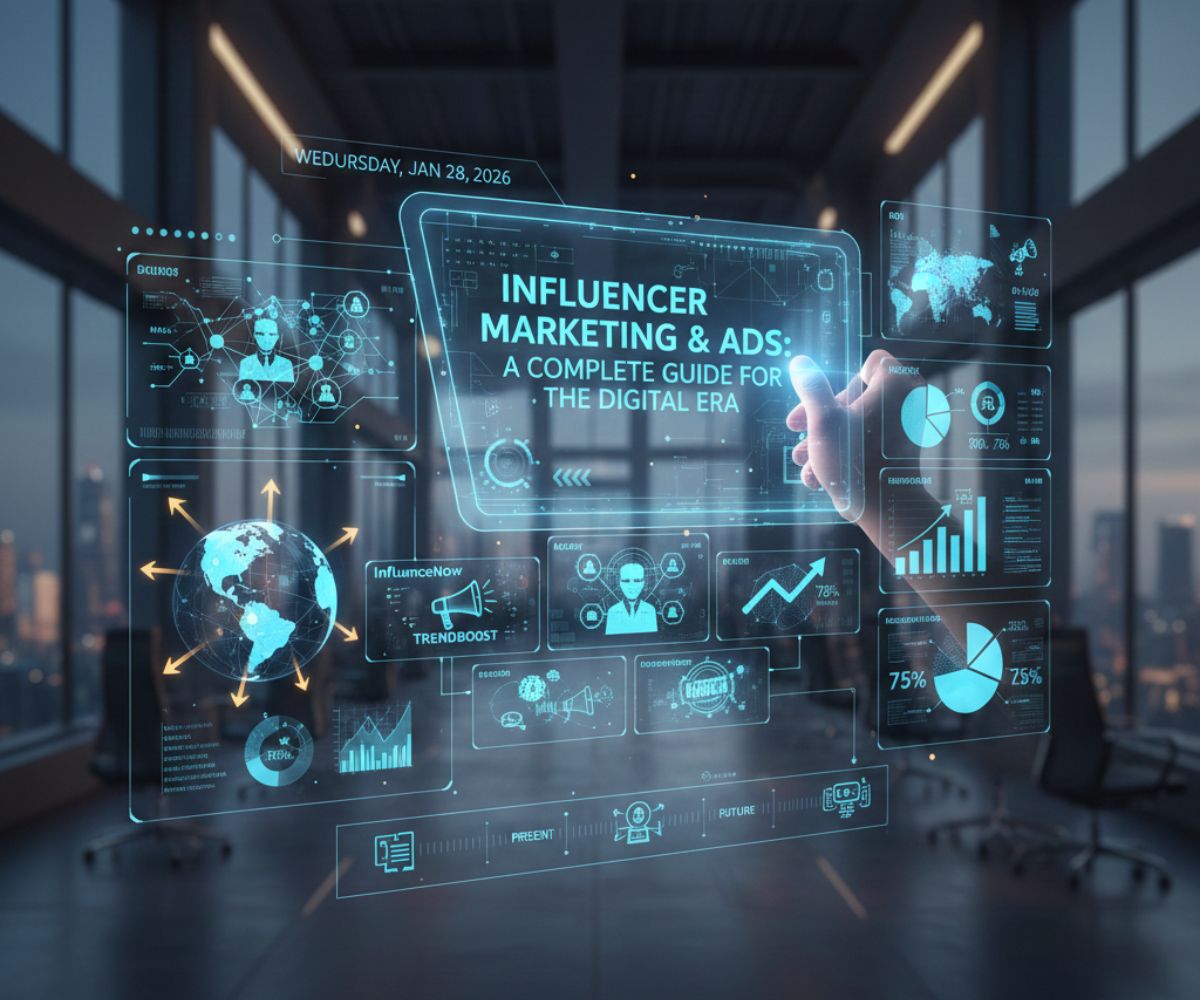
Influencer marketing and ads have become a cornerstone of modern digital promotion. In today’s crowded online space, brands no longer rely solely on traditional advertising methods. Instead, they collaborate with trusted content creators to build credibility, spark conversations, and drive conversions.
These creator-led campaigns blend authenticity with reach, allowing brands to connect with audiences in a more human and relatable way. As consumer trust shifts away from direct brand messaging, influencer-driven promotions continue to outperform many classic advertising formats.
What Is Influencer Marketing and Ads?
Influencer marketing and ads refer to partnerships between brands and individuals who have a loyal and engaged audience on digital platforms. These creators promote products or services through sponsored posts, videos, stories, reviews, or live content.
Unlike traditional advertising, influencer promotions rely on trust and personal connection rather than direct selling, making branded messages feel more natural and credible.
Evolution of Influencer Marketing
Influencer marketing initially began with celebrity endorsements in television and print advertising. With the rise of social media, influence became democratized, allowing everyday creators to build strong niche communities.
Today, micro and nano creators often deliver higher engagement rates than celebrities, proving that audience trust matters more than follower count.
Influencer Campaigns vs. Traditional Ads
Traditional advertisements often interrupt content, while influencer-led campaigns integrate seamlessly into users’ feeds. This organic placement makes promotions feel less intrusive and more engaging, resulting in stronger audience interaction and brand recall.
Why Influencer Marketing and Ads Matter Today
Influencer marketing and ads are more important than ever because modern consumers value authenticity and transparency.
Consumer Trust and Authenticity
Content creators build long-term relationships with their followers. When they recommend a product, it feels like advice from a trusted friend rather than a sales pitch.
Social Proof and Community Impact
Seeing real people use and recommend a product creates powerful social proof. This strengthens brand perception, increases confidence, and boosts purchase intent.
Types of Influencer Marketing Campaigns
Influencer marketing and ads come in different forms based on creator size, reach, and engagement.
Nano and Micro Influencers
Nano and micro influencers have smaller but highly engaged audiences. They are cost-effective, authentic, and ideal for niche targeting and community-driven promotions.
Macro and Mega Influencers
Macro influencers offer massive reach and are effective for rapid brand visibility and large-scale awareness campaigns.
Celebrity Influencer Advertising
Celebrity endorsements deliver instant recognition and prestige but often come with higher costs and lower engagement compared to smaller creators.
Platforms Used for Influencer Advertising
Choosing the right platform is crucial for campaign success.
Instagram and Facebook
These platforms are ideal for visual storytelling through reels, stories, and sponsored posts.
YouTube and Long-Form Video
YouTube works best for in-depth reviews, tutorials, unboxings, and narrative-driven creator content.
TikTok and Short-Form Content
TikTok’s short, creative video format drives viral engagement, trend participation, and quick brand recall.
Creating a Winning Influencer Strategy
A well-planned approach ensures influencer marketing and ads deliver measurable and meaningful results.
Goal Setting and KPIs
Clearly define whether your objective is brand awareness, engagement, lead generation, or direct sales.
Budget Planning
Allocate your budget based on creator tier, content format, campaign length, and expected ROI.
Influencer Outreach and Collaboration
Focus on building genuine, long-term relationships with creators rather than one-off promotional deals.
Measuring ROI in Influencer Campaigns
Tracking performance is essential to justify investment and optimize future efforts.
Engagement Metrics
Likes, comments, shares, and saves indicate how well content resonates with the audience.
Conversion and Sales Tracking
Use tracking links, affiliate URLs, and promo codes to measure direct sales and conversions.
Legal and Ethical Considerations
Influencer marketing and ads must follow ethical and legal guidelines to maintain credibility.
Disclosure and Transparency
Sponsored content should always be clearly labeled to comply with advertising regulations and maintain trust.
Brand Safety
Brands should work only with creators whose values, content style, and audience align with their identity.
Future Trends in Influencer Marketing and Ads
The future of influencer marketing and ads continues to evolve alongside technology and consumer behavior.
AI and Virtual Influencers
Brands are experimenting with AI-generated and virtual creators to build scalable, controlled campaigns.
Performance-Based Creator Partnerships
Pay-for-performance models, where compensation is tied to results, are gaining traction.
Frequently Asked Questions (FAQs)
1. What is influencer marketing and ads?
It involves brands partnering with content creators to promote products authentically.
2. Are influencer ads effective for small businesses?
Yes. Smaller brands benefit greatly from micro and nano creators due to high engagement and lower costs.
3. How do I choose the right influencer?
Focus on audience relevance, engagement rate, content quality, and brand alignment.
4. What platforms work best for creator marketing?
Instagram, YouTube, and TikTok are currently the most effective platforms.
5. How much should I budget for influencer ads?
Budgets vary depending on creator size, platform, and campaign goals.
6. Is influencer marketing ethical?
Yes, when transparency and disclosure guidelines are followed.
Conclusion
Influencer marketing and ads have reshaped how brands connect with consumers. By prioritizing authenticity, trust, and measurable outcomes, businesses can achieve sustainable growth in the digital landscape.
Institutions such as the National Institute of Digital Marketing (NIDM) emphasize creator-led strategies as a core skill for modern marketers, reinforcing their long-term relevance in today’s evolving digital ecosystem.