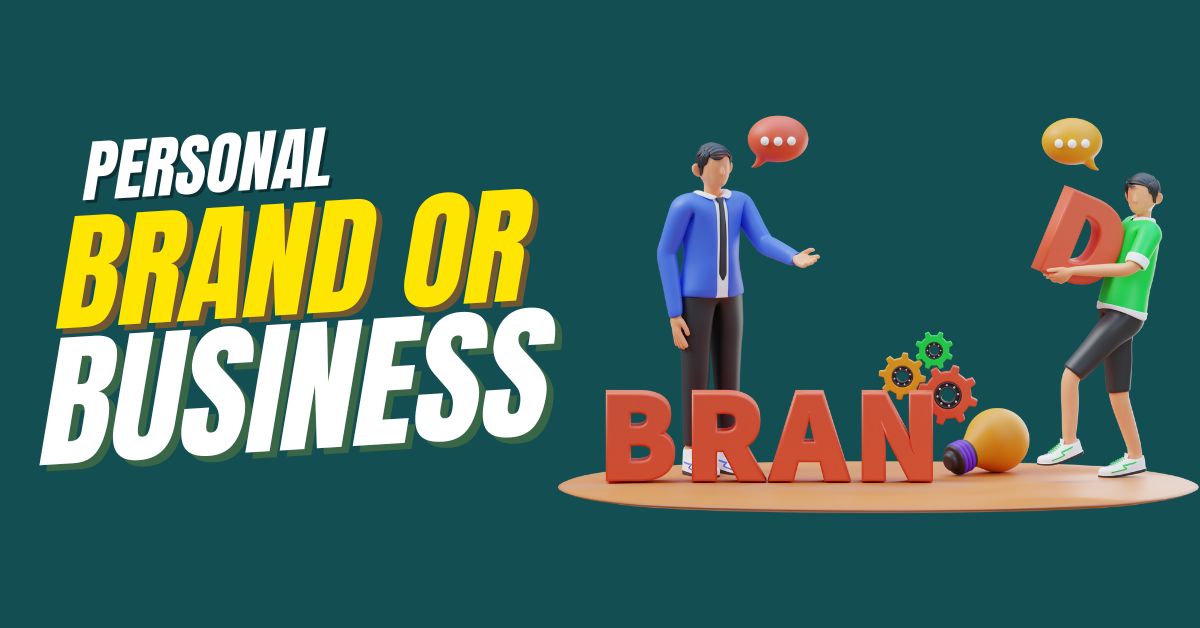
In today’s digital-first world, a brand is your most valuable asset. It’s the promise you make, the expectation you set, and the identity that makes you memorable. However, the moment one sets out to build a brand, a rather important question comes up: should I invest my time and energy in building a Personal Brand or a Business Brand?
The short answer is that it depends upon your long-term goals entirely.
Let’s break down each into advantages, disadvantages, and best applications.
The Resilience of the Business Brand
A business brand-or corporate brand-is built around a product, service, or company mission, independent from any single individual. Think of major tech companies, consumer goods brands, or global service firms.
Advantages
- Scalability and Succession: A business brand is created to outgrow the founders. Systems, processes, and values are the drivers that enable massive scaling and, finally, succession or sale.
- Perceived Stability: A logo and a company name often suggest more stability and permanence than a single person, which can be quite important for B2B or high-trust services.
- Protection of Privacy: You can run a successful large-scale company without putting your personal life and identity into the spotlight.
- Easier to Sell: A well-documented, self-sustaining business brand is a tangible, highly valued asset that can be sold for significant profit.
Disadvantages
- Slower Trust-Building: It takes more time and money to build an emotional connection with a faceless entity than it does with a person.
- High marketing costs: It often requires extensive advertising and professional creative services to establish an identity amidst the clutter.
- Risk of Mediocrity: Without the strong human voice, the brand can show up as sterile, generic, or have difficulty differentiating in crowded markets.
Ideal for:
- Product-based companies, large agencies, SaaS platforms, e-commerce stores, and businesses with multiple owners or founders.
- Anyone whose goal is to build an asset they can one day sell.
The Power of the Personal Brand
A personal brand represents what you want the world to see about yourself in terms of skills, experience, and personality. Thinking of influential figures, industry experts, and solo entrepreneurs, their name is the brand.
Advantages
- Authenticity and Trust: People connect with people, not logos. A personal brand is inherently authentic, therefore building trust faster and creating a committed community.
- Flexibility and Pivotability: Your business can change-you can launch a new product, service, or company-but your personal brand follows you. When you pivot industries, your audience oftentimes follows you.
- Cost-Effective Marketing: Often, content is at the heart of most personal brands: video, blogs, podcasts, and networking. Your time is the principal investment, reducing reliance on large advertising budgets.
- Attracts Talent & Opportunities: Being known as an expert in your field opens the door to speaking engagements, book deals, partnerships, and high-quality job offers.
Disadvantages
- Scale Limitation: It is difficult to scale a personal brand beyond your direct time and effort. You are the product, and you can only be in one place at one time.
- Lack of Separation: Your success and failures are attributed directly to your name. A public mistake can have severe consequences for your career and reputation.
- Difficult to sell: You can’t sell your personal brand; you can sell a business built atop this brand, but the core asset-you-isn’t transferable.
Ideal for:
- Coaches, consultants, freelancers, authors, speakers, artists, experts of any kind: financial advisors, marketing gurus.
- Any person wanting to become the face of an industry or a company.
The Hybrid Approach: The Smart Middle Ground
Thing is, you actually don’t have to choose. The best and most powerful brands in the world are leveraging the best of both.
The Strategy: Building a “Face” for the Brand
- Lead with the Business Brand: The company’s mission, values, and visual identity should be defined first; this is your foundation for scale.
- Activate the Personal Brand: Have the founders, CEO, or key experts create content and drive the conversation in the public sphere.
They become the human voice and trusted representative of the business brand. This strategy means that the company receives the benefit of the trust and authenticity of the personal brand, but can still scale and sell its business brand. If a founder leaves, the business brand remains strong.