Introduction
Most businesses struggle with brand narrative marketing because they lead with features, specs, and benefits. They talk about what they do but never why it matters to the person reading. The result? Forgettable content that gets scrolled past.
The brands people remember – Apple, Nike, Dove, Airbnb — all have one thing in common. They don’t just sell products. They use brand narrative marketing to connect with people on a human level.
In this post, you’ll learn exactly why brand narrative marketing works, the science behind it, and a practical framework to start using it in your own content today.
What Is Brand Narrative Marketing?
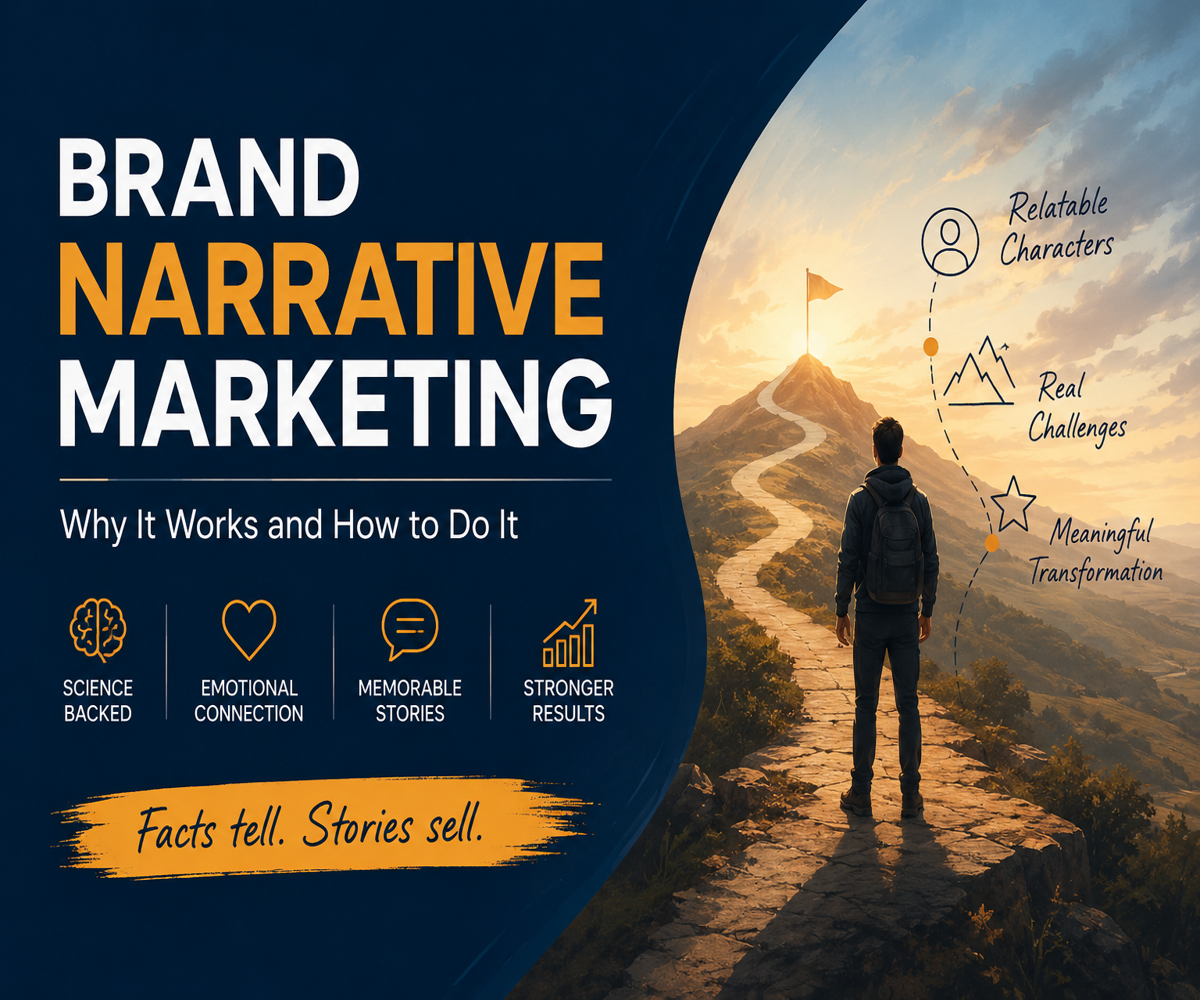
Brand narrative marketing is the practice of using a narrative to connect your brand, product, or message with your audience on an emotional level.
Instead of saying “Our shoes are lightweight and durable,” you tell the story of a runner who trained through injury, setbacks, and doubt — and crossed the finish line anyway. The shoes are still in the picture, but now they mean something.
Good brand narrative marketing has three elements:
- A relatable character (usually your customer, not your brand)
- A conflict or challenge (the problem your product solves)
- A resolution (the transformation your customer experiences)
That’s it. Everything else is decoration.
Why Brand Narrative Marketing Works (The Science)
This isn’t just marketing wisdom – it’s backed by neuroscience.
1. Triggers Neural Coupling
When you read a list of facts, only the language-processing parts of your brain activate. But when you hear a story, your brain lights up as if you’re experiencing the events yourself. This is called neural coupling, and it’s why brand narrative marketing feels so immersive.
2. Appeals to Emotion
Harvard professor Gerald Zaltman found that 95% of purchasing decisions happen subconsciously — driven by emotion, not logic. A well-told brand narrative creates empathy, which builds trust, which drives action.
3.Memorable
Cognitive psychologist Jerome Bruner found that facts wrapped in a story are 22 times more likely to be remembered than facts alone. In a world of infinite content, being remembered is the only metric that matters.
5 Types Every Business Can Use
You don’t need a dramatic origin story or a celebrity endorsement. Here are five brand narrative marketing types that work for any business:
1. The Founder Story
Why did you start this? What problem were you trying to solve? What did you sacrifice or learn? Founder stories build authenticity and trust — especially for new or small brands.
Example: A digital marketing agency that started because the founder’s family business was failing without an online presence.
2. The Customer Transformation Story
Before and after. Problem and solution. This is the most powerful brand narrative marketing format for conversion because it puts the customer at the center, not your product.
Example: A student who had zero knowledge of SEO and landed their first digital marketing job in 6 months.
3. The “Why We Exist” Story
What does your brand stand for beyond profit? This type of brand narrative marketing attracts customers who share your values — and they become your most loyal advocates.
4. The Behind-the-Scenes Story
Show your process, your team, your failures, your learning. Behind-the-scenes brand narrative marketing humanises your business and makes people feel like insiders.
5. The Problem Story
Open your content by telling the story of a common struggle your audience faces. Don’t jump to the solution immediately — let them feel seen first. Then offer the path forward.
The StoryBrand Framework
Donald Miller’s StoryBrand framework is one of the most widely used brand narrative marketing tools in marketing. Here’s the simplified version:
| Story Role | In Brand Narrative Marketing |
|---|---|
| The Hero | Your customer |
| The Problem | What’s frustrating them |
| The Guide | Your brand |
| The Plan | Your product/service |
| The Call to Action | Buy, sign up, book a call |
| Success | Life after your product |
| Failure (stakes) | What happens if they don’t act |
The key insight: your brand is not the hero. Your customer is. Your brand is the guide — think Yoda, not Luke Skywalker.
When you apply this brand narrative marketing framework, your content immediately becomes more relevant and engaging.
Narrative Marketing Across Content Types
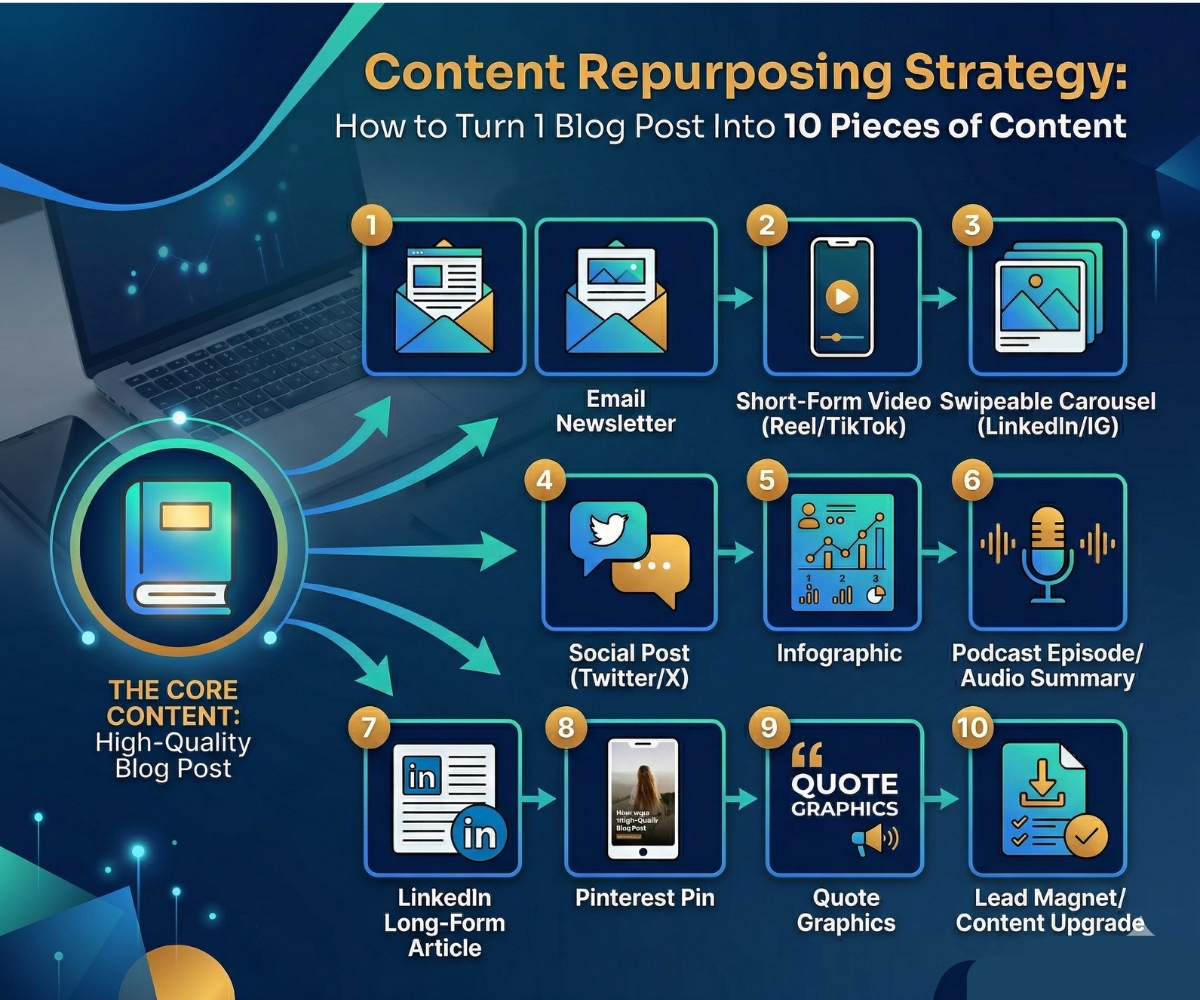
Blog Posts
Start every post with a relatable scenario or mini-story before you get into the “how-to.” Cold openers kill engagement — brand narrative marketing openings pull readers in immediately.
Social Media
Short brand narratives perform exceptionally well on LinkedIn and Instagram. Use the format: situation → struggle → shift → lesson. Four sentences. High impact.
Email Marketing
Story-based emails have higher open and click rates than purely promotional ones. Start with a brand narrative that mirrors your subscriber’s situation, then connect it naturally to your offer.
Video / Reels
Even a 30-second video can use brand narrative marketing. before. turning point. and the after. You don’t need a big budget — you need a clear narrative arc.
Landing Pages
Replace your generic “About Us” section with a short brand origin story. Replace feature bullet points with transformation stories from real customers.
Mistakes to Avoid
Making your brand the hero. Your customer doesn’t care about your brand’s journey — they care about their own. Always centre the customer in your brand narrative marketing.
Skipping the conflict. A story without conflict is just a list of nice things. The struggle is what makes the resolution meaningful.
Being too polished. Authenticity beats perfection. Imperfect, honest brand narratives build more trust than slick, corporate narratives.
Telling instead of showing. Don’t say “our customers love us.” Show a specific customer’s experience with specific details.
No clear point. Every brand narrative should lead somewhere — a lesson, a call to action, a shift in perspective.
Quick-Start: Write Your First Brand Narrative in 10 Minutes
Use this simple template:
“[Customer name/type] was struggling with [specific problem]. They tried [what they did before] but it didn’t work because [reason]. Then they [discovered your product/approach]. As a result, [specific transformation]. Now [life is better in this specific way].”
Fill in the blanks with a real customer’s experience. That’s your brand narrative. Adapt it for your blog, social media, email, and landing pages.
Final Thoughts
In 2026, audiences are more distracted, more skeptical, and more selective than ever. The brands that cut through the noise aren’t the ones with the biggest budgets. They’re the ones with the most human, relatable brand narratives.
Start small. Tell one real brand narrative this week. See how your audience responds. Then build from there.
Because at the end of the day, people don’t remember ads. They remember stories.
Great marketing is not just about selling products. It’s about telling stories people remember.
At National Institute of Digital Marketing, we help you learn how powerful storytelling, branding, content, and strategy work together to create meaningful marketing campaigns.