Dynamic Content in Email Marketing: A Complete Guide for Personalized Email Campaigns
Email marketing has evolved from generic mass messaging to highly personalized communication. Today, dynamic content in email marketing allows businesses to customize email elements based on subscriber data such as behavior, location, and preferences. As a result, brands can deliver relevant messages that feel tailored for every subscriber.
Moreover, dynamic content transforms ordinary email campaigns into personalized experiences that increase engagement, clicks, and conversions. For this reason, digital marketing training programs like those offered by the National Institute of Digital Marketing (NIDM) emphasize dynamic email personalization as a key modern marketing skill.
What is Dynamic Content in Email Marketing?
Dynamic content in email marketing refers to email elements that automatically change depending on subscriber data. Instead of sending the same message to everyone, marketers create rules that determine what content appears for each recipient.
Consequently, two subscribers may receive the same email campaign but see different product recommendations, images, or offers based on their preferences.
Dynamic Email Content vs Static Email Campaigns
Dynamic content in email marketing differs from static emails because static campaigns show identical content to every subscriber. In contrast, dynamic emails adapt based on customer data such as purchase history, browsing activity, or demographic details.
Therefore, this adaptability makes emails more relevant and significantly improves engagement.
Why Dynamic Content is Important for Email Personalization
Dynamic content in email marketing is important because consumers now expect personalized communication from brands. In fact, generic promotional emails often fail to capture attention and may even lead to unsubscribes.
However, personalized emails make subscribers feel valued and understood. As a result, engagement improves and brands can build stronger relationships with their audience.
Key Benefits of Dynamic Content in Email Marketing
Dynamic content in email marketing offers several advantages that improve overall campaign performance. Most importantly, it helps businesses deliver highly relevant content to each subscriber.
Higher Engagement and Open Rates
Dynamic emails often achieve higher open rates because personalized subject lines and content attract attention. Additionally, relevant messaging encourages subscribers to interact with the email.
Better Click-Through and Conversion Rates
Relevant product recommendations and targeted offers encourage subscribers to click and take action. Consequently, marketers often see higher conversion rates.
Improved Email Marketing ROI
Personalized campaigns generate more revenue because they deliver the right message to the right audience. Therefore, businesses often experience a stronger return on investment.
Better Customer Experience
Dynamic emails create a more meaningful experience for subscribers by providing content that aligns with their interests. Similarly, this approach strengthens brand loyalty.
Types of Dynamic Content Used in Email Campaigns
Dynamic content in email marketing can appear in several forms depending on marketing goals. For example, brands use different types of personalization to improve engagement.
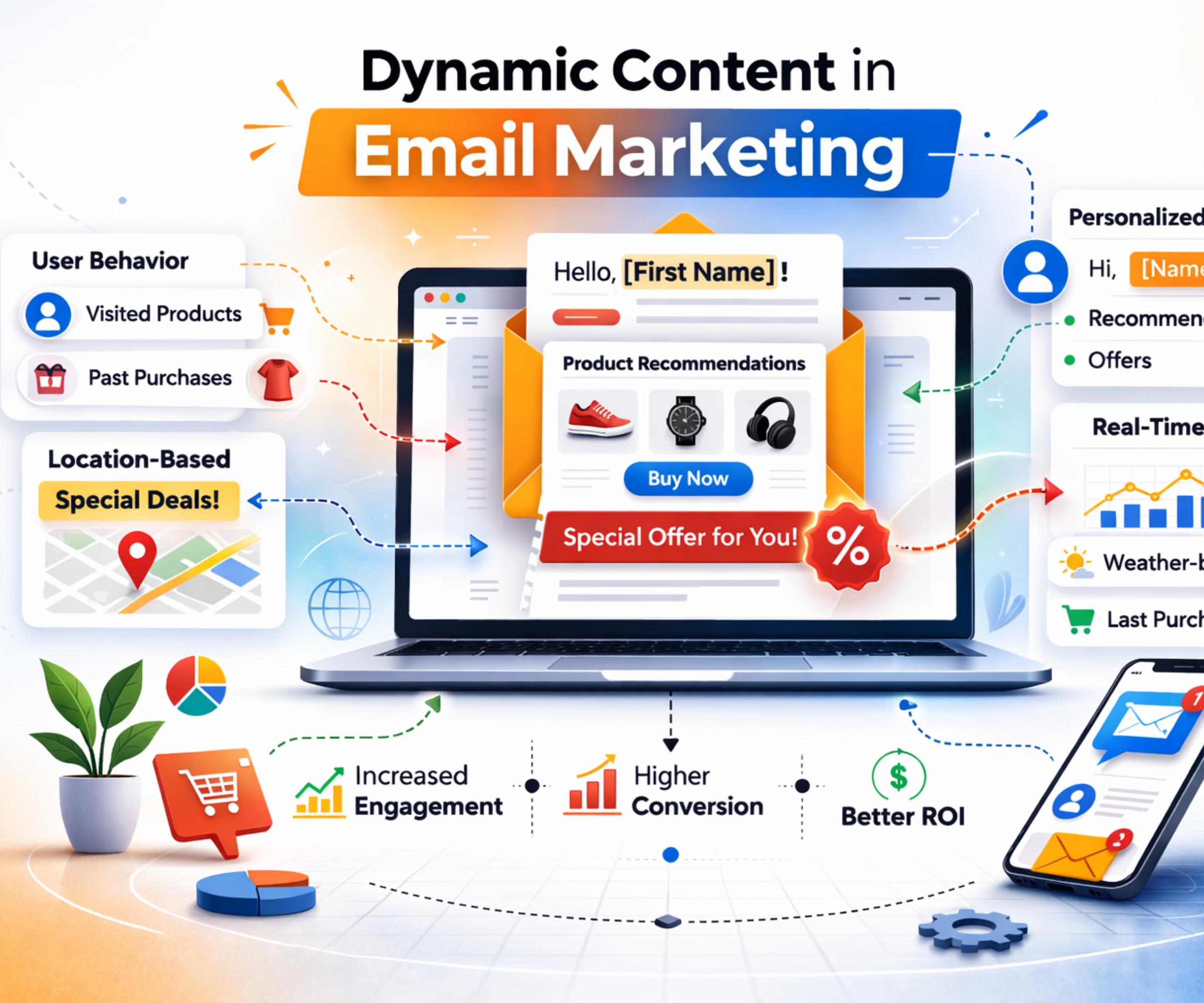
Personalized Product Recommendations
Brands can suggest products based on previous purchases or browsing behavior. As a result, customers are more likely to find relevant products.
Dynamic Text and Greetings
Emails can display personalized greetings or custom messages depending on subscriber details. In addition, this makes communication feel more personal.
Location-Based Offers
Businesses can promote region-specific deals or nearby store locations using geographic data. Therefore, offers become more relevant to subscribers.
Real-Time Email Elements
Countdown timers, stock updates, or live social feeds can change when the email is opened. Consequently, the content feels timely and interactive.
How Dynamic Content Works in Email Marketing Platforms
Dynamic content in email marketing relies on data, segmentation, and automation tools to personalize content. Essentially, these elements work together to deliver customized email experiences.
Subscriber Data and Segmentation
Marketers collect data such as demographics, purchase history, and engagement patterns to create audience segments. Afterward, they can design campaigns tailored to each group.
Conditional Logic and Automation
Email platforms use conditional rules like “If subscriber purchased product A, show recommendation B.” As a result, personalized content appears automatically without manual effort.
Real-World Examples of Dynamic Email Personalization
Dynamic content in email marketing is widely used across industries. For instance, e-commerce brands recommend products based on past purchases.
Similarly, streaming platforms suggest music or movies according to user preferences. Meanwhile, travel companies send personalized destination recommendations based on search behavior.
Therefore, these strategies help businesses deliver more relevant marketing messages.
Best Practices for Using Dynamic Content in Email Marketing
Dynamic content in email marketing works best when marketers follow a few important practices.
First, maintain accurate and clean customer data to ensure personalization works properly. Second, focus on meaningful audience segments rather than overly complex targeting rules. Finally, continuously test different email variations using A/B testing to improve campaign performance.
Likewise, digital marketing learners at the National Institute of Digital Marketing (NIDM) often practice these strategies to optimize email marketing campaigns.
Common Mistakes to Avoid in Dynamic Email Campaigns
Dynamic content in email marketing can be ineffective if certain mistakes are made.
For example, one common issue is over-personalization, which may feel intrusive to subscribers. Another mistake is ignoring mobile responsiveness, since most users read emails on smartphones. Furthermore, marketers should include fallback content so emails display properly even if subscriber data is missing.
Future Trends in Dynamic Email Marketing Personalization
Dynamic content in email marketing continues to evolve with new technologies.
For instance, artificial intelligence is increasingly used to analyze customer behavior and automatically personalize email content. Additionally, predictive analytics will help marketers anticipate customer needs and deliver relevant content before subscribers even request it.
Conclusion
Dynamic content in email marketing has become a powerful strategy for delivering personalized email campaigns. By using subscriber data and automation tools, businesses can create relevant email experiences that increase engagement, conversions, and customer loyalty.
Furthermore, marketers who want to master advanced personalization techniques can benefit from training programs offered by the National Institute of Digital Marketing (NIDM). Ultimately, as email marketing continues to evolve, dynamic content will remain a key factor in building effective and engaging campaigns.