YouTube SEO 2026 has transformed how videos get discovered — and if you’re still using strategies from two or three years ago, you’re leaving enormous amounts of traffic on the table. YouTube is now the world’s second-largest search engine, with over 3.7 billion monthly users, and its AI-powered recommendation engine is smarter and more competitive than ever before.
If you’re a content creator, digital marketer, or business owner trying to grow on YouTube, this guide is everything you need. We’ll break down exactly how the YouTube algorithm works, what ranking factors actually matter, and the practical steps you can take — starting today — to get your videos found.
|
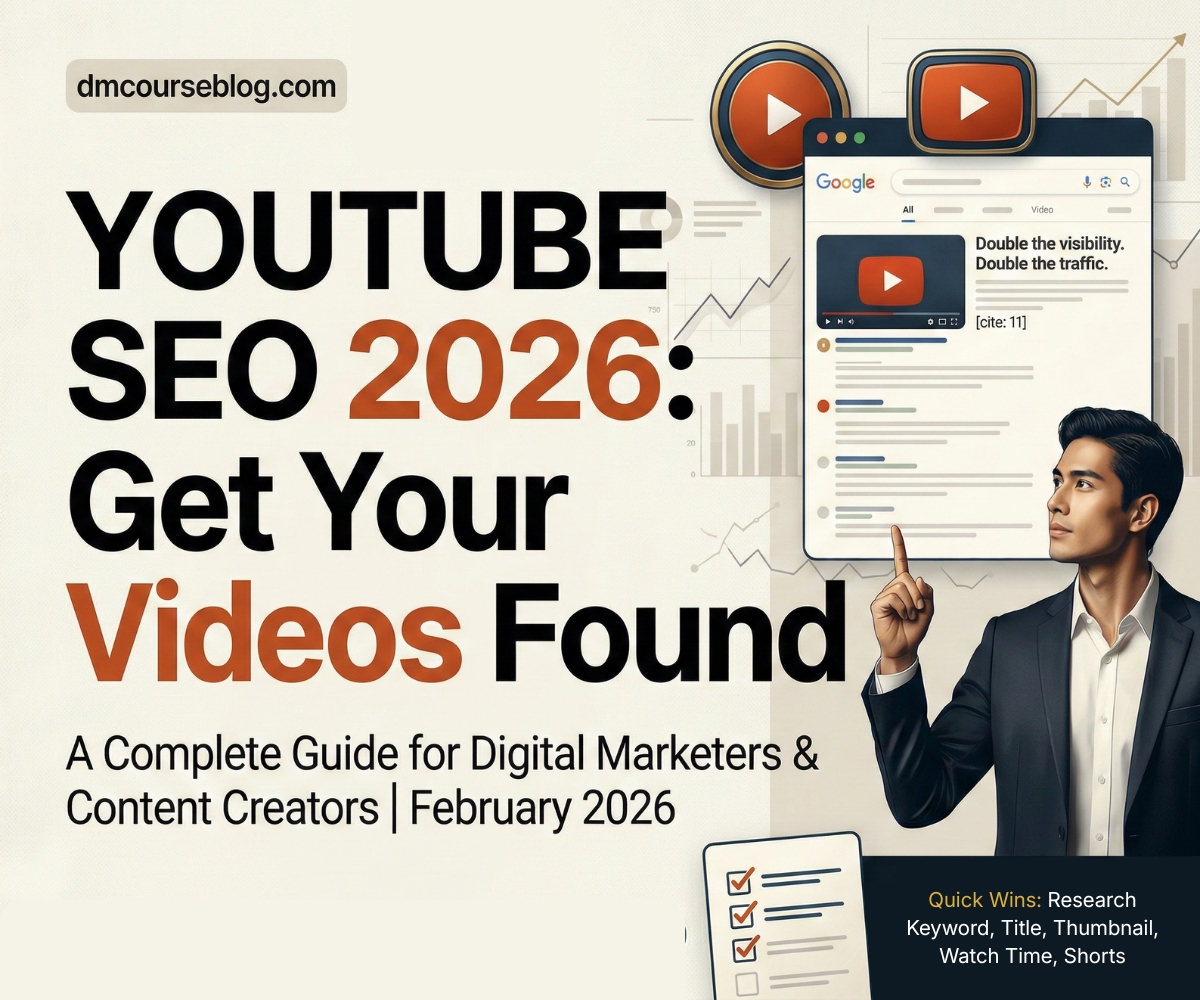
💡 Why This Matters More Than Ever in 2026 YouTube videos now appear inside Google’s AI-generated search results (SGE). A well-optimised YouTube video doesn’t just rank on YouTube — it can show up at the top of Google too. Double the visibility. Double the traffic. |
1. How the YouTube Algorithm Works in 2026
Before you optimise anything, you need to understand what YouTube is trying to do. YouTube’s goal is simple: keep people on the platform as long as possible. Its algorithm rewards videos that people actually watch, enjoy, and engage with.
The 2026 algorithm is powered by a multi-signal ranking system that evaluates:
-
- Click-Through Rate (CTR) — did people click your video when they saw the thumbnail?
- Watch Time & Completion Rate — how long did viewers stay? Did they watch to the end?
- Engagement Signals — likes, comments, shares, saves, and replies.
- Satisfaction Signals — post-watch surveys, return visits, and viewer history.
- Relevance — how closely does your video match what the searcher actually wants?
|
Pro Insight: In 2026, YouTube weighs ‘satisfaction signals’ even more heavily than watch time. A viewer who gives your video a thumbs up or leaves a comment after watching 60% sends a stronger positive signal than someone who watches 100% and clicks away in silence. |
2. YouTube SEO 2026: Keyword Research That Actually Works
YouTube SEO 2026 strategy starts with keywords — but not just any keywords. You need terms that people are actively searching on YouTube, that match your content, and that you have a realistic chance of ranking for.
Step 1: Use YouTube’s Own Search Bar
Type your topic into YouTube’s search bar and study the autocomplete suggestions. These are real searches happening right now. For example, type ‘YouTube SEO’ and you’ll see: ‘YouTube SEO for beginners’, ‘YouTube SEO 2026’, ‘YouTube SEO tips to rank faster’. These autocomplete phrases are exactly what your audience is typing.
Step 2: Study Your Competitors
Search for top-performing videos in your niche. Look at their titles, descriptions, and tags. What keywords appear repeatedly? You’re not copying them — you’re learning the vocabulary your audience uses.
Step 3: Use Keyword Tools
Tools like TubeBuddy, VidIQ, and Ahrefs (which now includes YouTube search data) show you monthly volume, competition scores, and trending keywords. In 2026 these tools have added AI-powered keyword clustering — helping you find related terms to weave naturally throughout your video.
|
💡 Long-Tail Keywords Win in 2026 Don’t chase broad keywords like ‘SEO tips’. Go for specific phrases like ‘how to rank YouTube videos as a beginner in 2026’. Less competition, more qualified viewers, and higher watch time because the audience is exactly who you made the video for. |
3. Optimise Your Video Title — Your #1 Ranking Factor
YouTube SEO 2026 Title Formula
Your title is the single most important on-page SEO element you control. For YouTube SEO 2026, a great title does three things simultaneously: it contains your primary keyword near the beginning, communicates clear value so viewers know why to click, and stays under 60 characters so it doesn’t get cut off in search results.
|
❌ Weak Title |
✅ Strong Title |
| My YouTube Video About SEO | YouTube SEO 2026: 7 Steps to Rank Faster |
| How to Do Keyword Research |
YouTube SEO 2026 Keyword Guide (Free Tools) |
4. Write a Description That Ranks AND Converts
YouTube SEO 2026 Description Formula
Most creators treat the description as an afterthought. That’s a massive missed opportunity — especially for YouTube SEO 2026. YouTube’s algorithm reads your entire description to understand your video’s topic, and a well-written description can dramatically boost your rankings.
Here’s the formula for a high-performing YouTube description:
-
- First 2–3 lines: Hook the viewer with the most compelling reason to watch. These appear above the ‘Show more’ fold — make them count.
- Lines 4–10: Naturally include your primary keyword and 3–5 related keywords. Write in full sentences — this is not the place to stuff keywords awkwardly.
- Timestamps: Add chapter markers (e.g., 0:00 – Intro, 2:15 – Keyword Research). YouTube promotes chaptered videos more aggressively.
- Call-to-action: Tell viewers to like, comment, subscribe, or visit your website.
- Links & resources: Add relevant links — your website, social profiles, and related videos.
|
Aim for descriptions of at least 200–300 words. The more relevant context you give YouTube, the better it can match your video to the right searches. |
5. Tags, Categories & Hashtags: Still Relevant in 2026?
Tags matter less than they did five years ago — but they’re not useless. They act as a secondary signal helping YouTube understand the topic cluster your video belongs to.
How to Use Tags Effectively
-
- Start with your exact primary keyword as the first tag.
- Add 3–5 variations (e.g., ‘YouTube SEO tips’, ‘rank YouTube videos’, ‘YouTube algorithm 2026’).
- Include your brand or channel name as a tag.
- Keep it to 10–15 tags maximum. Quality beats quantity.
Hashtags
Add 3–5 hashtags at the end of your description. They appear as clickable links above your video title on mobile — giving your video extra discoverability. Use specific, relevant hashtags rather than generic ones like #video or #youtube.
Category
Always select the most relevant category. If you’re a marketing channel, choose ‘Education’ or ‘Science & Technology’. The right category helps YouTube group your video with similar content and surface it to the right audience.
6. Thumbnails: The Click-Through Rate Multiplier
A video with mediocre SEO and an amazing thumbnail will outperform a perfectly optimised video with a boring thumbnail every single time. Why? Because CTR is one of YouTube’s most weighted ranking signals in 2026.
If 100 people see your video and 12 click it, that’s a 12% CTR. If your competitor’s gets 5 clicks, YouTube’s algorithm sees yours as more relevant — and rewards it with more exposure.
Thumbnail Best Practices
-
- Use high-contrast colours — bright, bold colours stand out against YouTube’s white and dark backgrounds.
- Show a face — human faces (especially with expressive emotions) dramatically increase CTR.
- Add 3–5 words of large text — reinforce the title and hint at the value inside.
- Maintain consistent branding — same fonts, colours, and style so viewers recognise your channel instantly.
- A/B test your thumbnails using YouTube Studio’s built-in split-test feature.
|
💡 The Thumbnail-Title Combo Your thumbnail and title must tell a coherent story together. If your title says ‘7 YouTube SEO Mistakes’ and your thumbnail shows a shocked face next to the word ‘WRONG’, viewers immediately understand the promise. That clarity drives clicks. |
7. The First 48 Hours: Launching Your Video for Maximum Impact
YouTube pays close attention to how your video performs immediately after upload. A strong launch signals high-quality content worth promoting to a wider audience.
-
- Upload at the right time — post when your audience is most active (YouTube Studio > Analytics > Audience > When your viewers are on YouTube).
- Notify your subscribers — YouTube sends notifications, but also promote across your email list, social media, and community tab immediately after upload.
- Reply to every early comment — engagement in the first 24–48 hours tells the algorithm your video is generating real conversations.
- Embed it on your website or blog — external traffic signals that your video has value beyond YouTube.
- Create a YouTube Shorts teaser — post a 30–60 second clip as a Short with a clear call-to-action to watch the full video.
8. YouTube SEO 2026 Watch Time Strategies: Keep Viewers Hooked
Watch time and audience retention are among the most critical YouTube SEO 2026 ranking factors you can directly influence. A video that people abandon after 20 seconds will never rank well, no matter how good your title or tags are.
Hook Viewers in the First 30 Seconds
Open every video with a bold statement, a surprising fact, or a direct preview of what the viewer will gain. Avoid long intros, slow builds, or requests to subscribe before you’ve delivered any value.
Use Pattern Interrupts
Every 60–90 seconds, change something: cut to a different camera angle, add a graphic, show a screen recording, or switch topics. Pattern interrupts reset viewer attention and dramatically reduce drop-off.
Structure Your Video Like a Blog Post
Use clear chapters, numbered steps, or a before/after structure. When viewers know what’s coming next, they’re more likely to stay. Tease upcoming sections: ‘Stick around for tip #5 — it’s the one most people get wrong’.
9. YouTube Shorts: The SEO Wildcard in 2026
YouTube Shorts crossed 100 billion daily views in 2025 — and in 2026 they’ve become one of the most powerful tools for growing a channel. But here’s what most creators miss: Shorts are not just a growth tool. They’re an SEO signal.
When your Shorts perform well (high completion rate, strong engagement), it tells YouTube’s algorithm that your channel creates content people genuinely enjoy — and this lifts the visibility of your long-form videos too.
-
- Create Shorts that tease or complement your long-form content.
- Use text overlays and captions — most Shorts are watched without sound.
- Post 3–5 Shorts per week to keep your channel active between long-form uploads.
- Pin a comment on each Short linking to the full video.
10. Channel-Level SEO: The Foundation You Can’t Ignore
Your individual videos don’t exist in isolation — YouTube also evaluates your channel as a whole. A well-optimised channel builds topical authority, which helps every video you upload rank better and faster.
-
- Channel name & handle: Include a keyword if it fits naturally (e.g., ‘NIDM Digital Marketing’).
- Channel description: Write 2–3 paragraphs clearly explaining what your channel covers. Include primary keywords naturally.
- Channel trailer: Create a 60–90 second trailer that hooks new visitors and clearly communicates your channel’s value proposition.
- Playlists: Group related videos into playlists. Playlists increase session time — a strong positive signal for the algorithm.
- Post consistently: Channels that upload on a regular schedule rank better. Once a week beats sporadic bursts.
Quick Wins Checklist: YouTube SEO 2026
|
☐ |
Research keywords before scripting — not after editing. |
|
☐ |
Put your primary keyword in the title, preferably in the first 5 words. |
|
☐ |
Write a description of 200+ words with natural keyword usage. |
|
☐ |
Add timestamps / chapter markers to every video. |
|
☐ |
Design a custom thumbnail with high contrast, a face, and clear text. |
|
☐ |
Post at peak audience activity time. |
|
☐ |
Reply to every comment in the first 48 hours. |
|
☐ |
Promote new videos via Shorts, email list, and social media on day 1. |
|
☐ |
Build playlists to increase session time and topical authority. |
|
☐ |
Review YouTube Studio analytics weekly and double down on what works. |
Final Thoughts
YouTube SEO 2026 is not about gaming the algorithm. It’s about creating content that real people love to watch — and then making sure YouTube can find it, understand it, and show it to the right people.
The creators winning on YouTube right now combine great content with smart optimisation. They research keywords, write compelling titles, design eye-catching thumbnails, and obsess over their first 30 seconds. They treat YouTube as a search engine, not just a video hosting platform.
Start applying these principles one by one. Pick three tactics from this guide, implement them on your next video, and measure the results. That’s how YouTube growth works in 2026 — consistently, strategically, and with patience.
|
📚 Want More Digital Marketing Guides? Visit dmcourseblog.com for in-depth guides on SEO, Social Media Marketing, Content Strategy, Email Marketing, Paid Ads, and more. New posts every week. |
YouTube SEO 2026 is the most significant shift in video discovery since YouTube first introduced its recommendation engine — but the algorithm only rewards creators who understand the strategy behind the optimisation. As emphasised by NIDM (National Institute of Digital Marketing), the future of video marketing belongs not to those who simply upload and hope, but to those who master the precise balance between search-intent content and data-driven channel authority. Don’t let your videos stay buried while competitors claim the top spots; join NIDM to gain the decisive edge in mastering YouTube SEO and video marketing in 2026.