Why PMax Optimization Needs a Rethink in 2026
Performance Max Optimization 2026 is no longer about blindly trusting automation but t’s about guiding it with smarter signals. As Google Ads leans deeper into AI-driven decision-making, advertisers are realizing that leaving Performance Max on autopilot often leads to budget waste, brand cannibalization, and low-intent traffic.
In 2026, winning with Performance Max means understanding how to steer automation using tools like Search Themes and Brand Exclusions without fighting Google’s AI.
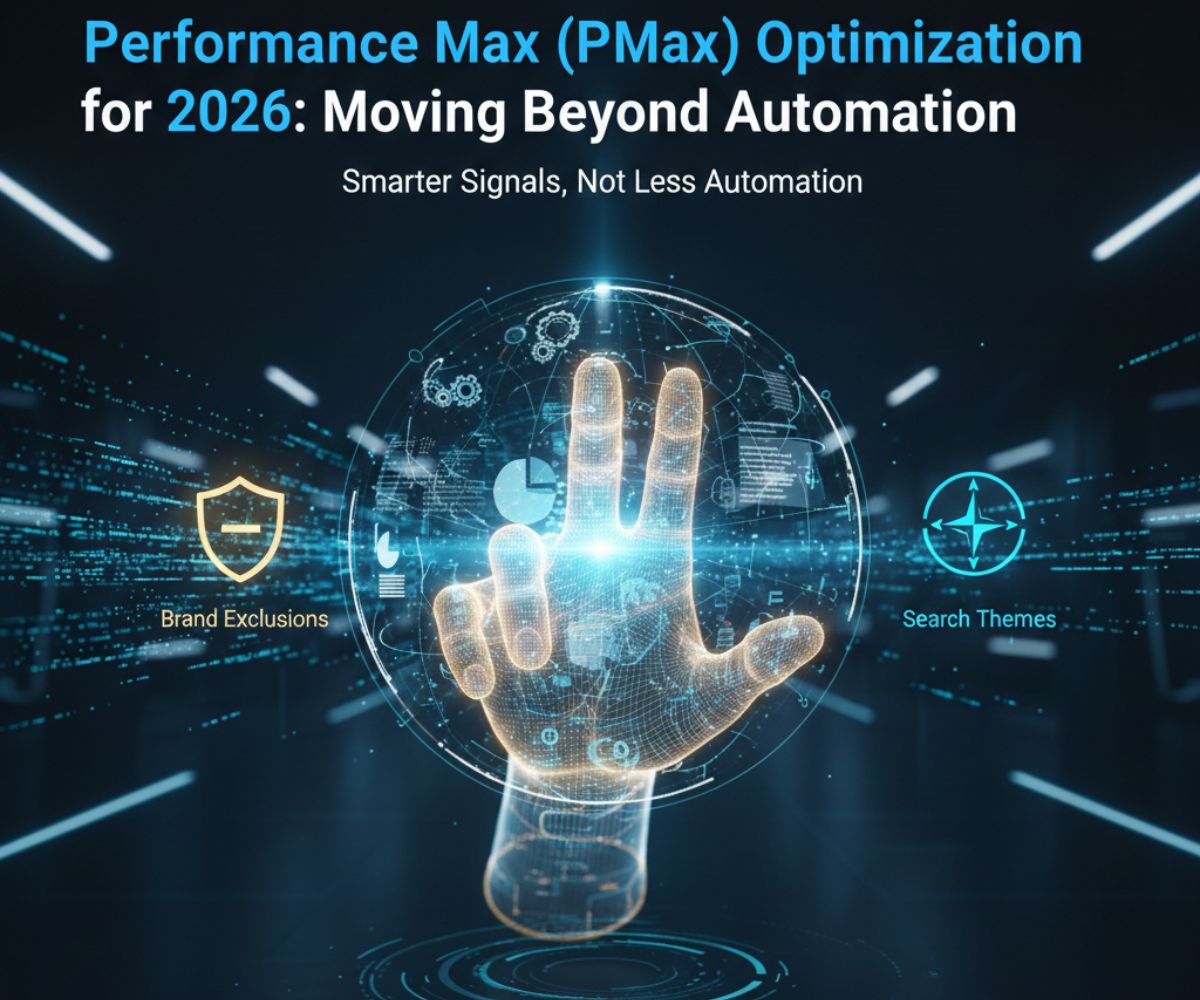
This shift makes Performance Max Optimization 2026 more about strategy than setup.: moving beyond automation and learning how to regain strategic control using Search Themes and Brand Exclusions inside Performance Max.
Understanding Performance Max Optimization 2026
What Performance Max Was Originally Designed For
At its core, Performance Max was built to unify all Google inventory Search, Display, YouTube, Discover, Gmail, and Shopping under one campaign type. The promise was simple: fewer manual decisions, broader reach, and smarter optimization powered by machine learning.
And for many advertisers, it worked… initially.
How PMax Has Evolved With AI and Automation
By 2026, Performance Max is no longer just automated but it’s aggressively automated. AI now controls bidding, placements, creatives, audience expansion, and query matching with minimal advertiser input.
That’s powerful. But power without direction is chaos.
Why Advertisers Are Losing Control
The problem isn’t automation itself. The problem is signal quality. When advertisers feed weak or vague signals, PMax fills the gaps however it sees fitnoften prioritizing volume over value.
The Automation Trap: Where PMax Goes Wrong
Budget Leakage Across Low-Intent Queries
Without clear guidance, PMax happily spends money on searches that look relevant but never convert. Think research-heavy queries, job searches, or vague informational intent. Many advertisers struggle with Performance Max Optimization 2026 due to limited transparency.
Brand Cannibalization Issues
One of the biggest complaints? PMax eating up branded searches that would have converted anyway at a much lower cost through standard Search campaigns.
Lack of Transparency and Reporting Gaps
You don’t see exact keywords. You don’t see full placement data. That opacity makes optimization feel like driving with fogged-up windows.
Why “Taking Back Control” Matters More Than Ever
Rising CPCs and AI Competition
As more advertisers lean into automation, auction pressure increases. AI is now competing against AI. The differentiator? Strategic inputs from humans.
The Risk of Over-Reliance on Black-Box Systems
Automation should amplify strategy, not replace it. When advertisers disengage completely, PMax becomes a cost center instead of a growth engine.
Search Themes: The Most Underrated PMax Control Lever
What Are Search Themes in Performance Max?
Search Themes are directional signals. They tell Google’s AI what types of searches matter most to your business without locking you into rigid keyword lists.
How Search Themes Influence Query Matching
Think of Search Themes as guardrails. They don’t restrict reach, but they strongly influence which queries the AI prioritizes.
Search Themes vs Keywords: The 2026 Reality
Keywords are rules. Search Themes are suggestions—with weight. In a machine-learning-first ecosystem, suggestions scale better.
How to Use Search Themes Effectively in 2026
Choosing High-Intent Search Themes
Commercial vs Informational Themes
Focus on themes that signal buying intent. If a search sounds like someone ready to act, it belongs in PMax.
Aligning Themes With Funnel Stages
Not all PMax campaigns should chase cold traffic. Match your themes to the campaign’s role in the funnel.
Structuring Search Themes for Scale
Group themes by intent, not by product obsession. Broader intent clusters help AI generalize intelligently.
Common Search Theme Mistakes to Avoid
- Being too vague
- Copying old keyword lists blindly
- Mixing brand and non-brand intent
Brand Exclusions: The Secret Weapon Against Budget Waste
What Are Brand Exclusions in PMax?
Brand Exclusions tell Google’s AI which branded terms it should avoid triggering ads for—yours or others’.
Why Brand Traffic Can Hurt Performance Max
Brand searches convert easily, making metrics look great. But they hide the real question: Is PMax actually driving incremental growth?
When Brand Exclusions Make Sense
If you already run branded Search campaigns, excluding brand terms from PMax is often the smartest move.
How to Set Up Brand Exclusions Correctly
Account-Level vs Campaign-Level Exclusions
Account-level exclusions offer consistency. Campaign-level exclusions offer flexibility. Choose based on scale.
Protecting Branded Search Campaigns
Brand Exclusions prevent internal competition and keep CPCs stable.
Using Brand Exclusions for Competitor Control
Exclude competitor brands if PMax keeps drifting into low-conversion conquesting territory.
Combining Search Themes and Brand Exclusions Strategically
Reducing Query Overlap
Together, these tools reduce confusion for the algorithm and clarify intent boundaries.
Improving Conversion Quality
Cleaner inputs lead to cleaner traffic. Simple as that.
Signal Stacking for Better AI Learning
When multiple signals point in the same direction, AI learns faster and optimizes smarter.
Advanced PMax Optimization Best Practices for 2026
Asset Group Segmentation
Separate asset groups by intent, not just creative format.
Audience Signal Refinement
Use first-party data wherever possible. It’s gold in a privacy-first world.
Creative Feedback Loops
Refresh creatives based on performance insights, not gut feelings.
PMax Negative Keywords: What You Can and Can’t Control
The Current State of Negative Keywords in PMax
limited. Still frustrating. Still manageable—with the right structure.
Workarounds to Minimize Irrelevant Traffic
- Smarter Search Themes
- Brand Exclusions
- Better audience signals
Measuring Success: KPIs That Actually Matter in Performance Max Optimization 2026
Beyond ROAS and CPA
Look at incrementality, not just efficiency.
Incrementality and Lift Analysis
Ask the real question: Would this conversion have happened anyway?
Future-Proofing Your PMax Strategy Beyond 2026
Human-in-the-Loop Advertising
AI is fast. Humans are thoughtful. The future belongs to teams that combine both.
Balancing Automation With Strategic Inputs
Don’t fight automation. Feed it better instructions.
Conclusion: Smarter Signals, Not Less Automation
Performance Max isn’t the enemy. Poor guidance is.
In 2026, the best advertisers won’t turn automation off they’ll shape it. By mastering Search Themes and Brand Exclusions, you stop wasting budget, protect high-value traffic, and finally make PMax work for you, not against you.
FAQs
1. Are Search Themes mandatory in Performance Max Optimization 2026?
No, but skipping them is like letting AI drive without a destination.
2. Will Brand Exclusions reduce conversions?
They may reduce volume but usually increase quality and true incrementality.
3. Can PMax fully replace Search campaigns?
Not strategically. Search and PMax work best together, not as substitutes.
4. How often should Search Themes be updated?
Review them quarterly, or whenever performance shifts significantly.
5. Is Performance Max still worth using in 2026?
Absolutely—if you move beyond autopilot and guide the system properly.
At the National Institute of Digital Marketing (NIDM), learn Performance Max optimization strategies that help you reduce wasted spend, protect branded traffic, and build scalable Google Ads campaigns with confidence.