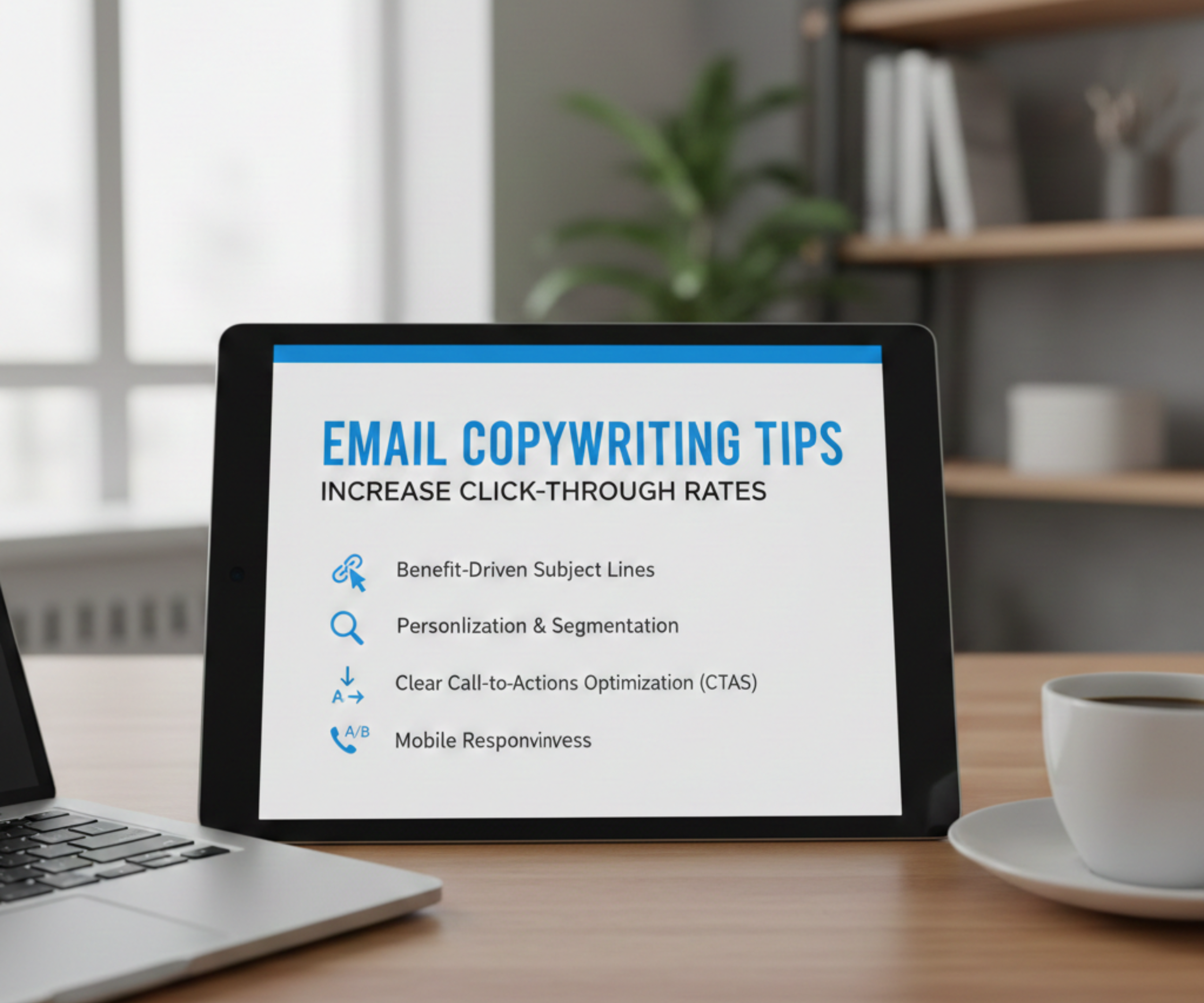
Email Copywriting Tips That Increase Click-Through Rates
Understanding the Importance of Click-Through Rates
To increase click-through rates, strong email copywriting starts with understanding what CTR actually means and why it matters. Click-Through Rate (CTR) measures how many recipients click a link inside your email compared to how many opened it. Opening shows curiosity. Clicking shows commitment — and commitment drives results.
What is Click-Through Rate (CTR)?
Click-Through Rate (CTR) is the percentage of readers who click on a link after opening your email. If 100 people open your email and 5 click, your CTR is 5%. This metric shows whether your message successfully motivates action.
Why CTR Matters for Email Marketing Success
Improving click-through rates is about turning interest into measurable action. A high CTR means your message is relevant, persuasive, and clear. Whether your goal is sales, downloads, or sign-ups, clicks bridge attention and conversion.
Know Your Audience Before You Write
Effective email copy begins with audience understanding. You cannot persuade someone if you don’t understand their needs, problems, and motivations.
Creating Audience Personas
Ask yourself: Who am I writing to?
Are they beginners? Busy professionals? Budget-conscious buyers? When your message reflects their goals and pain points, it feels personal — and personalized emails drive more engagement.
Segmenting Your Email List for Better Results
Sending the same email to everyone reduces impact. Segment your list based on behavior, interests, or purchase history. Tailored emails consistently generate higher engagement because they feel relevant rather than generic.
Crafting Irresistible Subject Lines
Your subject line determines whether your email gets opened at all. Without opens, there are no clicks.
Using Curiosity and Urgency
Curiosity attracts attention. Urgency encourages immediate action.
Examples:
-
“You’re missing this simple growth trick”
-
“Last chance: 50% off ends tonight”
Personalization Techniques
Adding a name or referencing past activity improves open and click performance.
Example: “Dharnesh, your exclusive offer is inside.”
Subject Line Length Best Practices
Keep subject lines between 6–10 words. Most emails are opened on mobile devices, and longer lines often get cut off.
Writing Engaging Preview Text
Preview text works as a second headline supporting your subject line.
If the subject line says:
“Your free guide is ready”
Preview text can say:
“Download it now and improve your results today.”
Together, they build curiosity and drive engagement.
Start with a Powerful Opening
Your first sentence must answer one question: Why should I care?
Examples:
-
“What if you could double your email clicks in one week?”
-
“Most marketers make this mistake — and it’s costing them sales.”
Avoid generic introductions like “Hope you’re doing well.” Lead with value.
Focus on Benefits, Not Features
Persuasive email writing relies on benefit-driven messaging. Features describe. Benefits convince.
Instead of:
“Our software includes advanced analytics.”
Say:
“See exactly what’s working and grow faster.”
People respond to outcomes, not specifications.
Keep Your Email Copy Clear and Concise
Emails are not blog posts. Keep paragraphs short — 2 to 3 lines maximum. Use simple language. Remove unnecessary words.
Clarity improves readability.
Readability increases engagement.
Use Conversational and Personal Tone
Write like you’re speaking to one person. Use conversational words like:
-
You
-
Your
-
Let’s
-
Here’s the thing
Connection builds trust. Trust increases action.
Structure Your Email for Easy Scanning
Most readers skim. Format your email for quick scanning:
-
Bullet points
-
Short sections
-
Bold highlights
-
White space
Make your message easy to digest and easy to act on.
Create Strong Calls-to-Action (CTA)
Clear calls-to-action significantly improve click performance.
Weak:
“Click here”
Strong:
-
“Get your free template”
-
“Start your trial”
-
“Download the guide now”
Use action verbs and clearly state the benefit.
CTA Placement Strategies
Place your CTA:
-
After explaining the main benefit
-
At the end of the email
-
Once near the top (for longer emails)
Make it visible and easy to tap.
Use Psychological Triggers
Strategic persuasion techniques can increase response rates.
Scarcity and Urgency
-
“Only 50 spots left”
-
“Offer ends tonight”
Scarcity speeds up decisions.
Social Proof and Trust
-
“Trusted by 10,000+ marketers”
-
“Rated 4.9/5 by users”
Trust reduces hesitation.
Optimize for Mobile Readers
Most emails are opened on smartphones. Ensure your formatting supports mobile users:
-
Short subject lines
-
Brief paragraphs
-
Large buttons
-
Minimal heavy images
Mobile optimization directly impacts performance.
A/B Test Your Email Copy
Improving email performance requires testing. Test one element at a time:
-
Subject lines
-
CTA wording
-
Email length
-
Personalization
-
Send time
Small improvements compound over time.
Avoid Common Email Copywriting Mistakes
Common mistakes that reduce engagement include:
-
Too many links
-
Multiple conflicting messages
-
Weak or unclear CTAs
Focus on one clear objective per email.
Measuring and Improving Your Results
Track these metrics:
-
Open rate
-
Click-through rate
-
Conversion rate
-
Unsubscribe rate
CTR shows how well your message motivates action. Conversions show whether your offer delivers value.
Conclusion of Increase Email Click-Through Rates
Increasing click-through rates is not about complicated language or clever tricks. It’s about clarity, personalization, relevance, and guiding readers toward one clear action. When you understand your audience, emphasize benefits, and write conversationally, your emails become powerful engagement tools.
For marketers who want to master advanced email marketing strategies and professional copywriting techniques, structured training from institutions like (NIDM) National Institute of Digital Marketing can help build practical skills and real-world expertise.
Because in email marketing, every click is a conversation — and every conversation is an opportunity.