Search is changing-and fast
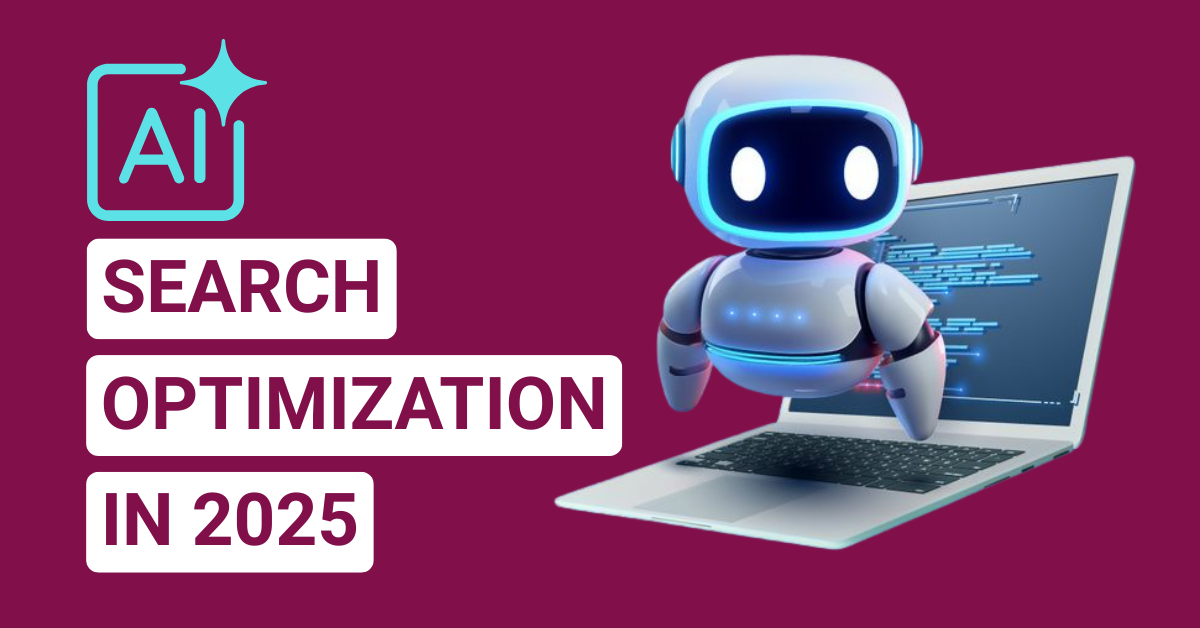
Indeed, with the recent emergence of ChatGPT, Gemini, Copilot, and Perplexity, all driven by AI, people no longer just “search”; they converse and demand direct answers. This is where a whole new era begins: AI Search Optimization.
Traditional SEO focused on how to rank web pages on Google. But the challenge is different in 2025. How can your brand stay visible when users hope to get straight forward answers from AI instead of clicking blue links and sort the information?
Here, we’ll explore how LLMs are changing online discovery and the key strategies you can use to strengthen your brand’s online presence.
What Does Brand Visibility Mean in the Age of LLMs?
Until recently, brand visibility meant being on the first page of Google; today, it’s all about being part of the conversation generated by AI systems.
If a user asks, “Which one is better for small businesses, Google Ads or Meta Ads?”, AI tools, like ChatGPT or Perplexity, do not show ten blue links with different concepts. They simply create a summarized response, including pros and cons, referring to several blog sources.
If these AI-generated answers don’t mention your brand, you’re invisible to the new generation of searchers.
In other words, visibility today signifies recognition by AI models: to be part of their trusted knowledge base, not just a website indexed by Google.
“AI Search Optimization,” “Generative Search Optimization,” and “Search Everywhere Optimization” — Are They the Same?
The following three emerging terms all sound similar, but they focus on somewhat different aspects:
AI Search Optimization:
This involves optimizing for findability and citability by any AI-powered search system, such as but not limited to ChatGPT, Bing Copilot, and Gemini.
Generative Search Optimization (GSO)
A broader approach that considers how your content appears within the AI-generated responses and summaries, not just rankings.
Search Everywhere Optimization (SEO):
The idea of users now searching across multiple platforms: social media, voice assistants, AI chatbots, and search engines.
The goal is to make your brand discoverable everywhere.
In short, these concepts all interrelate. Together, they spell out a vision of the future of discoverability in an AI-driven digital landscape.
How marketers can make a successful AI search optimization plan
To stay ahead, marketers need to think beyond keywords. Here’s how:
1. Focus on factual authority
AI models get their information from sources that are reliable and have the same information every time. Make sure that people quote, link to, and trust your brand.
2. Use structured content
Apply schema markup, metadata, and clear sectioning. AI reads structure better than fluff.
3. Optimize for conversational queries
People use natural language to ask the tool in question. Also, make sure your content answers questions like “how,” “why,” and “what if” clearly.
4. Build topical depth
Create clusters of related articles that build subject authority.
5. Use credible citations
Linking to verified sources is a signal of reliability, which increases your chances of being referenced by AI systems.
AI optimization = clarity of content + credibility + context.
Understanding the LLM Landscape: How LLMs Are Reshaping Content Discovery
LLMs are trained on the vast text databases of books, websites, research papers, and online discussions. Examples of such models are GPT-4, Gemini, Claude, and Llama.
This is because, in the case of a question, the model doesn’t “search” the web in real time but predicts the most probable and relevant answer out of what it has been trained on, often combined with live web data as can be seen in Bing Copilot or Perplexity.
Key Takeaways
- LLMs are for high-authority sources and contextually strong content.
- They may quote, summarize, or paraphrase content without direct links.
- Zero-click experiences are on the rise, and users get their answers without visiting sites.
Your content, therefore, has to be there, but it also needs to make trust and fit AI’s logic for comprehension.
Optimizing Content for LLMs
But optimization for LLMs is not about tricking algorithms; rather, it is about helping AI understand your information better, ultimately trusting it.
Actionable tips:
- Be clear, and use a matter-of-fact tone; AI will reward clarity while penalizing confusion.
- Add FAQs and brief summaries. These help models capture key answers.
- Use named entities: mention your brand, experts, and relevant organizations naturally.
- Cite authoritative data sources and include contextual links.
- Keep updating content regularly. LLMs prefer fresh, relevant information.
- Leverage structured data to define what your page represents: product, service, guide, etc.
Consider your content to be the training material for AI; the more lucid and accurate it is, the higher your brand’s visibility in AI responses.
Common Mistakes to Avoid While Performing Search Optimization for AI
Many brands are making crucial mistakes when transitioning to AI-focused search. Avoid these:
- ❌ Keyword stuffing: AI models know how natural language flows, not phrases overused.
- ❌ Disregard for factual consistency. Any false information reduces trust and decreases citation likelihood.
- ❌ Neglecting the updating of content: Search engines with dynamic AI indexes ignore outdated pages.
- ❌ Skipping metadata and schema – AI tools depend on structure to extract meaning.
- ❌ Lack of authority signals: Unverified or anonymous content will not rank in LLM-generated answers.
Principle number one: write for humans, optimize for AI comprehension.
Why Brands Should Embrace LLMs
Rather than fearing AI search, smart brands are adopting it early.
Benefits include:
- Higher conversational visibility: Your brand becomes part of AI-generated answers.
- Deeper personalization: AI tailors results to users, meaning precise audience targeting.
- Improved reputation: Consistent, believable content improves both search and AI trust.
- Cross-platform presence: LLMs pull information from multiple ecosystems, including websites, social media, and news outlets.
Forward-thinking brands are already building AI-friendly content ecosystems that go well beyond SEO: think podcasts, Q&A pages, and expert-driven blogs.
Limitations of AI in Marketing
AI search, while promising, is not perfect. Here are a few challenges to be aware of:
- AI hallucinations – wherein LLMs create fake or imaginary details.
- Opaque algorithms: Often, it is not clear why certain sources are selected and not others.
- Loss of brand control: Your message could appear rephrased or summarized differently.
- Limited real-time updates: some AI tools rely on older training data.
That is why human oversight is so crucial. AI improves marketing, but real strategy involves people.
The Road Ahead for AI Search Optimization
The world of search is moving from Search Engine Optimization to Search Experience Optimization. Your audience no longer just “searches”; they now interact, converse, and demand smart answers in one go.
As AI continues to shape the future of search and marketing, exploring advanced approaches like AI in Digital Marketing Strategies can help brands stay ahead of the curve.
For your brand to remain visible and relevant, it needs to adapt by:
- Creation of reliable structured content
- Building authority across digital ecosystems
- Keeping abreast of the evolution in LLMs.
In other words, the brands optimizing for AI today will be leading the digital landscape of tomorrow. Start learning, experimenting, and optimizing, because AI Search Optimization is not the future; it’s here.